
EPISODE · Apr 24, 2026 · 59 MIN
Tech CEOs Are Selling You the Future
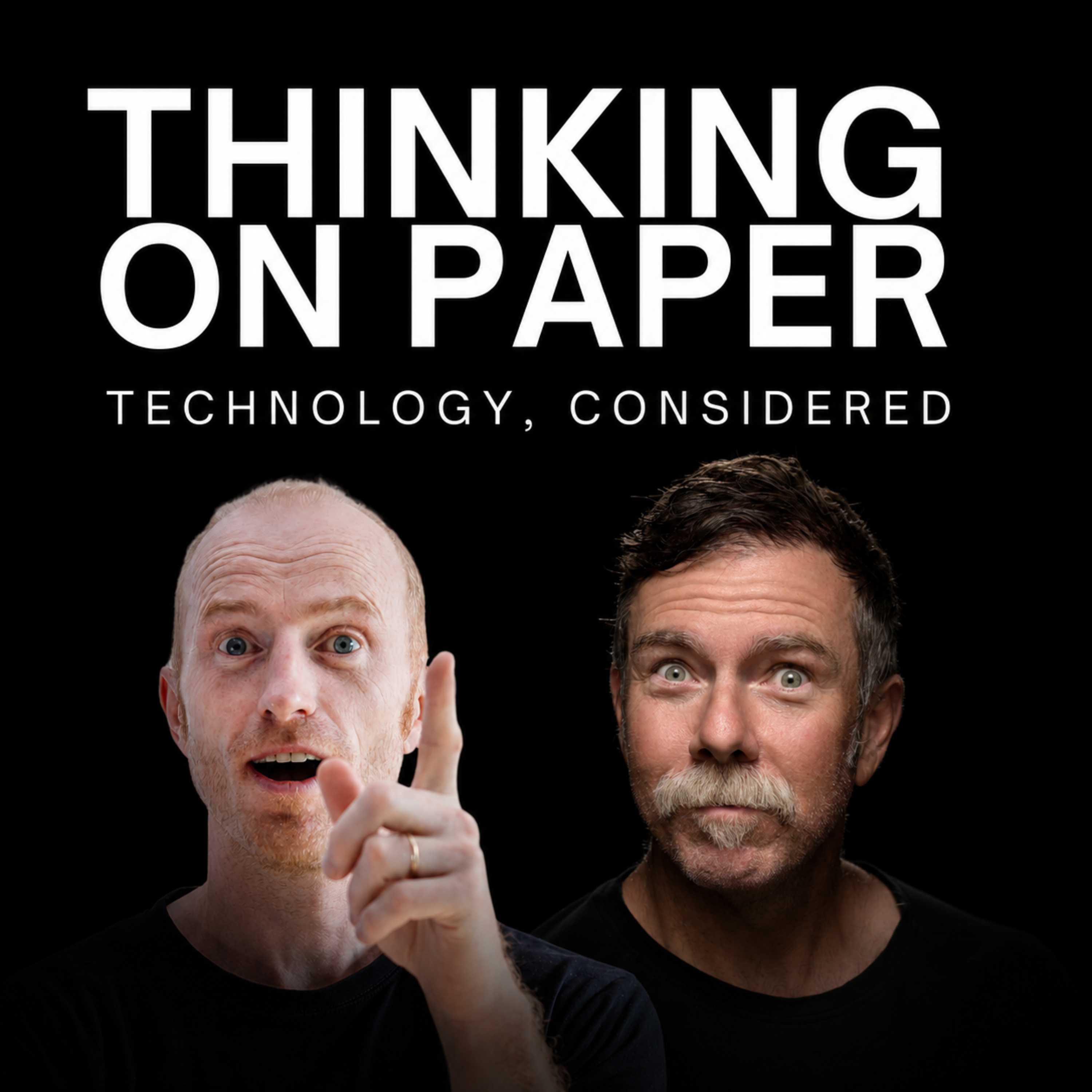
from Thinking On Paper · host Mark Fielding and Jeremy Gilbertson
Carissa Véliz joins Thinking on Paper to examine how AI forecasts, platform algorithms and prediction markets can influence the future they claim only to predict.Predictions aren’t always neutral descriptions. When they come from powerful technology companies, executives, platforms or financial markets, they can change investment, policy and public behaviour. A forecast may become a self-fulfilling prophecy because people act as though its outcome is inevitable.The conversation begins with a broader question about the good life, curiosity and what the analogue world offers that digital systems often remove. It then turns to the institutions increasingly making predictions about people and society.In this episode, we discuss:How AI predictions influence human behaviourWhy forecasts can become self-fulfilling propheciesHow technology executives shape expectations about the future of AIWhether AI hiring tools reinforce existing assumptions about workersHow TikTok and other recommendation systems direct attentionWhy engagement-maximising algorithms reward harmful contentHow prediction markets such as Kalshi and Polymarket workWhether prediction markets measure beliefs or help create outcomesHow platforms exploit the human desire for certainty and securityWhat the Molly Russell case reveals about algorithmic recommendationWhy comedy and serendipity resist predictive systemsHow citizens can make more deliberate choices about technology and beliefWhat Epicureanism offers that digital optimisation cannotCarissa argues that people should treat influential predictions as interventions rather than passive forecasts. The more reach and authority a prediction has, the greater its ability to reorganise the world around itself.This conversation examines how to resist technological prophecy by preserving uncertainty, curiosity and the freedom to choose futures that algorithms haven’t already selected.Please enjoy the show.--Thinking on Paper is a technology podcast about AI, computing, science, and the systems shaping the future.📺 Watch On YouTube: 🎧 Listen to every podcast📺 Follow us on Instagram🏠 Follow us on X🏠 Follow Jeremy on LinkedInTo suggest guests or sponsor the show, please email: [email protected] (00:00) Intro(01:00) What is the good life? (02:00) Why knowing yourself matters more than strategy (04:44) The analog world vs the digital world (06:45) How prophecies exploit our need for security (08:47) Ancient Rome (10:11) The illusion of safety (12:27) When predictions work(15:00) Altman, Amodei, Huang(28:29) How to resist prophecies (29:53) Prediction markets(31:49) TikTok, algorithms, and the Molly Russell case (36:08) Engagement algorithms(40:54) Self-fulfilling prophecies (43:44) Comedy(46:59) Seinfeld (52:16) Karikó (53:40) Serendipity (56:13) Why Epicurus beats the Stoics
Embed this episode
NOW PLAYING
Tech CEOs Are Selling You the Future
No transcript for this episode yet
Similar Episodes
No similar episodes found.
Similar Podcasts
No similar podcasts found.