
EPISODE · Nov 22, 2024 · 17 MIN
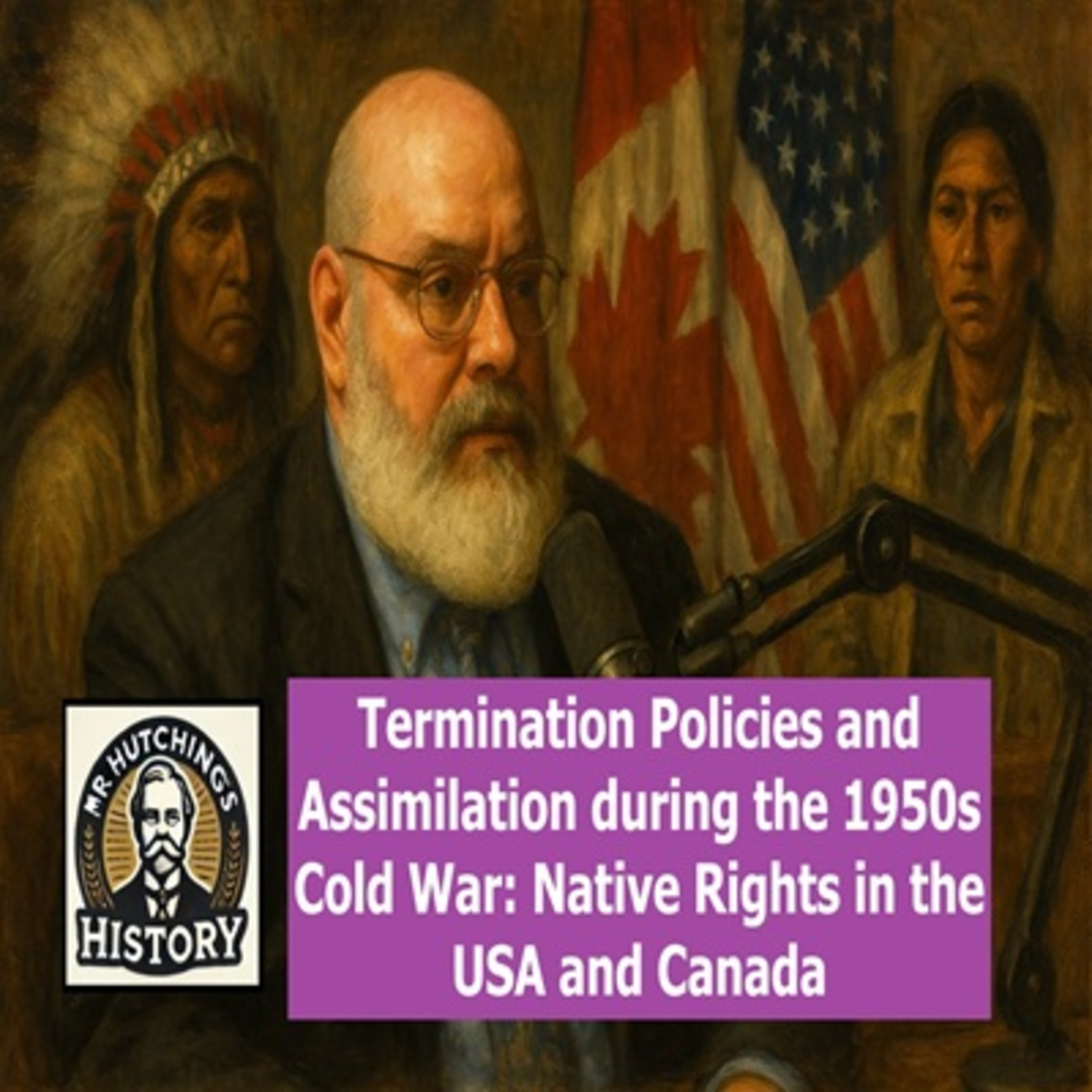
Termination Policies and Assimilation during the 1950s Cold War: Indigenous Rights in the USA and Canada
from Mr. Hutchings History · host Produced, created, and written by Harold M. Hutchings
In this episode of Mr. Hutchings History, we explore the Cold War-era policies of termination and assimilation that deeply affected Native Americans and First Nations communities in the U.S. and Canada. During the 1950s, the U.S. government pursued the Termination Policy, aiming to dissolve tribal governance and relocate Indigenous peoples to urban centers. However, this caused economic hardship and cultural displacement, prompting resistance from Native communities. In Canada, the government made symbolic reforms, such as granting citizenship rights and lifting bans on cultural practices, but continued to exert control through the Indian Act. We examine the consequences of these policies, the resistance from Indigenous groups, and the long-term impact on Indigenous self-determination. Despite these oppressive measures, Indigenous advocacy grew, setting the stage for later civil rights movements. Historians from various schools of thought interpret these developments differently, with some viewing them as well-intentioned but flawed, while others see them as attempts to exploit Native land and resources. Join us as we unpack this pivotal period in the fight for Indigenous rights. #Paper3HLoption2 #IndigenousRights #ColdWarUSA #ColdWarCanada #TerminationPolicy #AssimilationPolicies #NativeAmericanRights #FirstNationsRights #IndianAct #IndigenousResistance #Sovereignty #IndigenousSelfDetermination #NativeAmericanHistory #FirstNationsHistory #IndigenousAdvocacy #CivilRightsMovements #RedPower #IndigenousCulture #IndigenousHistory Works Cited Debo, Angie. And Still the Waters Run: The Betrayal of the Five Civilized Tribes. Princeton UP, 1940. Final Report of the Truth and Reconciliation Commission of Canada, Volume One: Summary. Truth and Reconciliation Commission of Canada. James Lorimer & Co., 2015. Fixico, Donald L. Termination and Relocation: Federal Indian Policy, 1945–1960. University of New Mexico Press, 1986. Prucha, Francis Paul. American Indian Treaties: The History of a Political Anomaly. University of California Press, 1994. Chapters (0:00) Introduction (0:33) Termination Era in the US (1:07) Dylan Meyer and Relocation Programs (2:10) House Concurrent Resolution 108 (2:52) Impact on Tribes (3:46) Historiographical Perspectives (4:40) Resistance to Termination Policies (5:35) Canada’s Approach to Indigenous Policy (6:28) Cultural Practices and Citizenship in Canada (7:22) Living Conditions on Reserves (8:17) Historians’ Perspectives on Canadian Policies (9:00) Indigenous School of History (10:06) Long-Term Impacts in the US (11:03) Long-Term Impacts in Canada (11:48) Lessons from Cold War Policies (12:52) The Importance of Historical Awareness (14:00) Responsibility for the Future
Embed this episode
NOW PLAYING
Termination Policies and Assimilation during the 1950s Cold War: Indigenous Rights in the USA and Canada
No transcript for this episode yet
Similar Episodes
No similar episodes found.
Similar Podcasts
No similar podcasts found.