
EPISODE · Apr 8, 2026 · 1H 4M
The AI Farm
from Growing the Future · host Dan Aberhart
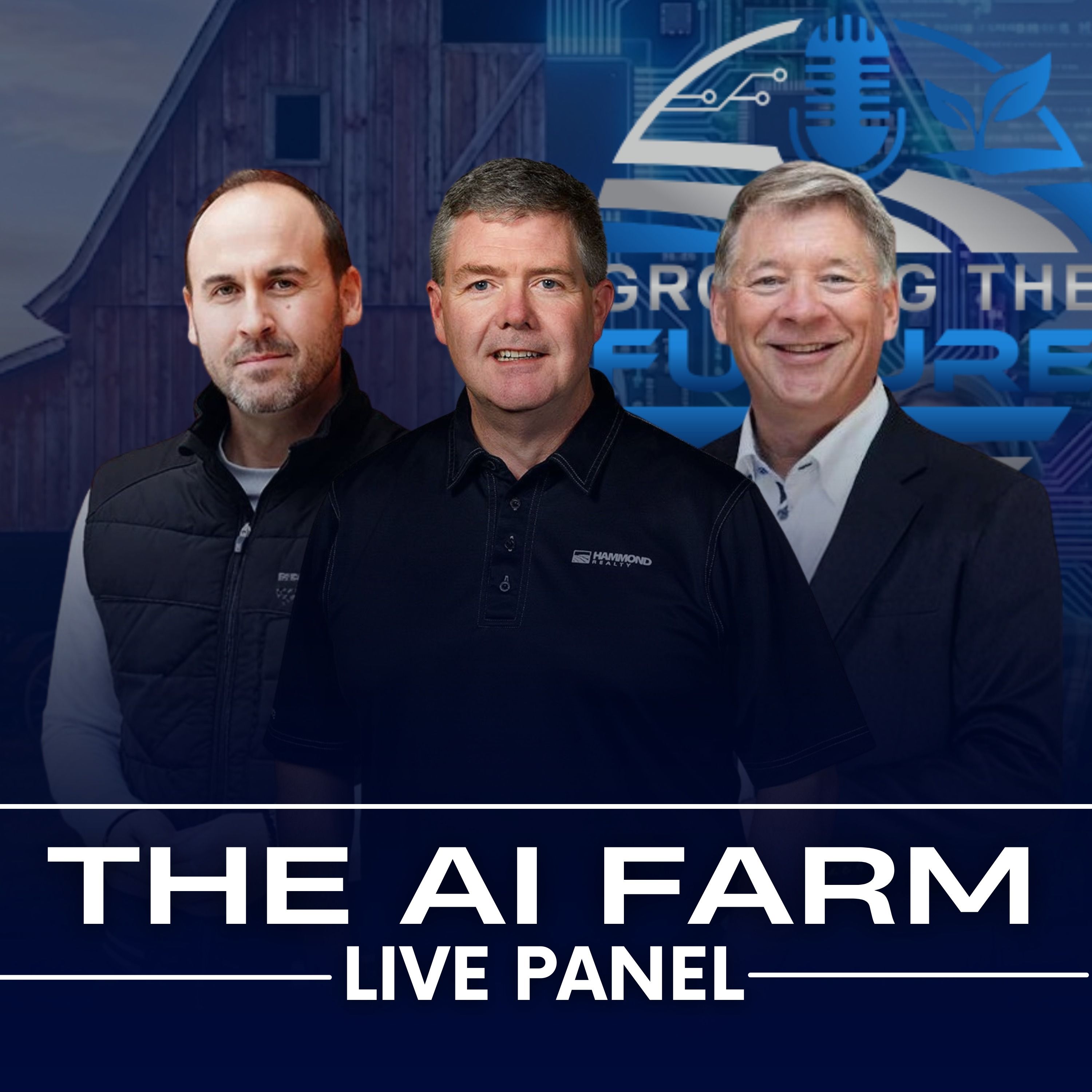
The steel-wheeled tractor was a fad once. So was the fax machine. Nobody's laughing at those now. AI is moving through agriculture whether the industry is ready or not. The global AI and agriculture market is approaching five billion dollars and growing at over 26% a year. Eighty percent of agribusinesses say they understand its potential. Only twenty percent have adopted it. And who's actually getting results? Closer to five percent. That gap is what this Growing the Future Productions live event is built to close. Dan Aberhart puts three of the most plugged-in AI power users in ag — Rob Saik, Tim Hammond, and Damon Johnson — in the same room for the first-ever episode of The AI Farm. No vendor pitches. No vague future-casting. Three people who are deep in this every single day. Audience vote at the end. Winner gets bragging rights. You get the ideas. Where AI Actually Disrupts Agriculture — And Where It Doesn't Rob Saik opens with a reframe: agriculture at the farm level ranks low on AI disruption — not because it's behind, but because farming is inherently hands-on and judgment-dependent. The bigger disruption is upstream, in realty, insurance, and the machinery sector. Prediction is where AI excels. Judgment still belongs to you. (00:07:40) — Rob walks through the tools he uses daily: Perplexity, Claude, Notebook LM, and a custom Dossier Builder that profiles anyone he's about to meet. His starter recommendation for producers new to AI: Perplexity. It's reference-based, cites its sources, and aggregates across multiple AI models. If you're perplexed about AI, that's your on-ramp. (00:21:07) — A Power Farm member built a complete grain marketing program by uploading his inventory and contracts into Claude. That's not a future possibility. That happened. Tim's Pick: A Custom GPT That Makes Decisions for Your Team Tim Hammond is in the top 1% of ChatGPT users globally — 26,500 messages, 800-plus threads in a single year. His big move: he fed 1,200 pages of regulatory knowledge into a custom GPT, locked it to that knowledge base only, and deployed it to his whole team. Now they ask the bot before they ask Tim. (00:23:14) — The framework from Jeff Woods' book The AI-Driven Leader: Context, Role, Interview, Task. Most people skip the Interview step. That's where AI surfaces your blind spots and assumptions before it gives you an answer. The farm application: 12,000 acres is the HR ceiling where most operations stall. AI helps you scale past it without adding headcount. Damon's Pick: A Full Farm Dashboard Built in 12 Minutes Damon Johnson — economist, active grain farmer, insurance builder — built a fully integrated farm management dashboard the night before this call. Six tabs. Google Maps field borders. Grain marketing scenarios. Input cost tracking. Seeding date calculator. Spray window tool. Twelve minutes. (00:38:00) — He uploaded years of historical farm data into a Claude project and prompted it to build what would previously have cost millions and years. His framing: Claude is now a prototype partner. Fail fast. Iterate. Build. (00:56:47) — He reads the exact prompt live: a grain marketing calculator for a 7,000-acre Saskatchewan farm, three marketing scenarios, net revenue comparison chart. Type it. Get it. The Poll Results — Where Producers Actually Are 19% haven't touched AI at all. 42% have played with ChatGPT but nothing on the operation. 27% use AI tools regularly for at least one part of their business. 10% have it built into multiple parts of the operation. (00:20:26) What's holding people back: a third don't know where to start. 17% don't trust the technology. 15% are worried about farm data being used. Also covered: Machine learning vs. AI explained without jargon (00:48:08). How to stop AI hallucinations (00:52:36). Drones, Starlink, and Goldman Sachs' $264 billion precision ag disruption number (00:54:24). Dan's live demo: using Claude inside Gmail to scrape 100-plus webinar registration emails and extract every question in seconds (00:46:20). And Whisper Flow — because typing is starting to feel like a fax machine. Final word from all three panelists: Start. Pick one pain point. Play with it. You'll find out what works. Featured in this episode: Dan Aberhart — Host, Growing the Future Productions Rob Saik — Founder and CEO, T1 Technology Corporation / Ag Advisor Pro Tim Hammond — Founder, Hammond Realty Damon Johnson — EVP, Global Ag Risk Solutions / Hub International Resources mentioned: Perplexity AI, Claude (claude.ai), Notebook LM, Whisper Flow, Grip farm management software, The AI-Driven Leader by Geoff Woods, Ag Advisor Pro More from Growing the Future: Podcast: growingthefuturepodcast.ca YouTube: Growing the Future Productions Ground Truth Daily: Available wherever you listen to podcasts Register for the Convergence Conference at convergence.ag and stay updated by subscribing to the Growing the Future Podcast at growingthefuturepodcast.ca.
Embed this episode
What this episode covers
Seventy percent of large-scale farms in developed countries are already using at least one form of AI — and the gap between the operations pulling ahead and the ones still dabbling is growing fast. Growing the Future Productions brings three of the sharpest AI power users in Canadian agriculture into the same room to share what they're actually doing, and hands the audience something rare: a straight answer on where to start.
Ready to play
The AI Farm
No transcript for this episode yet
Similar Episodes
No similar episodes found.
Similar Podcasts
No similar podcasts found.