
EPISODE · Feb 21, 2022 · 1H 56M
The Anglo-Sikh Wars Explained | Amarpal Singh
from The Story Isn’t Over: History from the Margins · host Ramblings of a Sikh
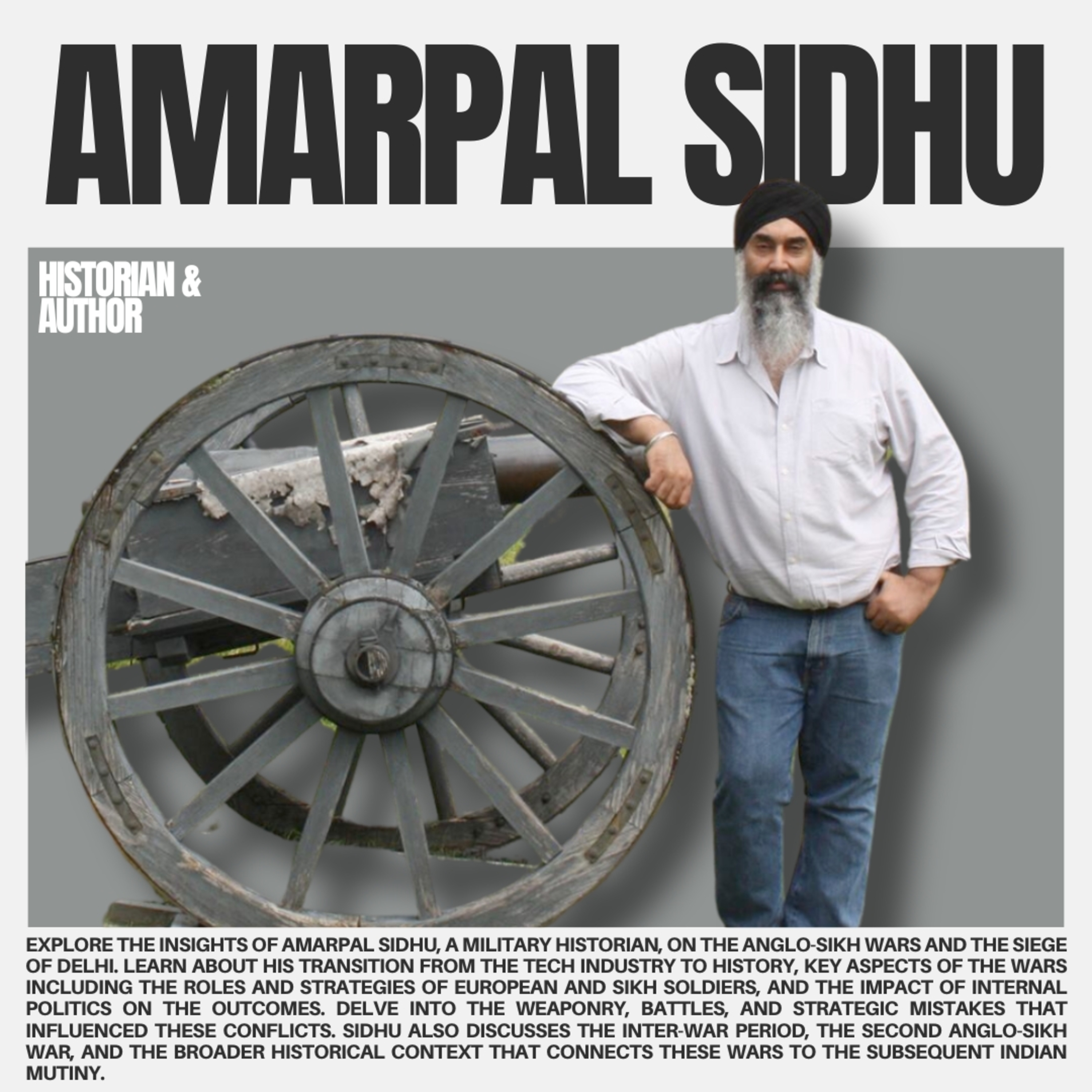
Today I have the pleasure to talk to Amarpal Sidhu, a software industry expert as well as a military historian. Amarpal has published two books focusing on the Anglo-Sikh Wars, the first being published in 2013 and the second in 2016, as well as a recent book, published in July this year, focusing on and titled, the ‘Siege of Delhi’. Amarpal has also appeared and collaborated on history programs for several TV channels. 00:00 - Introduction 00:28 - Upbringing, education and how you got to where you are today. 06:34 - 19th century books covering the Anglo-Sikh Wars 10:00 - Why was there a change from ‘The Sikh Wars’ to ‘The Anglo-Sikh Wars’? 12:58 - Does ‘Anglo-Sikh’ truly reflect the nature of those involved in the wars? 16:10 - Were there any European soldiers who fought on the side of the Lahore Darbar? 19:50 - Have you ever come across accounts of Sikh soldiers fighting on the side of the British? 21:25 - There is a generalised view that the Lahore Dabar had more soldiers, more guns, better suppliers and materials, and still lost, mainly due to internal treachery. To what extent is this true? 30:26 - If there had been generals such as Akali Phula Singh or Hari Singh Nalwa, would the Anglo-Sikh wars have panned out differently? 37:32 - Ultimately, is it due to the poor management of the Sikh Generals, such as Lal Singh and Tej Singh, that led to the Sikh demise? Even though, on paper, the Sikhs seemed to be the far superior side. 43:55 - Why were the Sikh armies setup with their backs against the river in some of the battles? 50:11 - What role do the European Generals play in the Anglo-Sikh Wars? 52:29 - What were the type of weapons used by the Sikh army & what level of industrialisation was present in Punjab to create these weapons? 58:26 - What was the role of the Phulkian Misl & the Royal House of Patiala? 01:00:33 - Would it be fair to say the Cis-Sutlej states were always at odds with the Lahore Darbar? 01:04:12 - Would it be fair to say that those who stayed neutral did so out of survival? 01:07:11 - What were the main reasons for the outbreak of the first Anglo-Sikh War? 01:14:00 - Now I know the main 5 battles that are focused on when discussing the first Anglo-Sikh War are Mudki, Ferozeshah, Baddowal, Aliwal and Sobraon. However, there are three minor battles, 2 before Mudki, which are Wadni Fort & Phillaur Fort, and one after Sobraon, which is the battle of Kangrah. How do these fit into the context of things and why are they not paid as much attention as the others? 01:19:51 - What occurs during the inter-war period & what is the role of Rani Jind? 01:30:00 - Just to clarify, is the 2nd Anglo-Sikh war an accident? 01:33:14 - The second Anglo-Sikh War is marked by four main engagements, Ramnuggar & Sadulpore, which are close and inconclusive contests, Chillianwala and Gujrat. Could you please explain what occurs at each battle & what occurs from one to the other? 01:43:31 - What is the fate of the Dogra brothers, Lal Singh, Tej Singh and Diwan Mulraj? 01:49:13 - Considering how close the Anglo-Sikh Wars are to the Mutiny, why is there a relaxed response from the Sikhs during the Mutiny? 01:55:22 - Conclusion
What this episode covers
Today I have the pleasure to talk to Amarpal Sidhu, a software industry expert as well as a military historian. Amarpal has published two books focusing on the Anglo-Sikh Wars, the first being published in 2013 and the second in 2016, as well as a recent book, published in July this year, focusing on and titled, the ‘Siege of Delhi’. Amarpal has also appeared and collaborated on history programs for several TV channels. 00:00 - Introduction 00:28 - Upbringing, education and how you got to where you are today. 06:34 - 19th century books covering the Anglo-Sikh Wars 10:00 - Why was there a change from ‘The Sikh Wars’ to ‘The Anglo-Sikh Wars’? 12:58 - Does ‘Anglo-Sikh’ truly reflect the nature of those involved in the wars? 16:10 - Were there any European soldiers who fought on the side of the Lahore Darbar? 19:50 - Have you ever come across accounts of Sikh soldiers fighting on the side of the British? 21:25 - There is a generalised view that the Lahore Dabar had more soldiers, more guns, better suppliers and materials, and still lost, mainly due to internal treachery. To what extent is this true? 30:26 - If there had been generals such as Akali Phula Singh or Hari Singh Nalwa, would the Anglo-Sikh wars have panned out differently? 37:32 - Ultimately, is it due to the poor management of the Sikh Generals, such as Lal Singh and Tej Singh, that led to the Sikh demise? Even though, on paper, the Sikhs seemed to be the far superior side. 43:55 - Why were the Sikh armies setup with their backs against the river in some of the battles? 50:11 - What role do the European Generals play in the Anglo-Sikh Wars? 52:29 - What were the type of weapons used by the Sikh army & what level of industrialisation was present in Punjab to create these weapons? 58:26 - What was the role of the Phulkian Misl & the Royal House of Patiala? 01:00:33 - Would it be fair to say the Cis-Sutlej states were always at odds with the Lahore Darbar? 01:04:12 - Would it be fair to say that those who stayed neutral did so out of survival? 01:07:11 - What were the main reasons for the outbreak of the first Anglo-Sikh War? 01:14:00 - Now I know the main 5 battles that are focused on when discussing the first Anglo-Sikh War are Mudki, Ferozeshah, Baddowal, Aliwal and Sobraon. However, there are three minor battles, 2 before Mudki, which are Wadni Fort & Phillaur Fort, and one after Sobraon, which is the battle of Kangrah. How do these fit into the context of things and why are they not paid as much attention as the others? 01:19:51 - What occurs during the inter-war period & what is the role of Rani Jind? 01:30:00 - Just to clarify, is the 2nd Anglo-Sikh war an accident? 01:33:14 - The second Anglo-Sikh War is marked by four main engagements, Ramnuggar & Sadulpore, which are close and inconclusive contests, Chillianwala and Gujrat. Could you please explain what occurs at each battle & what occurs from one to the other? 01:43:31 - What is the fate of the Dogra brothers, Lal Singh, Tej Singh and Diwan Mulraj? 01:49:13 - Considering how close the Anglo-Sikh Wars are to the Mutiny, why is there a relaxed response from the Sikhs during the Mutiny? 01:55:22 - Conclusion
NOW PLAYING
The Anglo-Sikh Wars Explained | Amarpal Singh
No transcript for this episode yet
Similar Episodes
Dec 5, 2025 ·50m
Oct 9, 2025 ·33m
Oct 3, 2025 ·40m
Sep 11, 2025 ·31m
Aug 27, 2025 ·39m
Aug 18, 2025 ·54m