
EPISODE · Nov 21, 2024 · 13 MIN
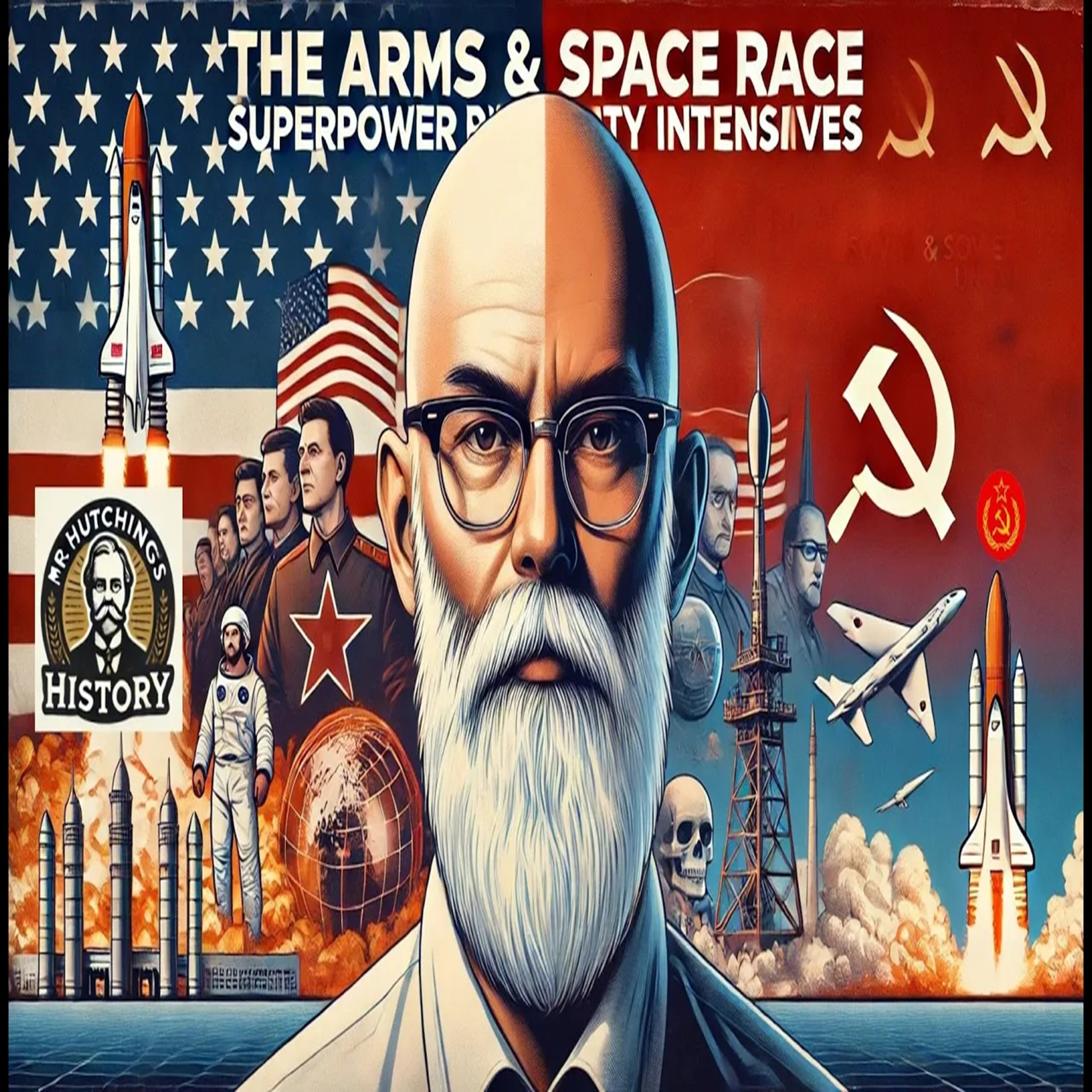
The Arms and Space Race—Superpower Rivalry Intensifies
from Mr. Hutchings History · host Produced, created, and written by Harold M. Hutchings
Welcome to Mr. Hutchings History! In today’s episode, we explore the intense arms and space race between the US and USSR up to 1959 and its impact on Cold War relations. These technological and military competitions not only showcased each superpower’s strengths but also heightened tensions that shaped global politics.Key topics covered:Eisenhower’s ‘Open Skies’ proposal and its rejection by KhrushchevThe discovery of the ‘missile gap’ and the U-2 spy plane flightsThe launch of Sputnik and its role in accelerating the space raceThe 1959 Kitchen Debate between Nixon and KhrushchevThe significance of the U-2 incident and the breakdown of US-Soviet diplomacyMcNamara’s findings on the missile gap and Soviet advancementsJoin us as we examine how the arms and space race not only fueled Cold War tensions but also influenced global politics in the 20th century. Was it a race for peace, or was the threat of nuclear war always just a step away?#Paper2WorldHistory #ColdWar #ArmsRace #SpaceRace #SuperpowerRivalry #USSR #USColdWarPolicy #Sputnik #MissileGap #GenevaSummit #OpenSkies #U2Incident #Khrushchev #Eisenhower #NuclearDeterrence #ColdWarDiplomacy #CulturalColdWarWorks CitedGaddis, John Lewis. The Cold War: A New History. Penguin, 2006.LaFeber, Walter. America, Russia, and the Cold War: 1945-2006. McGraw-Hill, 2008.Schlesinger, Arthur Jr. The Origins of the Cold War. Foreign Affairs, 1967.Zubok, Vladislav. A Failed Empire: The Soviet Union in the Cold War from Stalin to Gorbachev. University of North Carolina Press, 2007.Chapters(0:00) Introduction – The Cold War Heats UpHow the arms and space race fueled superpower tensions.(0:31) Perception vs. Reality – The Cold War MindsetWhy miscalculations and fear drove the arms race.(1:00) Eisenhower’s Open Skies Proposal (1955)A missed opportunity for transparency and trust.(1:52) The Missile Gap – A Fear-Driven Illusion?How U.S. intelligence fueled a costly nuclear buildup.(2:57) U-2 Spy Planes and Strategic DilemmasSecret reconnaissance vs. the risk of escalation.(3:19) Sputnik (1957) – A Shock to the WestHow the Soviet space victory triggered U.S. panic.(4:01) U.S. Response – NASA and Education ReformThe birth of NASA and a renewed focus on science.(5:00) The Kitchen Debate (1959) – Ideology in ActionNixon vs. Khrushchev in a battle of consumerism vs. communism.(6:09) The Camp David Summit (1959) – A Brief Thaw?Did diplomacy offer hope for easing Cold War tensions?(7:01) The U-2 Crisis (1960) – Trust ShatteredHow a downed spy plane destroyed diplomatic progress.(8:02) Historiography – Orthodox vs. Revisionist ViewsWho was to blame for escalating tensions?(9:25) The Cold War’s Enduring LegacyLessons from the arms race and its impact today.(10:15) Conclusion – The Power of Critical ThinkingHow misinformation and fear still shape global politics.
What this episode covers
Welcome to Mr. Hutchings History! In today’s episode, we explore the intense arms and space race between the US and USSR up to 1959 and its impact on Cold War relations. These technological and military competitions not only showcased each superpower’s strengths but also heightened tensions that shaped global politics.Key topics covered:Eisenhower’s ‘Open Skies’ proposal and its rejection by KhrushchevThe discovery of the ‘missile gap’ and the U-2 spy plane flightsThe launch of Sputnik and its role in accelerating the space raceThe 1959 Kitchen Debate between Nixon and KhrushchevThe significance of the U-2 incident and the breakdown of US-Soviet diplomacyMcNamara’s findings on the missile gap and Soviet advancementsJoin us as we examine how the arms and space race not only fueled Cold War tensions but also influenced global politics in the 20th century. Was it a race for peace, or was the threat of nuclear war always just a step away?#Paper2WorldHistory #ColdWar #ArmsRace #SpaceRace #SuperpowerRivalry #USSR #USColdWarPolicy #Sputnik #MissileGap #GenevaSummit #OpenSkies #U2Incident #Khrushchev #Eisenhower #NuclearDeterrence #ColdWarDiplomacy #CulturalColdWarWorks CitedGaddis, John Lewis. The Cold War: A New History. Penguin, 2006.LaFeber, Walter. America, Russia, and the Cold War: 1945-2006. McGraw-Hill, 2008.Schlesinger, Arthur Jr. The Origins of the Cold War. Foreign Affairs, 1967.Zubok, Vladislav. A Failed Empire: The Soviet Union in the Cold War from Stalin to Gorbachev. University of North Carolina Press, 2007.Chapters(0:00) Introduction – The Cold War Heats UpHow the arms and space race fueled superpower tensions.(0:31) Perception vs. Reality – The Cold War MindsetWhy miscalculations and fear drove the arms race.(1:00) Eisenhower’s Open Skies Proposal (1955)A missed opportunity for transparency and trust.(1:52) The Missile Gap – A Fear-Driven Illusion?How U.S. intelligence fueled a costly nuclear buildup.(2:57) U-2 Spy Planes and Strategic DilemmasSecret reconnaissance vs. the risk of escalation.(3:19) Sputnik (1957) – A Shock to the WestHow the Soviet space victory triggered U.S. panic.(4:01) U.S. Response – NASA and Education ReformThe birth of NASA and a renewed focus on science.(5:00) The Kitchen Debate (1959) – Ideology in ActionNixon vs. Khrushchev in a battle of consumerism vs. communism.(6:09) The Camp David Summit (1959) – A Brief Thaw?Did diplomacy offer hope for easing Cold War tensions?(7:01) The U-2 Crisis (1960) – Trust ShatteredHow a downed spy plane destroyed diplomatic progress.(8:02) Historiography – Orthodox vs. Revisionist ViewsWho was to blame for escalating tensions?(9:25) The Cold War’s Enduring LegacyLessons from the arms race and its impact today.(10:15) Conclusion – The Power of Critical ThinkingHow misinformation and fear still shape global politics.
NOW PLAYING
The Arms and Space Race—Superpower Rivalry Intensifies
No transcript for this episode yet
Similar Episodes
Dec 24, 2024 ·48m
Nov 16, 2024 ·23m
Oct 27, 2024 ·41m
Oct 27, 2024 ·26m
Oct 27, 2024 ·37m
Oct 27, 2024 ·35m