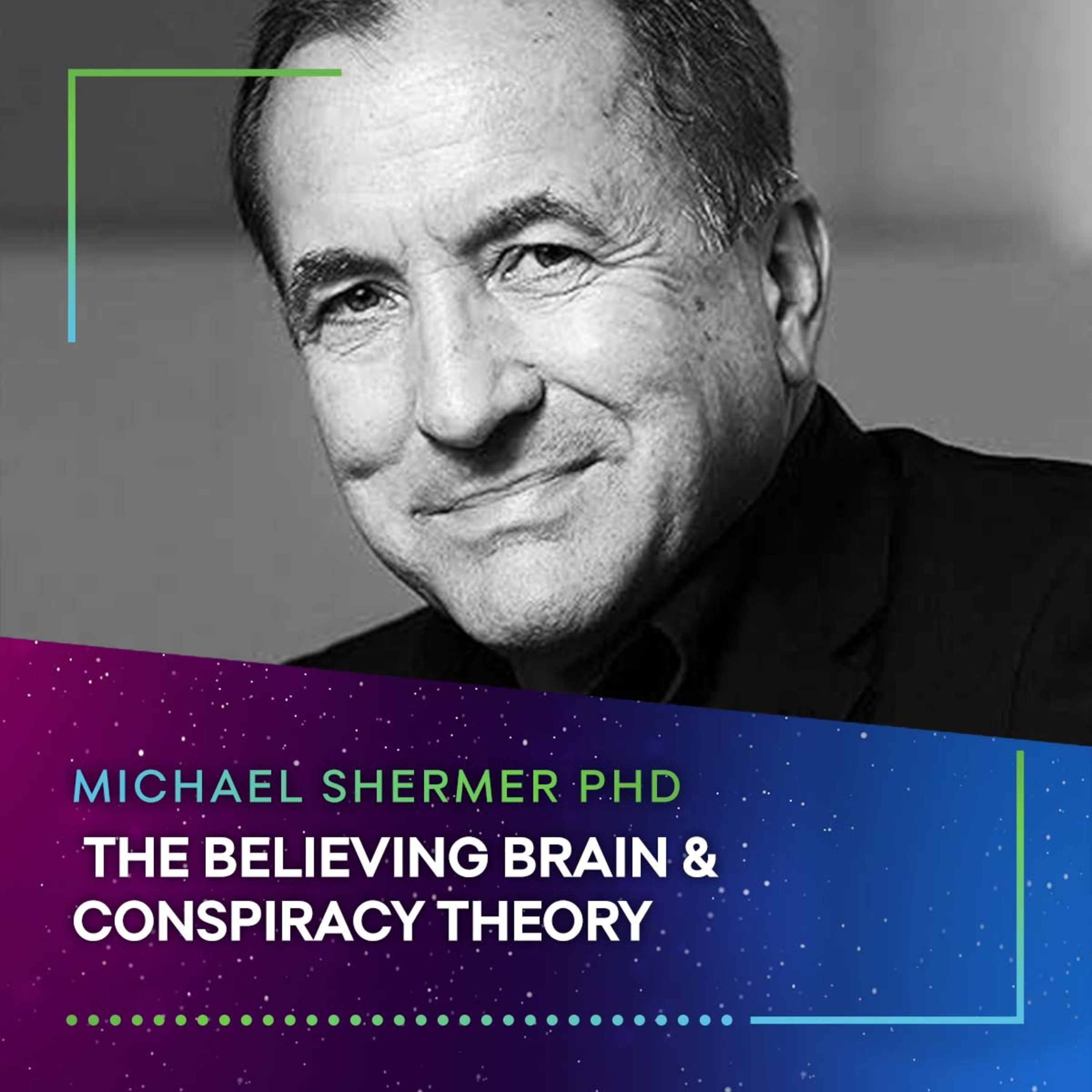
THE BELIEVING BRAIN & CONSPIRACY THEORY - Michael Shermer PHD #58 episode artwork

EPISODE · Jun 24, 2024 · 2H 3M

THE BELIEVING BRAIN & CONSPIRACY THEORY - Michael Shermer PHD #58

from Chasing Consciousness · host Freddy Drabble

Why do we have the tendency to believe things when they may not be true? Why do we project patterns, agency and meaning onto the world when sometimes there is none? How can we consider the probabilities of conspiracies to identify the ones that may be true? How do we encourage brave journalism that calls out conspiracies even by powerful institutions, in spite of the pejorative term ‘conspiracy theorist’?Today we have the uncomfortable topic of how our brains often believe things which aren’t true. The topic fits perfectly with our theme for series 4 of Self-transcendence vs Self-delusion. Our innate ability to notice patterns in systems, assign agency and find meaning in the world are among the reasons we’ve evolved to become so successful at predicting, understanding and creating meaningful collaborations in the world. But the issue with these abilities is that we might make the mistake of thinking what the brain assigns to the world for our own survival, is necessarily true of the world itself. Sure our brains do track the truth but truth is not always what’s needed for survival; so issues like negativity bias, confirmation bias and creating narrative stories that conveniently map onto our existing world view have become a deeply engrained part of our society. Add to this modern phenomena like the siloing of information by the internet into small echo chambers where only like minds come together; algorithmic amplification of memes led by the internet business model of “maximising engagement”; and decreasing trust in institutions, as economic inequality in the world increases exponentially, and you get a perfect storm of clashing beliefs about the truth.Fortunately, our guest today is one of the most established sceptical voices in science who reminds us that we need to track closely the difference between what can be collectively confirmed to be true, and what our brains project to be true from the inside out. He is of course, New York Times best selling author and founding publisher of Skeptic magazine Michael Shermer; he wrote for 18 years for the Scientific American. He’s written nine books but today we’re going to focus on his books “The Believing Brain” and his new release “Conspiracy: Why the rational believe the irrational”.What we discuss:00:00 Intro07:00 The philosophy of scepticism.08:45 ‘Default to truth’15:40 Moral truth VS moral relativism.19:00 Scientific revolutions overturning consensus.24:30 ‘The Believing Brain’.25:40 The ability to see patterns in the chaos, and assign agency to them.26:50 Evolution selects for assuming more things are real than not, just in case.30:10 Bayesian inference: levels of confidence in being right or wrong.32:40 ‘Agencicity’, impugning patterns with intentional agency.33:40 Most things happen randomly, and can’t be predicted.41:10 Assigning meaning to patterns in nature.43:50 Maslow’s Hierarchy of Needs.44:40 Teleology: goal directness in life.47:50 Dennet - the intentional stance48:50 Confirmation bias.54:00 Algorithmic amplification.57:40 There are many real conspiracies.01:00:20 Tribal, proxy and paranoid conspiracism.01:03:35 Being overly suspicious - negativity bias.01:07:50 Critical thinking - how not to throw out the baby with the bathwater.01:16:50 Conflict of interest in media - shareholders vs stakeholder interest.01:18:40 The pejorative term ‘conspiracy theorist’ demotivating brave journalism.01:26:30 Reductionism and determinism evaluated.01:32:20 Remote Viewing and psi phenomena: sceptics view.01:46:30 The UFO phenomena: sceptics view.References:Michael Shermer, “The Believing Brain”Michael Shermer, “Conspiracy”Michael Shermer, “The Moral Arc”Scepticism 101 course: How to think like a scientistRemote viewing Stargate Program documentary “Third Eye Spies” Helene Cooper, Ralph Blumenthal, and Leslie Kean - ‘Glowing Auras and ‘Black Money’: The Pentagon’s Mysterious U.F.O. Program’, NYTimes article

Why do we have the tendency to believe things when they may not be true? Why do we project patterns, agency and meaning onto the world when sometimes there is none? How can we consider the probabilities of conspiracies to identify the ones that may be true? How do we encourage brave journalism that calls out conspiracies even by powerful institutions, in spite of the pejorative term ‘conspiracy theorist’?Today we have the uncomfortable topic of how our brains often believe things which aren’t true. The topic fits perfectly with our theme for series 4 of Self-transcendence vs Self-delusion. Our innate ability to notice patterns in systems, assign agency and find meaning in the world are among the reasons we’ve evolved to become so successful at predicting, understanding and creating meaningful collaborations in the world. But the issue with these abilities is that we might make the mistake of thinking what the brain assigns to the world for our own survival, is necessarily true of the world itself. Sure our brains do track the truth but truth is not always what’s needed for survival; so issues like negativity bias, confirmation bias and creating narrative stories that conveniently map onto our existing world view have become a deeply engrained part of our society. Add to this modern phenomena like the siloing of information by the internet into small echo chambers where only like minds come together; algorithmic amplification of memes led by the internet business model of “maximising engagement”; and decreasing trust in institutions, as economic inequality in the world increases exponentially, and you get a perfect storm of clashing beliefs about the truth.Fortunately, our guest today is one of the most established sceptical voices in science who reminds us that we need to track closely the difference between what can be collectively confirmed to be true, and what our brains project to be true from the inside out. He is of course, New York Times best selling author and founding publisher of Skeptic magazine Michael Shermer; he wrote for 18 years for the Scientific American. He’s written nine books but today we’re going to focus on his books “The Believing Brain” and his new release “Conspiracy: Why the rational believe the irrational”.What we discuss:00:00 Intro07:00 The philosophy of scepticism.08:45 ‘Default to truth’15:40 Moral truth VS moral relativism.19:00 Scientific revolutions overturning consensus.24:30 ‘The Believing Brain’.25:40 The ability to see patterns in the chaos, and assign agency to them.26:50 Evolution selects for assuming more things are real than not, just in case.30:10 Bayesian inference: levels of confidence in being right or wrong.32:40 ‘Agencicity’, impugning patterns with intentional agency.33:40 Most things happen randomly, and can’t be predicted.41:10 Assigning meaning to patterns in nature.43:50 Maslow’s Hierarchy of Needs.44:40 Teleology: goal directness in life.47:50 Dennet - the intentional stance48:50 Confirmation bias.54:00 Algorithmic amplification.57:40 There are many real conspiracies.01:00:20 Tribal, proxy and paranoid conspiracism.01:03:35 Being overly suspicious - negativity bias.01:07:50 Critical thinking - how not to throw out the baby with the bathwater.01:16:50 Conflict of interest in media - shareholders vs stakeholder interest.01:18:40 The pejorative term ‘conspiracy theorist’ demotivating brave journalism.01:26:30 Reductionism and determinism evaluated.01:32:20 Remote Viewing and psi phenomena: sceptics view.01:46:30 The UFO phenomena: sceptics view.References:Michael Shermer, “The Believing Brain”Michael Shermer, “Conspiracy”Michael Shermer, “The Moral Arc”Scepticism 101 course: How to think like a scientistRemote viewing Stargate Program documentary “Third Eye Spies” Helene Cooper, Ralph Blumenthal, and Leslie Kean - ‘Glowing Auras and ‘Black Money’: The Pentagon’s Mysterious U.F.O. Program’, NYTimes article

NOW PLAYING

THE BELIEVING BRAIN & CONSPIRACY THEORY - Michael Shermer PHD #58

0:00 2:03:04

No transcript for this episode yet

We transcribe on demand. Request one and we'll notify you when it's ready — usually under 10 minutes.

Consciousness with Naskar Abhijit Naskar Official Podcast of Celebrated Neuroscientist, Bestselling Author and Peace Advocate Abhijit Naskar Heart Centered Revolution | Kundalini Yoga + Conscious Living Jen & Ramtin Pourvasei Welcome to the Heart Centered Revolution podcast! We are Jen and Ramtin Pourvasei, and we aim to uplift and inspire you by sharing wisdom and techniques from Kudnalini Yoga and other consciousness practices. Listen to learn tools to feel connected to your true self, and to understand what it means to be a spiritual being having a human experience. Each episode ends with a short pranayam, or breathing meditation. Learn more at www.heartcenteredrevolution.com. ChatGTM: Revolutionizing Restaurant Tech & Go-To-Market Strategies Michael Beck Welcome to ChatGTM by Ink Tank GTM, where tech innovation, strategic clarity, and caffeine-fueled chaos collide.Hosted by the dynamic duo of Michael Beck and Chad Horn, this isn’t just a podcast. It’s a pressure cooker for big ideas and practical genius. Michael is a human brainstorm in sneakers, equal parts espresso and electric current. Chad is the philosophical anchor, the strategist who makes sure the rocket ship remembers gravity.They don’t just talk shop. They crack open the engine room of business, startups, restaurants, retail, all of it and tinker until it hums. From AI-powered ordering systems to the operational alchemy that turns good ideas into great companies, this is where high-octane vision meets real-world execution.Guests? Imagine if Elon Musk and Anthony Bourdain had a dinner party. Bold thinkers, mad geniuses, and pragmatic disruptors drop in to turn conventional wisdom inside out with a wink and a war story.If you're a founder chasing scale, a builder breaking The Alchemical Cosmos Podcast Candice Tune in for profound cosmic talk with The Alchemical Cosmos Podcast. From astrology and the esoteric to consciousness and alchemy, we'll explore a range of topics all focused on self-growth and awareness with a dose of accountability.

Frequently Asked Questions

How long is this episode of Chasing Consciousness?

This episode is 2 hours and 3 minutes long.

When was this Chasing Consciousness episode published?

This episode was published on June 24, 2024.

What is this episode about?

Why do we have the tendency to believe things when they may not be true? Why do we project patterns, agency and meaning onto the world when sometimes there is none? How can we consider the probabilities of conspiracies to identify the ones that may...

Can I download this Chasing Consciousness episode?

Yes, you can download this episode by clicking the download button on the episode player, or subscribe to the podcast in your preferred podcast app for automatic downloads.
URL copied to clipboard!