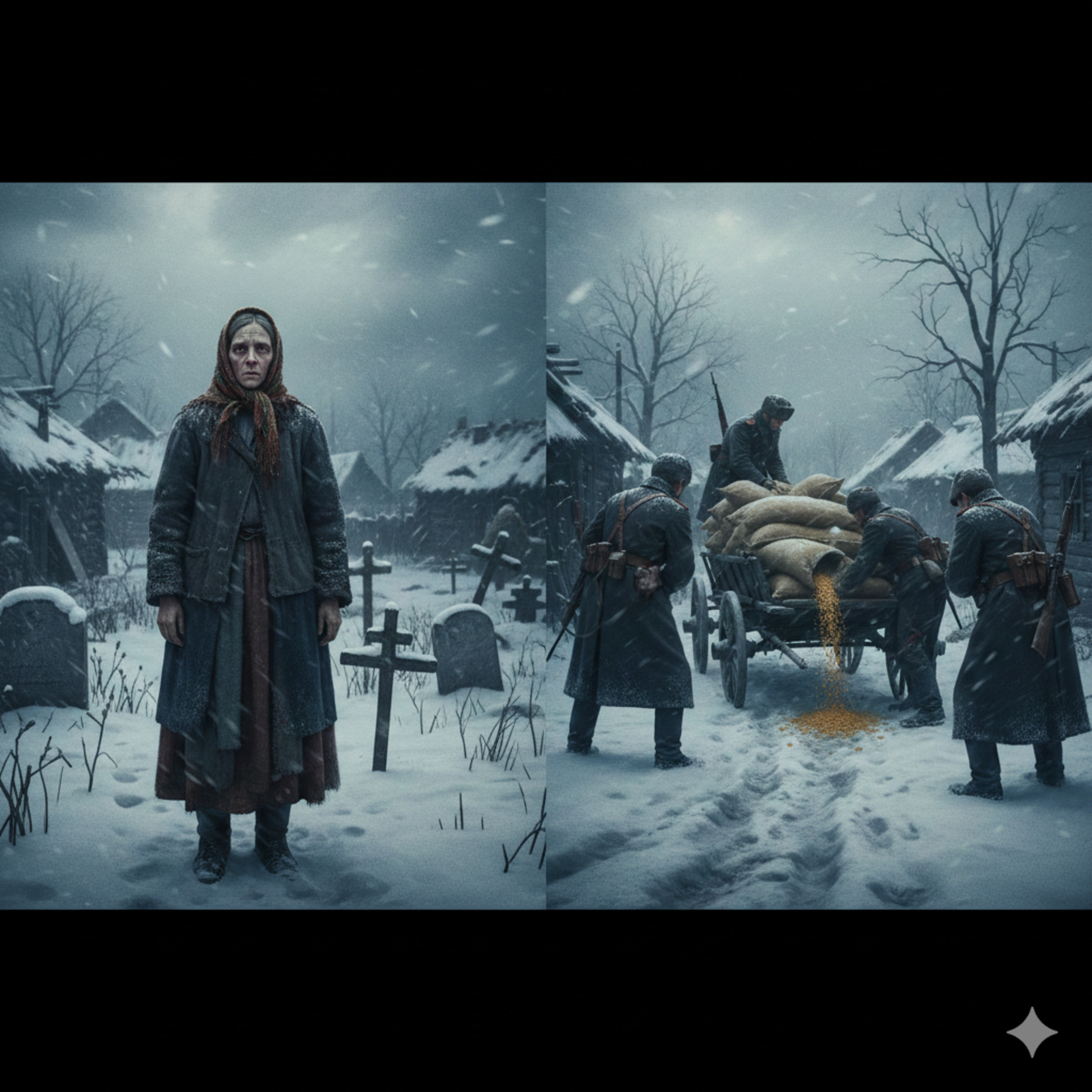
The Breadbasket Graveyard: Ukraine 1933 (Holodomor — Starvation as a Weapon) Pt1. episode artwork

EPISODE · Jan 26, 2026 · 12 MIN

The Breadbasket Graveyard: Ukraine 1933 (Holodomor — Starvation as a Weapon) Pt1.

from Time Machine Diaries: Ancient Civilizations & Future World Predictions. · host CNC Productions

In this gut-wrenching multi-part episode of Time Machine Diaries, Cullen dives into one of the darkest crimes of the 20th century: the Holodomor, the Ukrainian starvation of 1932–1933.This was not a natural famine. It was engineered.Through forced collectivization, impossible grain quotas, confiscation brigades, blacklisted villages, and sealed borders, Stalin’s Soviet state turned food into a weapon and transformed Ukraine, Europe’s breadbasket, into a graveyard.This episode breaks down how the system worked step-by-step, what starvation looked like in real villages, how survival was criminalized, and how propaganda tried to bury the truth for decades. It also makes uncomfortable modern comparisons to how power still controls people through resources, media narratives, and bureaucracy.This isn’t just history.It’s a warning.BooksApplebaum, Anne. Red Famine: Stalin’s War on Ukraine. Doubleday, 2017.Conquest, Robert. The Harvest of Sorrow: Soviet Collectivization and the Terror-Famine. Oxford UP, 1986.Davies, R. W., and Stephen G. Wheatcroft. The Years of Hunger: Soviet Agriculture, 1931–1933. Palgrave Macmillan, 2004.Fitzpatrick, Sheila. Stalin’s Peasants: Resistance and Survival in the Russian Village after Collectivization. Oxford UP, 1994.Graziosi, Andrea. The Great Soviet Peasant War: Bolsheviks and Peasants, 1917–1933. Harvard Ukrainian Research Institute, 1996.Hosking, Geoffrey. Rulers and Victims: The Russians in the Soviet Union. Harvard UP, 2006.Marples, David R. Heroes and Villains: Creating National History in Contemporary Ukraine. Central European UP, 2007.Snyder, Timothy. Bloodlands: Europe Between Hitler and Stalin. Basic Books, 2010.Viola, Lynne. The Unknown Gulag: The Lost World of Stalin’s Special Settlements. Oxford UP, 2007.Academic / Research CollectionsKulchytsky, Stanislav. “The Holodomor of 1932–33 as Genocide.” Nationalities Papers, Cambridge UP, various issues/chapters.Plokhy, Serhii. The Gates of Europe: A History of Ukraine. Basic Books, 2015.Subtelny, Orest. Ukraine: A History. U of Toronto P, 2009.Primary Sources / Contemporary ReportingThe Gareth Jones and Malcolm Muggeridge famine reporting (1933) — published dispatches and archival reprints in various collections.Soviet archival documents and grain procurement records (commonly cited in Davies & Wheatcroft; Applebaum).Documentaries / FilmHolodomor: Ukraine’s Genocide of 1932–1933. (various versions; commonly distributed in educational releases).The Soviet Story. Directed by Edvīns Šnore, 2008.Harvest of Despair: The 1932–33 Famine in Ukraine. Directed by Slavko Nowytski, 1984.Museums / Institutions (Great for show notes credibility)Holodomor Research and Education Consortium (HREC).National Museum of the Holodomor-Genocide (Kyiv).U.S. Commission on the Ukraine Famine (Congressional commission report materials).

In this gut-wrenching multi-part episode of Time Machine Diaries, Cullen dives into one of the darkest crimes of the 20th century: the Holodomor, the Ukrainian starvation of 1932–1933.This was not a natural famine. It was engineered.Through forced collectivization, impossible grain quotas, confiscation brigades, blacklisted villages, and sealed borders, Stalin’s Soviet state turned food into a weapon and transformed Ukraine, Europe’s breadbasket, into a graveyard.This episode breaks down how the system worked step-by-step, what starvation looked like in real villages, how survival was criminalized, and how propaganda tried to bury the truth for decades. It also makes uncomfortable modern comparisons to how power still controls people through resources, media narratives, and bureaucracy.This isn’t just history.It’s a warning.BooksApplebaum, Anne. Red Famine: Stalin’s War on Ukraine. Doubleday, 2017.Conquest, Robert. The Harvest of Sorrow: Soviet Collectivization and the Terror-Famine. Oxford UP, 1986.Davies, R. W., and Stephen G. Wheatcroft. The Years of Hunger: Soviet Agriculture, 1931–1933. Palgrave Macmillan, 2004.Fitzpatrick, Sheila. Stalin’s Peasants: Resistance and Survival in the Russian Village after Collectivization. Oxford UP, 1994.Graziosi, Andrea. The Great Soviet Peasant War: Bolsheviks and Peasants, 1917–1933. Harvard Ukrainian Research Institute, 1996.Hosking, Geoffrey. Rulers and Victims: The Russians in the Soviet Union. Harvard UP, 2006.Marples, David R. Heroes and Villains: Creating National History in Contemporary Ukraine. Central European UP, 2007.Snyder, Timothy. Bloodlands: Europe Between Hitler and Stalin. Basic Books, 2010.Viola, Lynne. The Unknown Gulag: The Lost World of Stalin’s Special Settlements. Oxford UP, 2007.Academic / Research CollectionsKulchytsky, Stanislav. “The Holodomor of 1932–33 as Genocide.” Nationalities Papers, Cambridge UP, various issues/chapters.Plokhy, Serhii. The Gates of Europe: A History of Ukraine. Basic Books, 2015.Subtelny, Orest. Ukraine: A History. U of Toronto P, 2009.Primary Sources / Contemporary ReportingThe Gareth Jones and Malcolm Muggeridge famine reporting (1933) — published dispatches and archival reprints in various collections.Soviet archival documents and grain procurement records (commonly cited in Davies & Wheatcroft; Applebaum).Documentaries / FilmHolodomor: Ukraine’s Genocide of 1932–1933. (various versions; commonly distributed in educational releases).The Soviet Story. Directed by Edvīns Šnore, 2008.Harvest of Despair: The 1932–33 Famine in Ukraine. Directed by Slavko Nowytski, 1984.Museums / Institutions (Great for show notes credibility)Holodomor Research and Education Consortium (HREC).National Museum of the Holodomor-Genocide (Kyiv).U.S. Commission on the Ukraine Famine (Congressional commission report materials).

NOW PLAYING

The Breadbasket Graveyard: Ukraine 1933 (Holodomor — Starvation as a Weapon) Pt1.

0:00 12:17

No transcript for this episode yet

We transcribe on demand. Request one and we'll notify you when it's ready — usually under 10 minutes.

No similar episodes found.

No similar podcasts found.

Frequently Asked Questions

How long is this episode of Time Machine Diaries: Ancient Civilizations & Future World Predictions.?

This episode is 12 minutes long.

When was this Time Machine Diaries: Ancient Civilizations & Future World Predictions. episode published?

This episode was published on January 26, 2026.

What is this episode about?

In this gut-wrenching multi-part episode of Time Machine Diaries, Cullen dives into one of the darkest crimes of the 20th century: the Holodomor, the Ukrainian starvation of 1932–1933.This was not a natural famine. It was engineered.Through forced...

Can I download this Time Machine Diaries: Ancient Civilizations & Future World Predictions. episode?

Yes, you can download this episode by clicking the download button on the episode player, or subscribe to the podcast in your preferred podcast app for automatic downloads.
URL copied to clipboard!