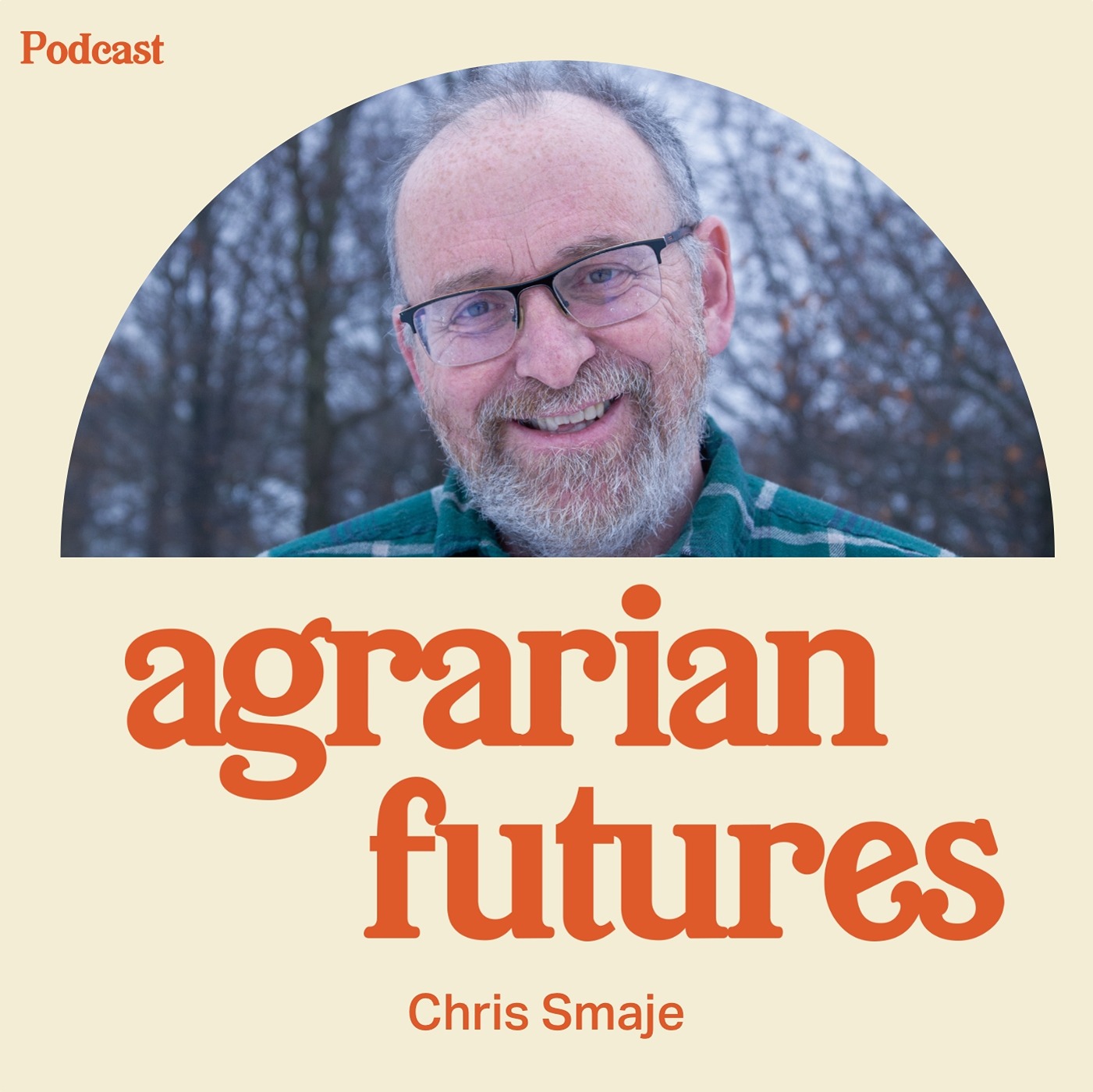
The Case Against Techno-Fixes with Chris Smaje episode artwork

EPISODE · Jan 8, 2025 · 46 MIN

The Case Against Techno-Fixes with Chris Smaje

from Agrarian Futures · host Agrarian Futures

In the face of climate change and biodiversity loss, the solutions we hear the most are technological ones - many of which mirror the economic and philosophical approaches that precipitated these crises in the first place. But what if that vision is flawed? Chris Smaje, author of Saying NO to a Farm-Free Future, challenges the dominant eco-modernist philosophy head-on. He critiques its reliance on techno-fixes—not just on technological grounds, but also economic, political, and spiritual ones.In this episode, Chris shares an alternative vision: a localist, agro-ecological approach to modern agriculture, rooted in self-provisioning for our basic needs and leveraging natural cycles instead of hyper-technological systems. It’s a vision that reconnects us to the land, promotes food sovereignty, and rethinks what a feasible and fulfilling future could look like.In this episode, we dive into: Why he wrote Saying NO to a Farm-Free Future, inspired by a critique of prominent environmental and agricultural thinker George Monbiot. What our environmental crises reveal about the deeper flaws in our econmic systems. How industrial agriculture’s obsession with efficiency undermines ecological and social resilience. The ecological work of animals and why they’re vital to sustainable farming systems. The drive toward urbanism and the assumptions—often misguided—about its benefits for the planet. Reimagining quality of life beyond financial measures. And much more…More about Chris:Chris Smaje helps run a small farm in Somerset, England and has worked as a commercial vegetable grower and an academic social scientist. He’s recently published two books, A Small Farm Future (2020) and Saying NO to a Farm-Free Future (2023). He’s currently at work on a third – Lights for a Dark Age – all published by Chelsea Green.Agrarian Futures is produced by Alexandre Miller, who also wrote our theme song. This episode was edited by Drew O’Doherty.

In the face of climate change and biodiversity loss, the solutions we hear the most are technological ones - many of which mirror the economic and philosophical approaches that precipitated these crises in the first place. But what if that vision is flawed? Chris Smaje, author of Saying NO to a Farm-Free Future, challenges the dominant eco-modernist philosophy head-on. He critiques its reliance on techno-fixes—not just on technological grounds, but also economic, political, and spiritual ones. In this episode, Chris shares an alternative vision: a localist, agro-ecological approach to modern agriculture, rooted in self-provisioning for our basic needs and leveraging natural cycles instead of hyper-technological systems. It's a vision that reconnects us to the land, promotes food sovereignty, and rethinks what a feasible and fulfilling future could look like. In this episode, we dive into: * Why he wrote Saying NO to a Farm-Free Future, inspired by a critique of prominent environmental and agricultural thinker George Monbiot. * What our environmental crises reveal about the deeper flaws in our econmic systems. * How industrial agriculture's obsession with efficiency undermines ecological and social resilience. * The ecological work of animals and why they're vital to sustainable farming systems. * The drive toward urbanism and the assumptions—often misguided—about its benefits for the planet. * Reimagining quality of life beyond financial measures. * And much more… More about Chris [https://chrissmaje.com/]: Chris Smaje helps run a small farm in Somerset, England and has worked as a commercial vegetable grower and an academic social scientist. He's recently published two books, A Small Farm Future (2020) and Saying NO to a Farm-Free Future (2023). He's currently at work on a third – Lights for a Dark Age – all published by Chelsea Green. Agrarian Futures is produced by Alexandre Miller, who also wrote our theme song. This episode was edited by Drew O'Doherty.

NOW PLAYING

The Case Against Techno-Fixes with Chris Smaje

0:00 46:06

No transcript for this episode yet

We transcribe on demand. Request one and we'll notify you when it's ready — usually under 10 minutes.

Soft, Earthen Futures Storywork Studio Soft, Earthen Futures is a podcast about imagining and crafting a more whole world. We explore what it means to stand at the threshold between what has been and what is trying to emerge, tending to that in-between space, listening for what the earth is dreaming through us, and giving those visions form. This show is for wild-hearted creatives, entrepreneurs, and visionaries. Hosted by founder, story doula, and eco-somatic depth guide, Daje Aloh. What Needs to Get Done – Right Now Its-all-here This is the moment where futures are forged. Where men rise by doing what others delay.So I ask: What needs to get done—right now? The tastylive network tastytrade The tastylive network teaches investors innovative, simple ways to trade stocks, options, and futures, take advantage of market volatility and build a successful portfolio. Tom Sosnoff leads an irreverent and playful band of floor traders who are showing America a new way to quickly find low risk, high return strategies in bullish, bearish and sideways markets. Ray Dalio Academy of Achievement Ray Dalio is the founder and owner of Bridgewater Associates, the world's largest and richest hedge fund. The firm manages approximately $130 billion in global investments for institutional clients including foreign governments and central banks, pension funds, university endowments and charitable foundations. The son of a jazz musician, Dalio began investing at the age of 12 when he bought shares of Northeast Airlines for $300, tripling his investment when the airline merged with another company. After completing his education at Long Island University and Harvard Business School, Dalio worked on the floor of the New York Stock Exchange and invested in commodity futures. In 1975, at age 26, he founded Bridgewater Associates in his two-bedroom Manhattan apartment. As the firm expanded, he wrote a 100-page essay, 'Principles,' to share his management philosophy with his employees. Dalio believes his team must be 'radically truthful and transparent' to achieve excellence. 'We need to kn

Frequently Asked Questions

How long is this episode of Agrarian Futures?

This episode is 46 minutes long.

When was this Agrarian Futures episode published?

This episode was published on January 8, 2025.

What is this episode about?

In the face of climate change and biodiversity loss, the solutions we hear the most are technological ones - many of which mirror the economic and philosophical approaches that precipitated these crises in the first place. But what if that vision is...

Can I download this Agrarian Futures episode?

Yes, you can download this episode by clicking the download button on the episode player, or subscribe to the podcast in your preferred podcast app for automatic downloads.
URL copied to clipboard!