
Support for the show comes from Factor. It's a new year, and that means new resolutions, new opportunities, and new food to try. Factor is ready to eat. Meal delivery takes the stress out of meal planning with chef-crafted, dietitian-approved meals.
Deliver right to your door. With over 35 meals to choose from, including options like keto, calorie-smart, vegan, veggie, and more. 11 ton of nutritious and flavorful options to kickstart your year. Head to FactorMeals.com slash Switched50 and use code Switched50 to get 50% off.
That's code Switched50 at FactorMeals.com slash Switched50 to get 50% off. Switched on Pop. Welcome to Switched on Pop. I'm musicologist Nate Sloan.
And I'm songwriter Charlie Harding. Charlie Harding, it is 2024. There are going to be some big releases, some exciting guests that we're going to have with us. But today, I think we should kick things off by going to the people that make the show what it is.
I'm talking, of course, about the listeners. In an election year, it's appropriate. Let's get them crack. Okay.
Let's go to the people, the Vox Populi, the Hoi Palloi, the masses, yearning to be free. Free of their burning musicological questions. Ah, wow. Look how I did that.
Okay. So we got it all up nice and tight. Okay. This is really exciting.
Our brilliant producer, Rihanna, has gone through our inbox over the past, I don't know, what are we talking here? Like months of questions, right? Yeah. Rihanna has found the most fun and provocative and meaty listener questions for us to dig into on the show.
And they've gone and they've gotten most of those listeners to actually record voice notes, asking their questions. So this is cool. This is like the Switched on Pop call-in episode. The doctors are in.
We are going to cure your musical maladies. It's going to be fun. All right, fun. Our first listener question comes from David.
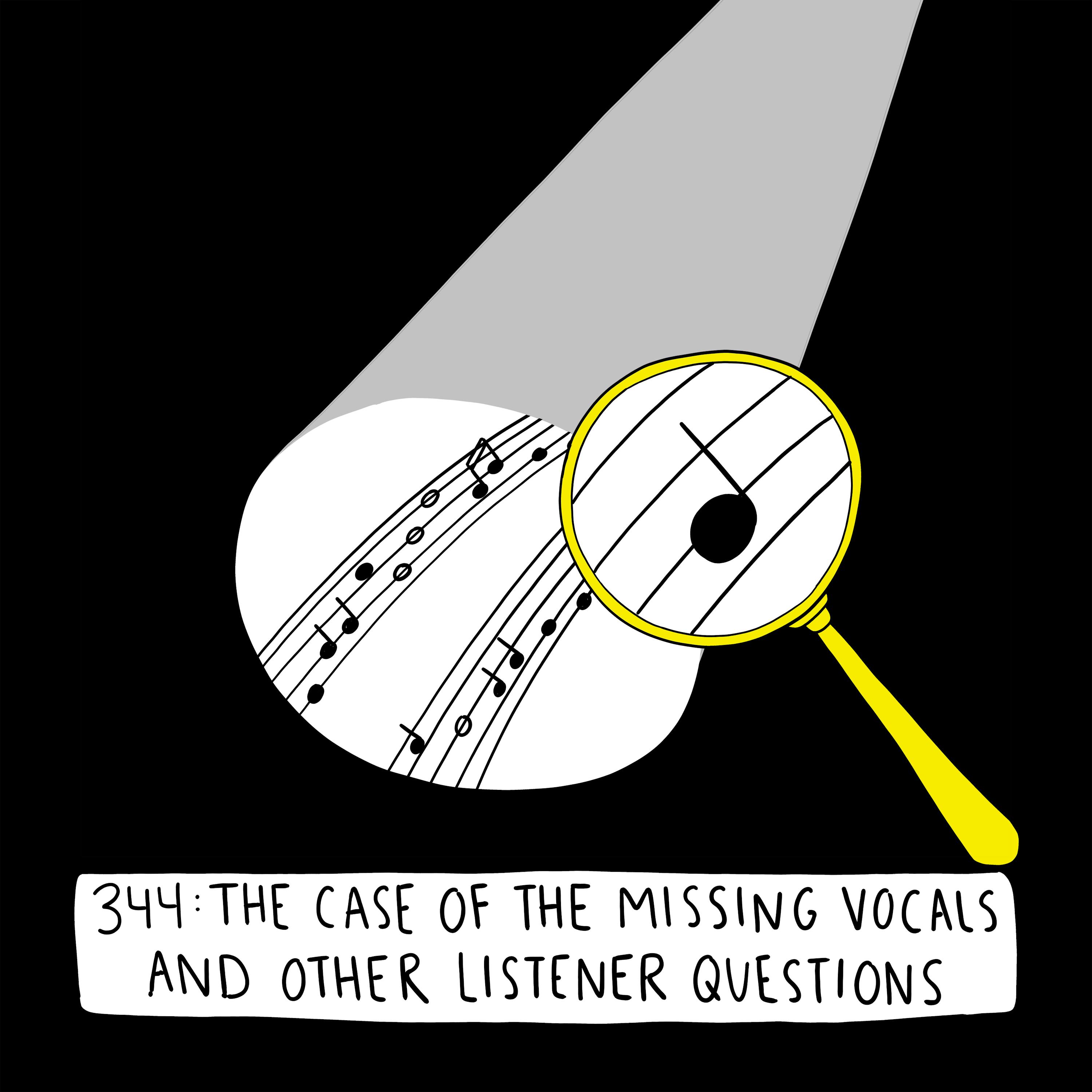
I think this one will start things off with a bang. Hi, team. I've got a mystery for forensic musicologist Joe Treble to investigate. What ever happens to create multi-part harmonies in songs?
I know group acts are rare nowadays, but some of my favorite groups are those that feature incredible harmonies, but we don't really see it on Top 40 Radio anymore. Can you help me tell this mystery? Psychologist Joe Treble. Should we see if he's available?
Yeah, I mean, it's actually pretty great. I've got him on speed dial. Okay, let's give him a ring. Hello?
Hey, Joe Treble, I've got a very salient musical question for you. Okay, shoot. What has happened to multi-part harmony on the Top 40? It used to be a thing, and now it's not.
I assume because I solved the mystery of the missing key change for you. Now you want me to investigate the missing multi-part harmonies. Well, songwriter Charlie Harding, let's crack this case. There's some investigators that focus on missing people.
You focus on missing musical moments. So what's going on? Okay, so your listener, David, wants that throwback rich vocal harmony sound that you get from classic pop. But if you turn on the Top 40 today, you don't hear any of that.
Who do you think are the suspects in this case, Charlie? I mean, I guess if I were to go to the Billboard Hot 100 right now, it's someone like Jack Harlow. It's not a lot of the harmony. My nemesis, Jack Harlow, we meet again.
He knows what he did. What did he do? That's for another episode, Charlie. You're Virgin Ears.
Okay, let's listen to Lovin' On Me. Joe, it's musicologist Nate Sloan here. Quick question. This is a sample, right, that we're hearing on this Jack Harlow track?
Well, Nate, yes, this is a sample from Cadillac Dale. His song, whatever, parenthesis, bass, soliloquy. And I think you'll notice something when we hit play on this track. We can do whatever, whatever you wanna do.
I am on, in, hit or ten, when it comes to Lovin' You. Now, I don't like no whips and chains and you can't tie me down. But you can whip your lovin' on me, baby, round and round and round. Much vocals, multi-part harmonies.
Very nice. But that's not what Jack Harlow samples, Charlie. Charlie, that's right. I see what you mean, Joe.
He samples the part right after the vocal harmonies. For Lovin' On Me. We can do whatever, whatever you wanna do. I am on, in, hit or ten, when it comes to Lovin' You.
So, Joe Trouble, you're saying that your nemesis, Jack Harlow, could have sampled this beautiful, lush harmony and instead samples this isolated vocal. What's your beef? Well, I have no beef. I'm a disinterested investigator.
But if we're trying to answer David's question about where did multi-part harmonies go, this seems like a textbook case. Here, you have an opportunity to sample some rich vocal harmonies, but you don't. So what's going on here? This suggests to me that listeners' tastes are more geared towards solo voices.
As David said in his question, solo artists have really taken precedence over groups, over bands, over boy bands and girl groups. So, maybe this is a sign of the musical times where we gravitate towards that solo voice. Man, this guy's smart. Yeah, you should give him an honorary doctorate in musicology.
Let's make it out of ourselves. I don't necessarily hear this as a problem. Meaning, like, I actually don't think that vocal harmonies have gone away. Like, if you go back to the charts, you also have Tate McCray's Greedy, which is full of lush harmonies.
Charlie, are your ears okay? Yeah, Charlie, we're worried about you over here. What's going on? We didn't hear a single vocal harmony there.
Yeah, I'm with this Joe Trouble guy. I mean, what are you hearing here, Charlie? Well, first of all, you have Tate McCray is doubling her vocals and making them thick and wide and coarsy like she's singing on top of herself. Not a harmony.
Not a harmony. And she's also singing really nice harmonies that are lower in the mix that are boosting the overall lead vocal and putting it, making it more prominent. I feel like you're actively undermining your own argument by playing this example, Charlie. But you've inadvertently offered me and Joe some more evidence for why vocal harmonies might be disappearing.
And I wonder if it has something to do with autotune and processed vocals, which you hear all over this Tate McCray track, and which maybe don't lend themselves to group harmonies as well as an unprocessed sort of naked vocal. Wow, that's a fascinating insight, Musicologist and Islam. No, no. Joe, this guy, Musicologist and Islam, he doesn't know what he's talking about.
I totally, totally, wholeheartedly disagree. I am shook that this is the example you picked. All right, let's keep going to the charts for a second. Let's listen to Dua Lipa's Houdini.
Listen to those harmonies. Okay. Not only do we have doubles and counter melodies, but in the chorus there, we have some really nice vocal harmonies. Come on.
I will grant you that there are present some vocal harmonies, but again, I feel like every song you're giving us just kind of waters down your side of the story, because these are such kind of light, simple harmonies. Also, is this the chorus or is it the post-chorus, Charlie? I think it's the post-chorus. It's the post-chorus, yeah, probably.
And finally, I just want to go back to David's question. He's talking about Fleetwood Mac style harmonies, right? We're talking about, I don't know, the chain or something. Like a chorus of voices singing in these thick stacked harmonies.
This is like Dua Lipa singing up a third above the melody. It's like it's not quite the same. Okay. Joe, what's your take?
I agree with everything you just said. This guy's a genius. Oh, man. You two seem thick as thieves.
I know. I think we're going to start our own show together, Charlie. I don't know how to break this to you. Okay, fine.
Let me offer a different interpretation of what I hear when I think of multi-track beautiful harmonies, contemporary popular music. Okay. I'm curious what you're about to play for us. I'm all ears.
I feel like multi-part backing vocals are essential to contemporary popular music. And I know this. When people track a pop song, they set up a template in Pro Tools that has a tracking track and then a lead vocal and then countless doubles, countless backing vocals, countless harmonies, ad-libs, octaves, whispers. It's super common on a basic pop chorus.
With one singer, I will allow it. Just one singer. They will track their vocals so many times they'll have 60 tracks. Super, super, super common.
And you can look at an artist like Charlie Puth who shows off exactly how he does this all the time. It's one of his favorite things to do on social media. Hello. I'm layering vocals right now and I thought it'd be a cool time to show all of you how I'm doing it.
Stacking vocals. This might be a big slap in the face to any music conservatory, but I actually write the notes down. So that's an A. So it goes F sharp.
Ooh. Ooh. Ooh. And I'll start with that up top.
The lyric that I'm singing with these first couple of notes is they don't. And when you put it all together, you get the following. We got boost. Cool.
Okay. Okay. All right. All right.
Let me just put the cherry on top. If you want amazing multi-part harmonies and temporary popular music, look no further than Ariana Grande, who's currently going all over social media, posting images of her in the studio, tracking vocals in front of Pro Tools, double tracking her vocals, showing off her vocal tracking powers. And it's something that we know she's amazing at. Just go back to her 2020 release.
Shut up. Off the own positions. If you want multi-part harmonies. How you been in your time?
Huh? How you been in your time? Huh? You've been so worried about mine.
Huh? Can't even get you some money. Now you sound so dumb. Now you sound so dumb.
So maybe you should shut up. I don't know if it was worth calling up some private investigator because I feel like I've completely answered this question. Multi-part couple's gone nowhere. All right, Joe.
Thanks for your services. Get out of here. I'm tired of doing this bit. Always a pleasure.
I think he's a nice guy. He's a nice guy. Okay, Joe. It's just you and me again.
Let's see if we can find some common ground here. I hear you with the Charlie Puth, with the Ariana Grande. I do have some questions about like how well those songs performed, you know. Oh.
Shut up. That was number 47 for one week. So I'm still feeling like when it comes to top 40 pop, there is a bit of a fear of vocal harmony. And I do wonder why this is.
Is it because it doesn't lend itself to the way that people listen to music these days, like out of their iPhone speakers or computer speakers, where you might not get that full, you know, audiophonic experience of listening to multi-part harmonies? Is it because, like David suggested in his question, we've moved more to like the rise of the solo artists and we want to hear their voice? Is it maybe auto-tune, like I said earlier? I don't know.
But I do want to conclude this little skirmish that we've had with an announcement that if we go off the charts, we can find some amazing multi-part harmonies. And I do have a couple examples of those I'd love to share, if that's amenable to you, Charlie. Yeah, absolutely. Okay, how about Not Strong Enough by Boy Genius?
The way I am, not strong enough to be your man, I try, I can't, stop staring at the ceiling fan of the floor. I thought you would bring me some Boy Genius, the ultimate demonstration of friendship through music, but I did think that you were going to give me the first song off their album without you, without them. Give me everything you've got, I'll take what I can get out, I want to hear your story and be a part of it, thank you. Well, that's lovely, Jack.
Yeah, I love your pick, but I just like hearing the solo voices all in harmonies. So there's rich harmony out there waiting to be had, you just might not find it in the top 40 of the Billboard chart, or as Charlie said, perhaps it's morphed into something else in that realm. Either way, what a stimulating question from David to start this off with. I like starting 2024 at a bit of loggerheads with you, Charlie.
This is a nice new dimension for our show. I look forward to arguing with you more. It is a political year, so perhaps we'll butt heads some more. First question down.
Let's go to question number two. Let's hear from Gen. Hey, Nate and Charlie, this is Gen in Honolulu, Hawaii. Here's a question.
I've noticed that in police and lawyer shows set in Los Angeles, there's often a kind of moody jazz soundtrack, usually with a lot of trumpet emphasis on thinking shows like Bosch and Perry Mason, and I like it, but where does this come from? Who created the template for this? All right, love the show. Thanks.
Did someone say LA lawyer cop shows? It's Joe Trouble again. You're going to keep me away. This question was made for me.
Joe, goddammit, he's back. How do we get rid of this guy? Okay, we'll blow him up with the question. Okay, I actually can sew this one up with a ribbon for you fellas really quickly here because I feel very confident that I know my LA noir lore, and if I take you back to the 1974 film Chinatown with a soundtrack by Jerry Goldsmith, the film that arguably started the whole second film noir craze, what sounds do we hear on the soundtrack?
So I feel pretty confident saying that this soundtrack establishes the trumpet as the defining instrument of that LA noir sound that you can now hear in Bosch and Terrence Blanchard's score for Perry Mason. This also explains why, Joe Trouble, you wear a little trumpet lapel pin. That's actually an homage to a lost love, and I'd rather not talk about it, Charlie. Okay, Joe, thank you for solving this trumpet mystery.
We're thankful for you. I think we've had enough of you. I'm sure there are more important investigations that you need to get to work on. Yeah, my vocal cords have quite enough for that character.
But what do you think about it? Are you convinced, Charlie, by his hypothesis? Have you seen Chinatown? I have seen Chinatown.
If you're going to Los Angeles, you've got to watch Chinatown. It teaches all the politics of how that whole city works. It's true. All right, cool.
That was easy. Wow, no animosity. No, we're on the same page. That was great.
I love that question from Gen. I love that show. Perry Mason, too. I'm sad I got canceled.
Okay, that was robust. My vocal cords need to rest. Let's take a quick break and come back and dig into some more listener questions. Support for the show comes from Factor.
If you're looking to kickstart the new year, Factor is here to help. Factor's ready-to-eat meal delivery takes the stress out of meal planning, letting you skip the grocery stores, prep work, and cooking boutique, and sets you up for success in the new year no matter your resolution. Like, if you're looking to save some time, Factor's two-minute meals are your secret weapon. Or maybe you're hoping to cut back on your spending.
Well, Factor offers meals that are cheaper and more delicious than expensive takeout. Or if your resolution involves being more conscious about what you eat, Factor has 35 chef-crafted and dietitian-approved meals to choose from every week, including options like keto, calorie-smart, vegan, and more. Factor's sending us a couple meals to try. I'm particularly excited about the shredded chicken taco balls.
Seems like a quick, easy meal. Also, the smoky barbecue chicken breast looks really good. And I'm most excited to try the roasted red pepper and basil barramundi. I also see on their website that you can get some add-ons in addition to ready-to-eat meals.
They have cold-pressed juices, smoothies, energy bites, extra protein, veggie sides, and more. Head to FactorMeals.com. and use code SWITCHED50 to get 50% off. That's code SWITCHED50 at FACTORMEALS.COM slash SWITCHED50 to get 50% off.
Charlie, here's a fun question from our listener, Jenna. Hey, Nate and Charlie. My question for you guys is about this song called Make Your Own Kind of Music by Cass Elliott. So lately, I've noticed it's made a bit of a resurgence.
It was used in a Barbie movie trailer, and it was also used in the series Lost when it's played on record by this character, Desmond, who keeps pushing this button to keep the world from ending. And my question is, how does this very 70s-esque song work so well in both Barbie and Lost? It's like existential and uplifting, and I don't know how it works that line so well. But yeah, can't wait to hear what you guys think.
Okay, this is fun, because this song, I feel like I have an operating theory on how this song works as a soundtrack. These are not the only two major pieces of media that have used it. In fact, I think a whole meme, as of earlier in 2023, when the film The Unbearable Weight of Massive Talent came out, it was kind of a flop. It was a very self-conscious film starring Nicolas Cage playing a fictional version of himself, where he goes and visits a cartel.
There's a whole story, whatever. There's a scene of him taking LSD with the head of this cartel. They're driving down a road, looking deep into each other's eyes with this kind of empty stare and drug-induced smile. And this image of Nicolas Cage and Pedro Pascal, who plays the cartel head, becomes a major meme.
It went all over TikTok, and I think that this meme was such a success. The song got picked up in the world of comedy, and recently, SNL, Saturday Night Live, even a whole sketch about the value of this song in the soundtracking, in which Mama Cass, played by Chloe Trost, and her producer, a female stone, are in the studio recording the song, make your own kind of music, and are discussing how big of a success it's going to be, not as a hit, but as a piece of soundtracking. Oh, this song is going to be everywhere, Mama. And then everybody's going to forget about it for a long, long time.
Oh, I know. Really? Oh, yeah, yeah, baby. But in about 40, 50 years, I think it's going to start showing up in a bunch of movies, baby.
Wow, the movies! Oh, yeah, because it's a perfect song to go into a slow-mo montage where the main character snaps and goes on a rampant. I think Emma Stone and this character totally captures the value of Mama Cassie's Make Your Own Kind of Music, because this song is a sad fucking song. Whoa!
Charlie Harding just cursed on air. This is unprecedented. Please go on, but I just need to announce it. This must be, you're making a serious point here.
Let's go. I'm feeling strong about this. Wow. It's like hearing Mr.
Rogers curse or something. It's very shocking. Okay, go ahead. I have my shoes, my jacket, my sweater bucket on.
There's so much tension in this song between the apparently uplifting lyric and the swelling emotional cinematic music and how Cass Elliot delivers her vocal. Check out the first verse. Nobody can tell you There's only one song worth singing I kind of feel like it's dead behind the eyes. This song has dead eyes.
It's just, it's almost monotone. The song worth singing Full flat In the verse, you mean? Oh, yeah, yeah. Yeah, right here.
It's the beginning of the song. I can hear that, yeah. I'm persuaded. Okay, dead eye verse.
And the character is literally described as going nowhere. And then we're supposed to believe that as the song builds up towards the chorus, we're going to overcome all these problems. But no, we don't. This chorus is some sad kind of joke.
It sets up the expectation that, hey, you can get through all this loneliness going nowhere, you're nobody. That's fine. You're going to sing your own kind of music. That's great.
You're going to empower yourself. You're going to do a bunch of self-help. You're going to focus. You're going to do all the healing work you've got to do.
And then at the end, she delivers this punchline in triplets just to emphasize that nobody is going to sing along to your song, you absolute loser. To be clear, she says, even if no one else sings along. No, she's very clear that no one's going to sing along to the song. Wow, you are bringing a dark aura to this tune, Charlie.
I guess I see your interpretation. Right, so if you're a character lost on an island, whether that's out to sea or in Barbie land, and you're trying to find yourself, but you've got nowhere to go because everything is fake and twisted and all these things are happening to you, what a perfect song to represent that, feeling lost and alone and actually there's no hope. Interesting. So what these film soundtracks are responding to in the song is the eerie dislocation that it creates throughout, especially in the verse, but even within the chorus where you still kind of end up on your own by the end of it.
Those triplets are interesting. It is a weird moment in the song. You're like, wait, what is this choice about? Perhaps I can get behind your read of it, Charlie.
This is making me think of the song in a new way. I'm here for it. Frankly, the reason why this really works is because there is a contrast of the musical expectations, which is uplifting, somatic, strings, horns. It's exciting.
You're going to have your own song. How great. But the underlying tone of how it's sung actually matches closer to what's happening in some of these films. And I was thinking about this question.
I realized that it's not a solitary example. This is a trend where films use a song that kind of mismatches the scene to highlight the darkness of what's happening. It immediately took me to the film American Psycho from the year 2000, based on the 1991 book, where Christian Bale's character plays a banker who's a serial killer, and he's hanging out with one of his colleagues while preparing to murder him with an axe. And all the while, he's pantomimating what a pop music critic might say about the latest music release, Huey Lewis' Hip To Be Square.
In 87, Huey released this. Four, the most accomplished album. I think they're undisputed maver pieces. Hip To Be Square.
Songs don't catch you. Most people probably don't listen to the lyrics, but they should, because it's not just about the flavors of conformity and the importance of trends, it's also a personal statement about the band itself. Hey, Paul! Ah!
Okay, love that clip. You're positioning American Psycho as maybe a genesis point of this sort of ironic use of soundtracking in films? The problem is not so much a genesis point, or like, this is the platonic ideal, because it's sort of so deeply self-aware of using the music as diegetic music, it's like soundtrack music, and he's actually commenting on the music, which is a larger commentary about indulgence in the 1980s and consumerism and the inherent violence of everyday life. I was kind of clueless as to where the start of this trend had happened, and so I actually called up an expert to help us out.
Hi, this is Keith Phipps, one of the writers behind The Reveal and a co-host of The Next Picture Show. If there's a ground zero for the ironic use of popular songs in movies, it's probably, as writer Sean Doyle suggested in a 2016 film comment article, Stanley Kubrick's director Strangelove or How I've Learned to Stop Worrying and Love the Bomb. Kubrick ends the film with images of mushroom clouds set to virulent World War II-era hit We'll Meet Again. Spoiler, we won't.
We'll meet again. Don't go where, don't go where. But I think it's a trio of films from the early 1990s, perhaps not coincidentally, an era in which Generation X was coming to its own, that became the real catalyst for the device. Joe Pesci being a crap out of someone to the soaring sounds of Donovan's Atlantis and Goodfellas.
Bill Murray being tormented by I Got You, Babe, and Groundhog Day. And perhaps most influential of all, Michael Madsen gleefully torturing a policeman to the tune of Steelers' wheels stuck in the middle with you in Reservoir Dogs. Each port to accelerate on a trend that seemingly refuses to go away. All right, you're flexing, Charlie.
You got esteemed movie critic Keith Phipps to chime in here. Posting a great podcast next to the show, also featuring our colleague, Jennifer Kofsky from New York Mag. So bringing it back to Mama Cass, with Keith's information, we can trace this back to the 1960s, this larger phenomenon. Dr.
Strangelove, maybe, as the vortex of this satirical use of music. And in some ways, as you point out, it's nothing new, but I do like the notion that the song itself might need to have a little bit of ambivalence and even melancholy baked into it in order for it to function in this way. And I am compelled by your explanation of how we can hear that in Make Your Own Kind of Music. So I'm going to hear this song in a bit of a new light the next time I do encounter it in the soundtrack of a zombie killing exploitation film or something.
I'm glad I was able to help you listen to this in a different way, even if no one else listens along. Oh God. You look so disappointed in me. I'm back just to say you should be arrested for that.
Fair. You should be behind bars. Maybe I can reclaim myself in a speed round of final questions. Unlikely, but possible.
First of all, thank you, Jenna, for that great question. Now it's off to listener Amy. Amy, unfortunately, has COVID and was unable to record a message sending you healing vibes, Amy. Here's what Amy wanted to hear.
I would love to hear your take on a possible through line between David Bowie's Major Tom, Brown's control to Major Tom, Elton John's Rocketman, and Cox's Runaway to Mars. Runaway to Mars was my top Spotify song for this year. And considering I clocked 46 straight days listening to music, I thought I should ask the experts what your thoughts are. Are big space hits reflective of some part of our culture?
Love the show, Amy. I love this question because it's this very silly thing that I do when I watch movies with my wife, which is pretend that the characters have a narrative through line in every movie that actor has been in. So if you watch a George Clooney film, like if he's floating out in space and gravity, he's also been a real estate guy in Hawaii. He's also been a consultant who flies from place to place and all over the same world.
Am I making any sense here? You're making sense. I'm just not sure to what end. This just sort of titillates and amuses you during movie night?
It would turn all films into a cinematic universe if this had to be considered by screenwriters, that every actor had to somehow fit into a larger narrative arc. It would just make movies and television a whole lot worse, but maybe a lot more fun. Okay, that's a thought exercise. So maybe these three songs about space, do they do the same thing?
Are they in conversation with each other? Okay, so that's where we're going. Wow, wow, what a walk to get there. Okay, so you're positing that there is some invisible thread connecting these songs.
I mean, first of all, Charlie, we need to listen to this song, Talk Runaway to Mars. I assume you're familiar and listeners are familiar with David Bowie's Space Oddity and Elton John's Rocketman, but Talk Runaway to Mars. Have you heard this one, Charlie? No, that was it.
Let's spin it. Before my time runs out, what if I run away tomorrow? Would you find me in the stars? First question, is this Elon Musk's personal anthem?
Well, I was just going to say, or Bezos or any other billionaire with too much money, not enough taxes. There is something interesting where this song could be heard as the sort of temporal equivalent of a song like Space Oddity. What I mean is Space Oddity came out in 1969. That's 10 years after the moon landing.
This idea of space is probably still kind of new at this point, still kind of nascent, still something about wondrous possibility and questions of what's out there. Now, fast forward to Runaway to Mars in 2022, and it's more of a sense of like, I need to go to space, I need to go to Mars to escape this reality. And that is exactly what some of the thinking behind Musk and Bezos and all these other designs on colonizing Mars is. It's like, this planet is not doing so well, so let's escape to Mars, to another planet, where, of course, we'll replicate all of the same mistakes and ruin that planet and then presumably go to another planet.
So I do find this question so interesting because I think you could hear this song, even though musically it's a little different, like it is the modern equivalent of what like those earlier space anthems were relating to. And there's some lyrical through lines too. The, if I run out of oxygen line does remind me of the Bowie where our space man sort of disappears into space and we don't know if he's okay. Maybe he's been picked up by aliens or maybe he's just drifting off into infinite darkness.
Amy, I hope you answered your question. Feel better soon. Speed round two, it's Brian. Hi, Switch on Pop.
Recently, I noticed a small cluster of songs all about communication and getting in touch playing on my local alternative rock station. Dial Drunk by Noah Khan, you've already talked about, but it's getting played alongside Emergency Contact by Pierce the Veil and All Caps by Weathers. Is there a little mini boomlet in songs about texting and cell phones happening now? That's really funny.
Love this question. I don't want to give away too many of our methods, but when I have one of these permissions, I generally believe that I don't have any original ideas and that someone else has already come up with it and I can probably find it. And usually when there is a musical trend that is bubbling up, there's like seven Spotify playlists that have already made. So let's check this out.
If we just go Spotify, songs about phones. Playlist by user GWRSPT, songs about phones. Immediately, it's very clear that this is a trend that's been running on forever, right? So here we have 76 songs over four hours long about phones.
Obviously, right at the top, Tommy 2-pound, 8-6-7-5-3-0-9-slash-genny. We've got Blondie's Call Me. Call Me, maybe. McCarrie Jepsen.
Hello, by Adele. Got a phone call. Call to say I love you. I see you wonder.
Can't forget Lady Gaga, Beyoncé's telephone. That's Operator, Abba's Ring Ring. There's so many fun ones here. One of my favorite songs about phones that's a little more recent is Rico Nasty's iPhone from 2020.
This guy won't be nothing like the last one. Smokey so much guys, I forgot to put my mask on. Now I'm ready to shop call you on my iPhone. I love this song because it's like a song that I think an iPhone, if it were self-aware, would sing.
This is the sound of an iPhone. And so often, singing about a piece of technology like a phone call and a specific piece of technology like an iPhone, I think can date a song, but it really works for me on Rico Nasty's clip. If you go back in time, though, and look at other songs about telephone technology, I don't think they age that well, so I wouldn't recommend contributing to this trend, especially if you're being hyper-specific about the technology that you're using to communicate with your loved one. Take, for example, R.E.M.'s Star 69.
If you don't recall, before the time of caller ID, if someone called you and you didn't know what it was, you'd have to ring Star 69. That would take you back to that phone call. That's good. It gets worse when you go to 50 Cent's high all the time.
We've got a fact machine in this song. It's a great flow, but it immediately dates the song. This issue of using technology in your song, I think it's usually an issue until I realized that Crazy in Love by Beyoncé and Jay-Z features prominently a pager. Did she get a page during the recording?
Got me looking so crazy right now, love. Got me hoping you'll page me right now. Wow. No, I have to say I missed that particular line.
Fascinating. There are still people who work in the medical profession who get pages. The technology is somehow still around. But if you're going to drop technology in your song, it might kind of run its course.
Crazy in Love is I. Right. Well, I was going to say, I don't know, because some of those songs have aged pretty well, even though they have these dated references. You know what song I like with them in the telephone?
Hello, baby. Hello, my honey. Hello, my rectum gal. Wait, what is it doing?
Is that just a really annoying phone call? Send me a kiss by wire. Baby, my heart's on fire. If you refuse me, honey, you'll lose me.
Then you'll be left alone. Oh, baby, telephone and tell me that I am your own. Oh, telephone. But it also has a telegram in there.
Send me a kiss by wire. That's true. But here's the thing. That song was written in 1899, Charlie.
Wow. And what it shows us is that, I mean, I'm just continuing with your argument. Pop music has always been obsessed with communication devices. Going back to the start of the pop music industry.
I'll make a wager with you that one of these technologies is here to stay and is seriously underused in pop music. It's Passenger Pigeons. Rihanna, cue up Britney Spears. Email my heart.
Email my heart and say I love one that's so dry. I know you're out there and I know what you still care. The point of revelation, I just realized that song is about sending an email to her heart, not including her heart in an email. That's not a heart emoji.
This is before the times of emoji. Yeah, no, that's illuminating. To be clear, this song is from 1999 when there was all kinds of dot-com hype about the internet. And so, yes, this song sounds dated, but the concept of email is not.
Just in 2022, Sabrina Carpenter put out a whole album, Emails I Can't Send. Ah, yeah. And this very podcast relaunched its own email newsletter that gives people deeper and personal insights into the songs you talk about on your show. You did it.
It gives you exclusive playlists and music news stories that you don't want to miss via all that nasty algorithmic stuff that you scroll through every day. You don't know what you're going to get. If you want to get more Switch On Pop in your life, you've got to sign up. Email newsletter into our hearts.
You can find it in our show notes and on our website. Please subscribe. You did it. I said it couldn't be done.
Smooth as a Britney ballad. Wow, look at that. This has been an absolutely blast. So what a fun way to kick off 2024.
Charlie, we've got to do this again. I love hearing these questions. Look at all these wonderful tangents and even, you know, combative arguments that these questions have served for us. We've got to make this at least an annual tradition.
And don't forget about me. My invoice is in the mail. I take Venmo or Zelle. Joe Trouble's very up-to-date in his technology.
He needs the money, let's be honest. All-timey profession, but technologically savvy. If anyone has a song they know about Venmo or Zelle, please let us know. Great, wow, great cue.
Yeah, where's the, it's going down in the Venmo comments. Wasn't that a song about how you're finding out that your partner's cheating on you because you see a Venmo to their lover or something? It's a hit. That feels like some uncharted territory.
Let's write it. This episode of Switched On Pop was produced and DJed by Rihanna Cruz. Yes. Also produced by Nate Sloan and myself, Charlie Harding.
Edited by Joey Myers. Engineered by Brandon Farland. Illustrated by Aaron Scott Lee. Community management by Andy Barr.
Our executive producer is Nish.Kerwa, a member of the Box Media Podcast Network, a production of Vulture and New York Magazine. Subscribe to New York Magazine at newyorkmag.com slash pop. Thanks so much to all the listeners who contributed questions. If we didn't get to yours, we offer our sincere apologies.
There's too many good questions simply to include. We might answer a few more in our newsletter via email. The newsletter plugs keep coming. But you know what?
There's good stuff in there. I do recommend people sign up. You can find all our stuff, obviously, on our website, switchedonpop.com, socials. I mean, there's so many socials at this point.
We're on all of them. At Switched On Pop. I mean, I think most of them. We're not on the dating services.
I don't think a podcast can join the dating services. Discord in my heart? Is that another potential? Discord in my heart?
Blue sky in my heart? Yeah, yeah, yeah. Okay. Find us at Switched On Pop.
We'll be back again next Tuesday. Until then, thanks for listening. Thanks for listening. Support for the show came from Factor.
If you're looking to start this year off on the right foot, you might want to check out Factor. Factor offer ready to eat meals, let them straight to your door to take a stress out of meal planning. With 35 different meals to choose from every week, plus cold pressed juices, smoothies, energy bites, and more, Factor can be your key to success in the new year. Head to FactorMeals.com slash Switched50 and use code Switched50 to get 50% off.