
EPISODE · Mar 25, 2026 · 20 MIN
The cosmic traffic jam of TDE 2025aarm
from Multi-messenger astrophysics · host Astro-COLIBRI
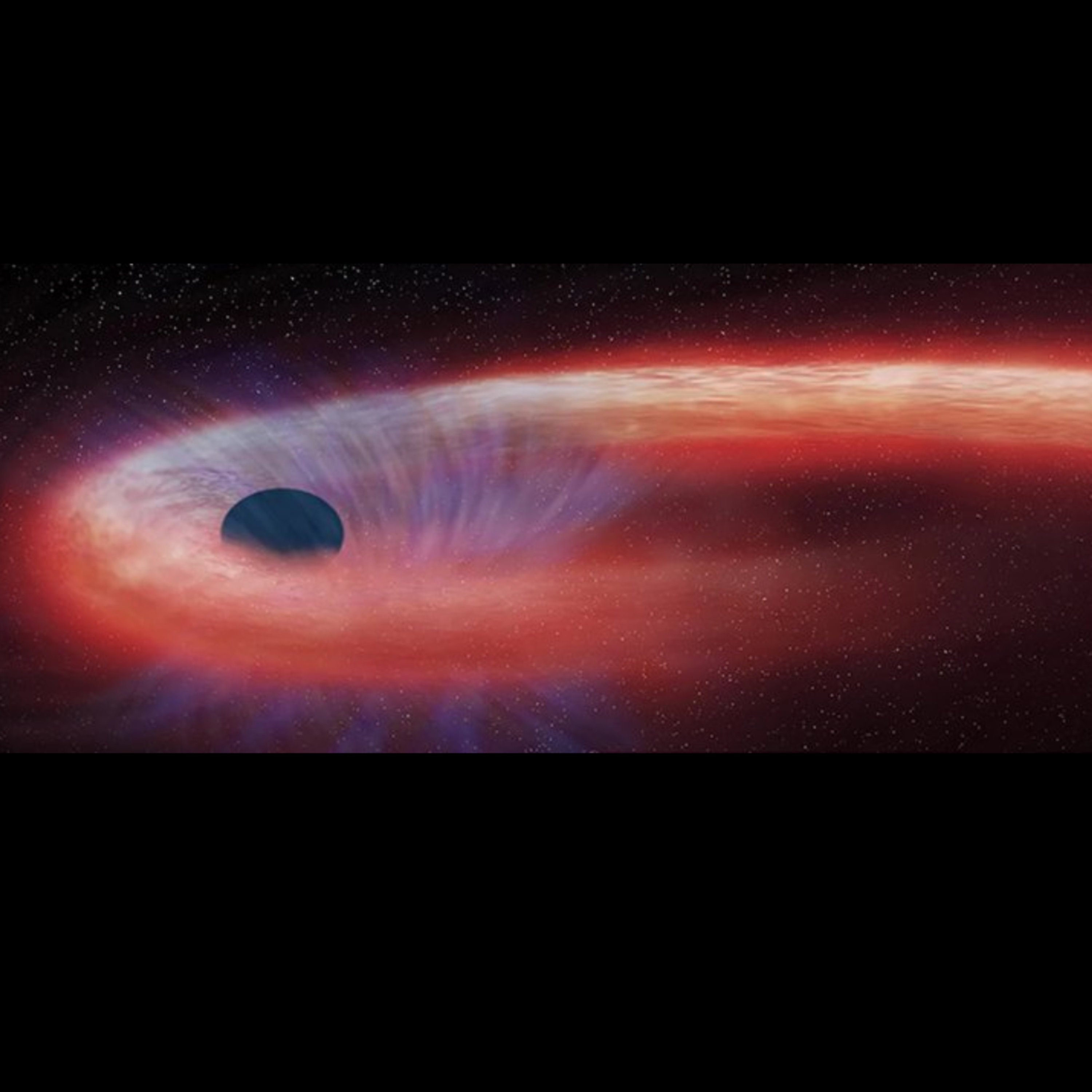
In this episode, we dive into the violent and fascinating cosmic phenomenon known as a Tidal Disruption Event (TDE)—what happens when a star wanders a little too close to a supermassive black hole and gets torn apart by tidal forces. We focus on a newly analyzed event, TDE2025aarm, which is the second closest TDE ever discovered, located "just" 61.48 megaparsecs away. Because it happened in our cosmic backyard, astronomers were able to get an unprecedented, highly detailed look at the event across multiple wavelengths of light, including optical, UV, and X-ray. Join us as we break down the forensic evidence of this stellar crime scene. We discuss the victims and the culprit—data suggests a lightweight star (about 16% the mass of our Sun) was shredded by a massive black hole weighing 20 million times the mass of our Sun. We also explore the mystery of the event's incredibly faint X-ray emissions. Does the data point to a "delayed accretion" scenario, where the bright light we see actually comes from stellar debris colliding with itself rather than immediately falling into the black hole? Tune in to find out!Reference:Simongini, A., Kherlakian, M., López-Oramas, A., & Becerra, J. (2026). Early emission characterization of TDE2025aarm. https://arxiv.org/pdf/2603.20123Acknowledements: Podcast prepared with Google/NotebookLM. Illustration credits: NASA / CXC / M. Weiss
Embed this episode
Ready to play
The cosmic traffic jam of TDE 2025aarm
No transcript for this episode yet
Similar Episodes
No similar episodes found.
Similar Podcasts
No similar podcasts found.