The Country is not a Company episode artwork

EPISODE · Jan 15, 2026 · 7 MIN

The Country is not a Company

from The World Systems Journal · host Poornachandra Upadhya

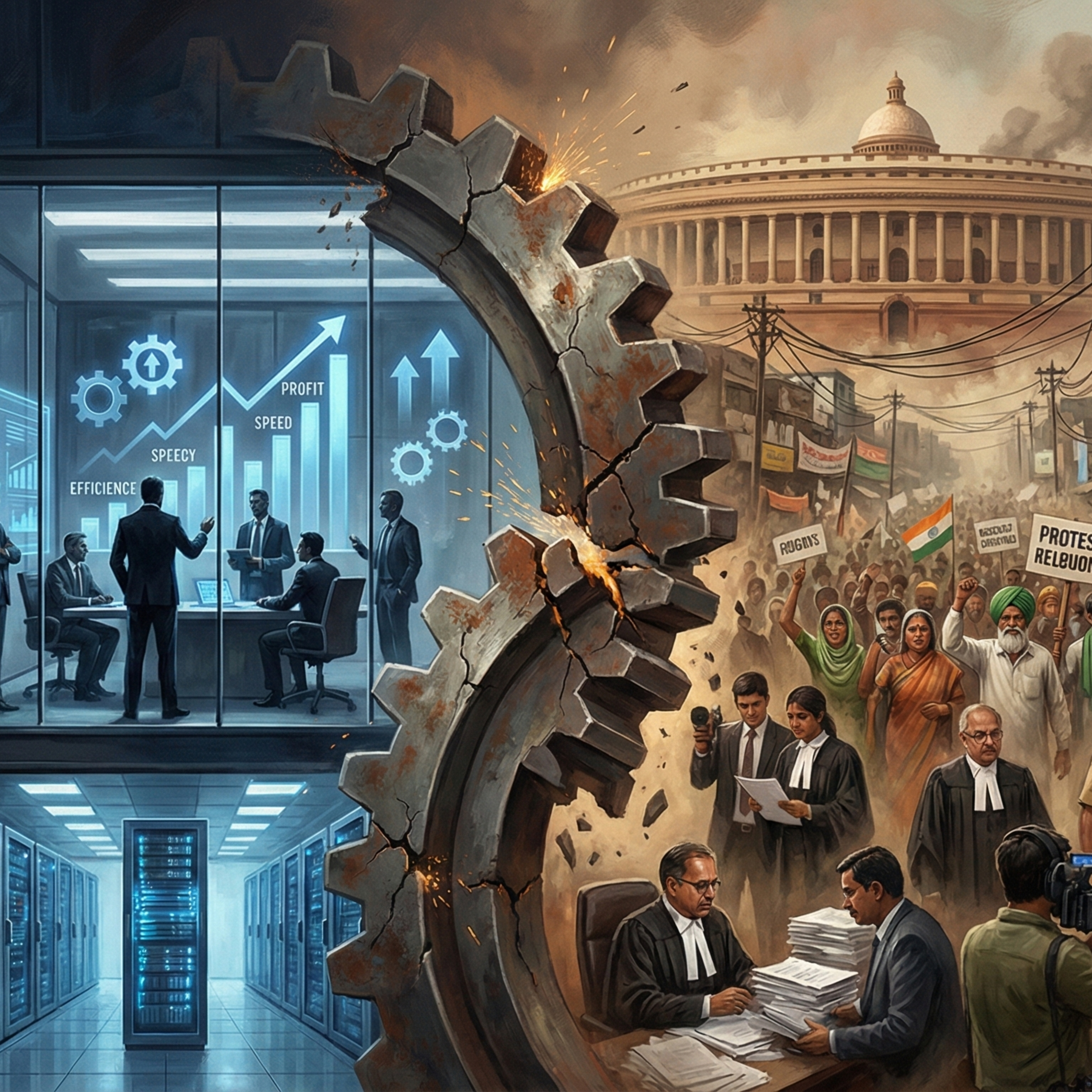
Why can’t a country be run like a company?The comparison is common, and at first glance it sounds reasonable.Companies create wealth, move fast, and are often led by capable people. If countries also have talented leaders, managers, and professionals, why shouldn’t they function the same way?In this episode of The World Systems Journal, we examine why that idea breaks down once we look more closely.This is not an argument against business, entrepreneurship, or private enterprise. India, like many countries, has world-class companies and globally respected CEOs. The question here is not about talent — it is about structure.A company and a country operate under fundamentally different rules.Companies are built around ownership, hierarchy, and speed. Authority flows downward, decisions can be enforced, and performance is judged quickly. Countries, by contrast, are built — or constrained — to manage disagreement, shared power, history, identity, and competing moral claims. Decisions must be negotiated across institutions, regions, courts, bureaucracies, and publics. Accountability is diffused, change is slow, and friction is not a failure of the system but a feature of it.Using plain language and everyday examples, this episode walks through:why ownership and legitimacy are not the same thinghow accountability works differently in public systemswhy institutions like courts and bureaucracies resist speedwhy leadership changes rarely translate into rapid structural reformand why importing “corporate efficiency” into governance has limitsThis is a slow, careful exploration — not a verdict, and not a prediction.It does not offer solutions or slogans. Instead, it aims to clarify how systems actually function, and why judging countries by corporate standards often leads to misunderstanding rather than insight.Some ideas are not meant to go viral.They are meant to be understood.

Why can’t a country be run like a company?The comparison is common, and at first glance it sounds reasonable.Companies create wealth, move fast, and are often led by capable people. If countries also have talented leaders, managers, and professionals, why shouldn’t they function the same way?In this episode of The World Systems Journal, we examine why that idea breaks down once we look more closely.This is not an argument against business, entrepreneurship, or private enterprise. India, like many countries, has world-class companies and globally respected CEOs. The question here is not about talent — it is about structure.A company and a country operate under fundamentally different rules.Companies are built around ownership, hierarchy, and speed. Authority flows downward, decisions can be enforced, and performance is judged quickly. Countries, by contrast, are built — or constrained — to manage disagreement, shared power, history, identity, and competing moral claims. Decisions must be negotiated across institutions, regions, courts, bureaucracies, and publics. Accountability is diffused, change is slow, and friction is not a failure of the system but a feature of it.Using plain language and everyday examples, this episode walks through:why ownership and legitimacy are not the same thinghow accountability works differently in public systemswhy institutions like courts and bureaucracies resist speedwhy leadership changes rarely translate into rapid structural reformand why importing “corporate efficiency” into governance has limitsThis is a slow, careful exploration — not a verdict, and not a prediction.It does not offer solutions or slogans. Instead, it aims to clarify how systems actually function, and why judging countries by corporate standards often leads to misunderstanding rather than insight.Some ideas are not meant to go viral.They are meant to be understood.

NOW PLAYING

The Country is not a Company

0:00 7:55

No transcript for this episode yet

We transcribe on demand. Request one and we'll notify you when it's ready — usually under 10 minutes.

No similar episodes found.

No similar podcasts found.

Frequently Asked Questions

How long is this episode of The World Systems Journal?

This episode is 7 minutes long.

When was this The World Systems Journal episode published?

This episode was published on January 15, 2026.

What is this episode about?

Why can’t a country be run like a company?The comparison is common, and at first glance it sounds reasonable.Companies create wealth, move fast, and are often led by capable people. If countries also have talented leaders, managers, and...

Can I download this The World Systems Journal episode?

Yes, you can download this episode by clicking the download button on the episode player, or subscribe to the podcast in your preferred podcast app for automatic downloads.
URL copied to clipboard!