
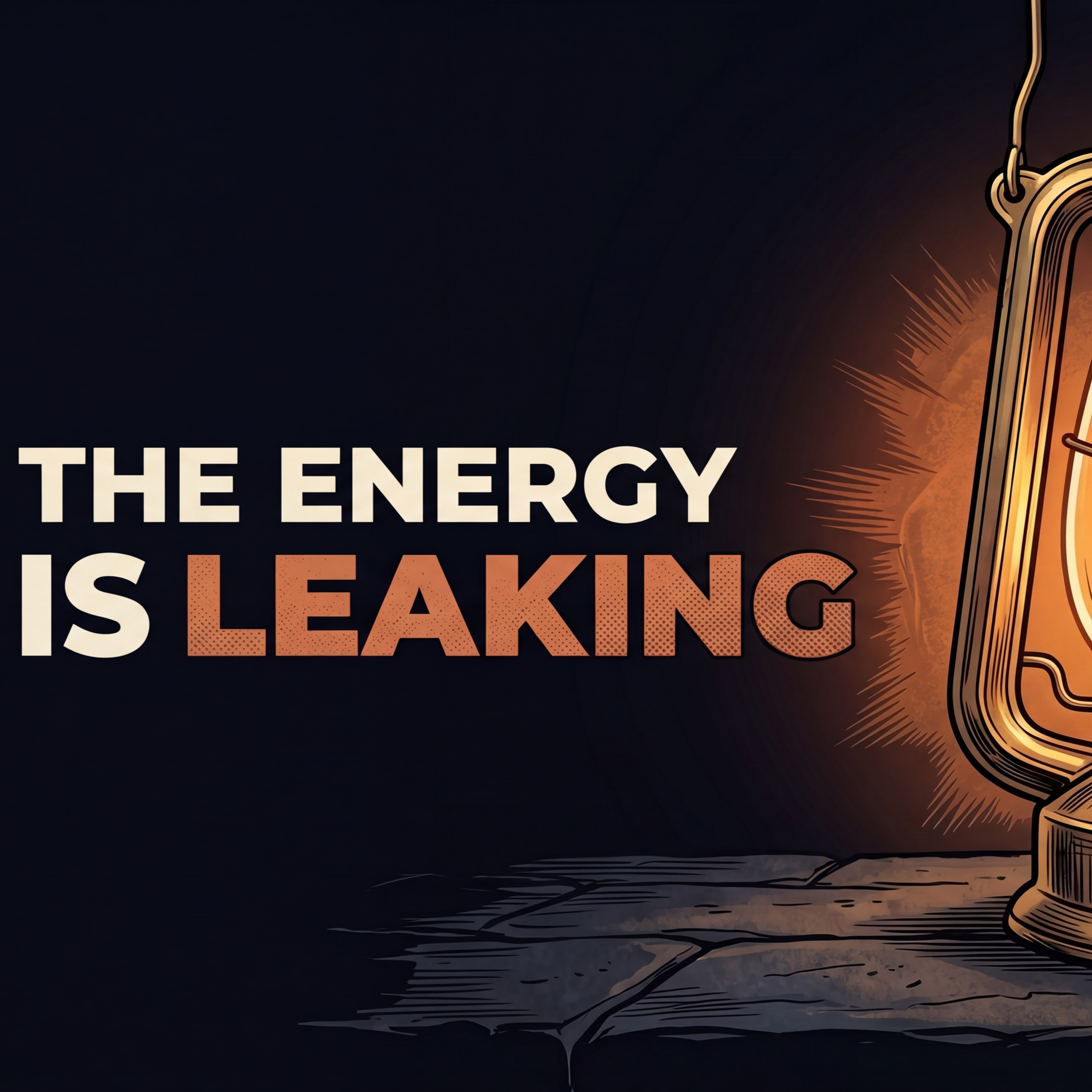
EPISODE · Jun 19, 2026 · 15 MIN
THE DARK SIDE OF SELF-IMPROVEMENT
from THE INSIGHT SOURCE · host THE INSIGHT SOURCE
Self-improvement burnout happens when working on yourself becomes the source of the problem — not the solution.Follow THE INSIGHT SOURCE for research-grounded episodes on why things work or don't.Most people who burn out from self-improvement are working too hard at it. Something shifts over time: practices that once felt helpful start running on anxiety about stopping rather than genuine benefit. That shift — from care-driven to fear-driven — is the mechanism this episode examines.The conversation covers the internal audit (habit of scoring whether you did a practice correctly rather than noticing whether it helped), why self-compassion research shows that self-kindness produces stronger motivation after setbacks than self-criticism, & why rest can start registering as threatening rather than restorative when the nervous system has been chronically activated. The 2nd half covers a practical framework: the growth pause, the "Later, Maybe" list, the minimal stabilizing anchor, and the one structural boundary worth starting with.QUESTIONS ANSWERED- What is self-improvement burnout, & how is it different from regular burnout?- Why does doing everything right sometimes make you feel worse & not better?- What is the internal audit, & why does it turn habits into a performance review?- What does self-compassion research actually show about motivation?- Why can rest feel dangerous rather than restorative, and what does that signal?- How do you pause practices that are draining without your mind reading it as failure?CORE THEMES & INSIGHTS- The fear-driven vs care-driven split: the same practice can run on either driver — the driver determines whether it's sustainable- The internal audit as self-surveillance: measuring execution instead of outcome creates chronic underperformance on your own self-assigned test- Self-compassion is a performance input, not softness: Breines & Chen (2012) found that self-kindness after setbacks correlates with stronger motivation to improve- Playing not to lose: self-criticism motivates short-term but leads to avoiding risk and experiment over time- Rest feeling unsafe is information: when calm registers as a threat signal, that's data about the system state, not a character flaw- Integration as progress: letting what you started become real before adding more is a phase of growth, not a pause from it- Structural boundaries over intentions: a specific enforceable limit holds; a vague intention doesn'tTHIS EPISODE IS FORPeople consistently working on their health, habits, or mental well-being & are finding themselves more depleted. Anyone who has noticed that rest now feels suspicious, that pausing a practice feels like failure, or that the question "am I doing enough?" runs on a loop.JOIN THE CONVERSATIONPoll: Which of these is running your self-improvement habits right now — A. genuine benefit, B. fear of stopping, or C. honestly not sure anymore?Q&A: What one practice would you pause right now if you trusted that nothing would fall apart?LINKSWebsite: https://www.theinsightsource.comWatch YouTube: https://TheInsightSource.short.gy/YoutubeSpotify: https://TheInsightSource.short.gy/SpotifyApple Podcasts: https://TheInsightSource.short.gy/ApplePodcastsListen Amazon Podcasts: https://TheInsightSource.short.gy/AmazonPodcastsFollowInstagram: https://TheInsightSource.short.gy/InstagramTikTok: https://TheInsightSource.short.gy/TikTokX: https://TheInsightSource.short.gy/XCHAPTERS00:00 Introduction02:24 Health Disclaimer03:12 Fear-driven vs care-driven practice04:55 The internal audit07:22 Self-compassion research09:16 Practical reset10:09 The growth pause12:12 Structural boundaries14:05 Permission piece15:12 OutroDISCLAIMERThis episode is educational and is not a substitute for professional medical or psychological advice. If you're experiencing significant symptoms of burnout or chronic stress, please consult a qualified healthcare professional.
What this episode covers
Self-improvement burnout happens when working on yourself becomes the source of the problem — not the solution.Follow THE INSIGHT SOURCE for research-grounded episodes on why things work or don't.Most people who burn out from self-improvement are working too hard at it. Something shifts over time: practices that once felt helpful start running on anxiety about stopping rather than genuine benefit. That shift — from care-driven to fear-driven — is the mechanism this episode examines.The conversation covers the internal audit (habit of scoring whether you did a practice correctly rather than noticing whether it helped), why self-compassion research shows that self-kindness produces stronger motivation after setbacks than self-criticism, & why rest can start registering as threatening rather than restorative when the nervous system has been chronically activated. The 2nd half covers a practical framework: the growth pause, the "Later, Maybe" list, the minimal stabilizing anchor, and the one structural boundary worth starting with.QUESTIONS ANSWERED- What is self-improvement burnout, & how is it different from regular burnout?- Why does doing everything right sometimes make you feel worse & not better?- What is the internal audit, & why does it turn habits into a performance review?- What does self-compassion research actually show about motivation?- Why can rest feel dangerous rather than restorative, and what does that signal?- How do you pause practices that are draining without your mind reading it as failure?CORE THEMES & INSIGHTS- The fear-driven vs care-driven split: the same practice can run on either driver — the driver determines whether it's sustainable- The internal audit as self-surveillance: measuring execution instead of outcome creates chronic underperformance on your own self-assigned test- Self-compassion is a performance input, not softness: Breines & Chen (2012) found that self-kindness after setbacks correlates with stronger motivation to improve- Playing not to lose: self-criticism motivates short-term but leads to avoiding risk and experiment over time- Rest feeling unsafe is information: when calm registers as a threat signal, that's data about the system state, not a character flaw- Integration as progress: letting what you started become real before adding more is a phase of growth, not a pause from it- Structural boundaries over intentions: a specific enforceable limit holds; a vague intention doesn'tTHIS EPISODE IS FORPeople consistently working on their health, habits, or mental well-being & are finding themselves more depleted. Anyone who has noticed that rest now feels suspicious, that pausing a practice feels like failure, or that the question "am I doing enough?" runs on a loop.JOIN THE CONVERSATIONPoll: Which of these is running your self-improvement habits right now — A. genuine benefit, B. fear of stopping, or C. honestly not sure anymore?Q&A: What one practice would you pause right now if you trusted that nothing would fall apart?LINKSWebsite: https://www.theinsightsource.comWatch YouTube: https://TheInsightSource.short.gy/YoutubeSpotify: https://TheInsightSource.short.gy/SpotifyApple Podcasts: https://TheInsightSource.short.gy/ApplePodcastsListen Amazon Podcasts: https://TheInsightSource.short.gy/AmazonPodcastsFollowInstagram: https://TheInsightSource.short.gy/InstagramTikTok: https://TheInsightSource.short.gy/TikTokX: https://TheInsightSource.short.gy/XCHAPTERS00:00 Introduction02:24 Health Disclaimer03:12 Fear-driven vs care-driven practice04:55 The internal audit07:22 Self-compassion research09:16 Practical reset10:09 The growth pause12:12 Structural boundaries14:05 Permission piece15:12 OutroDISCLAIMERThis episode is educational and is not a substitute for professional medical or psychological advice. If you're experiencing significant symptoms of burnout or chronic stress, please consult a qualified healthcare professional.
NOW PLAYING
THE DARK SIDE OF SELF-IMPROVEMENT
No transcript for this episode yet
Similar Episodes
No similar episodes found.
Similar Podcasts
No similar podcasts found.