The Depth of Visiting the Sick: Bikur Cholim, Part 3 episode artwork

EPISODE · Jun 12, 2026 · 9 MIN

The Depth of Visiting the Sick: Bikur Cholim, Part 3

from The Chaplain's Table · host Simcha Lefton

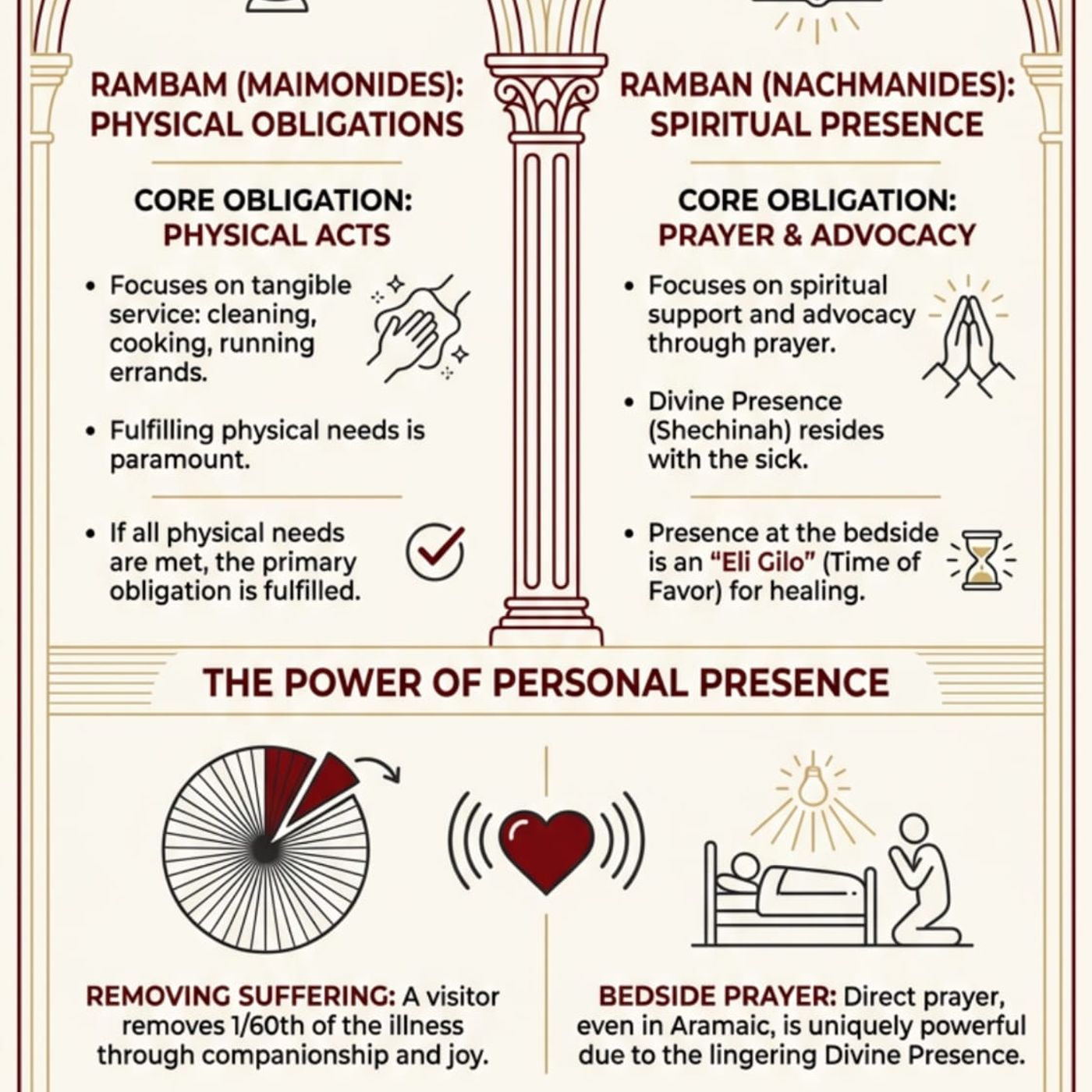
Key Hebrew Terms in This Episode:Bikur Cholim (ביקור חולים) — Visiting the sick; one of the most fundamental mitzvot in Jewish law, considered a potential life-saving actMitzvah (מצוה) — A Torah commandment; a sacred obligationRambam (רמב"ם) — Rabbi Moshe ben Maimon (Maimonides); his view: the primary fulfillment of bikur cholim is meeting the sick person's physical and practical needs, with prayer as secondaryRamban (רמב"ן) — Rabbi Moshe ben Nachman (Nachmanides); his view: the primary fulfillment is prayer at the bedside — if you did not pray, you have not fulfilled the mitzvahShechina (שכינה) — The divine presence; the Talmud teaches that the Shechina rests at the head of a sick person's bed, which is why bedside prayer carries unique spiritual powerMalachim (מלאכים) — Angels; prayers recited away from the bedside are carried to God through angels, who do not understand Aramaic — which is why Aramaic prayer is permitted specifically at the bedside where the Shechina is directly presentHashem (השם) — Literally "The Name"; the way observant Jews refer to God in everyday speechDavening (דאַוונען) — Praying; from the Yiddish; used here to refer to the act of praying on behalf of the sickBen Mazal (בן מזל) — One born under the same astrological sign or spiritual disposition as the sick person; according to some opinions, such a visitor has an especially heightened ability to remove sufferingIgros Moshe (אגרות משה) — The major halachic responsa of Rabbi Moshe Feinstein, one of the foremost twentieth-century poskim (decisors of Jewish law); referenced here regarding end-of-life and hospice-related questionsGemara (גמרא) — The component of the Talmud containing rabbinic discussion and analysis of Jewish law; the source of many of the core rulings discussed in this episodeHalacha (הלכה) — Jewish law; the legal framework within which all these obligations are defined and appliedShaliach (שליח) — An agent or messenger; discussed here in the context of whether one can fulfill bikur cholim by sending someone else or making a phone callThe Depth of Visiting the Sick: Bikur Cholim, Part 3 Time Stamp Breakdown:- 0:00 - 1:03: Review of the Root Mitzvah: Two Primary Reasons for Bikur Cholim (Rambam vs. Ramban)- 1:03 - 2:07: The Rambam's View: Meeting Needs is Primary, Prayer is Secondary. The Ramban's View: Prayer is Primary, Bedside Prayer's Power (Esratzon, Shechina).- 2:07 - 3:12: The Gemara on Reducing Suffering (1/60th Rule, Ben Gilo's Impact - Meiri's Interpretation)- 3:12 - 4:17: Rabbi Akiva's Example: Not Visiting is Like Spilling Blood. Active Advocacy vs. Passive Presence. Praying for the Sick to Die (Hass Case).- 4:17 - 5:33: The Shechinah at Bedside and Aramaic Prayer. When to Visit: Avoiding First/Last 3 Hours of the Day.- 5:33 - 6:35: Ben Gilo and the Meiri's Interpretation. The Mitzvah in Practice: Kuf, Mamon, Neshama (Body, Money, Soul).- 6:35 - 7:58: Sending an Agent (Shliach) and Telephone/Remote Visits. When a Messenger is Sufficient (Rambam's View).- 7:58 - 9:10: Major Machloket: Rambam vs. Ramban on Obligation if Needs are Met. Community Volunteers.- 9:10 - 9:55: Future Topics: When to Visit/Not Visit, Who Should Visit/Not Visit, Rewards & Consequences. Mentioned Rishonim and Sources.20 Hashtags:- #BikurCholim- #VisitingTheSick- #JewishMitzvah- #Halacha- #Rambam- #Ramban- #Gemara- #DivinePresence- #Prayer- #TikkunOlam- #Compassion- #Healing- #RabbiAkiva- #JewishLaw- #BenGilo- #Shechina- #Mitzvot- #Chesed- #TorahStudy- #JewishWisdom

Key Hebrew Terms in This Episode:Bikur Cholim (ביקור חולים) — Visiting the sick; one of the most fundamental mitzvot in Jewish law, considered a potential life-saving actMitzvah (מצוה) — A Torah commandment; a sacred obligationRambam (רמב"ם) — Rabbi Moshe ben Maimon (Maimonides); his view: the primary fulfillment of bikur cholim is meeting the sick person's physical and practical needs, with prayer as secondaryRamban (רמב"ן) — Rabbi Moshe ben Nachman (Nachmanides); his view: the primary fulfillment is prayer at the bedside — if you did not pray, you have not fulfilled the mitzvahShechina (שכינה) — The divine presence; the Talmud teaches that the Shechina rests at the head of a sick person's bed, which is why bedside prayer carries unique spiritual powerMalachim (מלאכים) — Angels; prayers recited away from the bedside are carried to God through angels, who do not understand Aramaic — which is why Aramaic prayer is permitted specifically at the bedside where the Shechina is directly presentHashem (השם) — Literally "The Name"; the way observant Jews refer to God in everyday speechDavening (דאַוונען) — Praying; from the Yiddish; used here to refer to the act of praying on behalf of the sickBen Mazal (בן מזל) — One born under the same astrological sign or spiritual disposition as the sick person; according to some opinions, such a visitor has an especially heightened ability to remove sufferingIgros Moshe (אגרות משה) — The major halachic responsa of Rabbi Moshe Feinstein, one of the foremost twentieth-century poskim (decisors of Jewish law); referenced here regarding end-of-life and hospice-related questionsGemara (גמרא) — The component of the Talmud containing rabbinic discussion and analysis of Jewish law; the source of many of the core rulings discussed in this episodeHalacha (הלכה) — Jewish law; the legal framework within which all these obligations are defined and appliedShaliach (שליח) — An agent or messenger; discussed here in the context of whether one can fulfill bikur cholim by sending someone else or making a phone callThe Depth of Visiting the Sick: Bikur Cholim, Part 3 Time Stamp Breakdown:- 0:00 - 1:03: Review of the Root Mitzvah: Two Primary Reasons for Bikur Cholim (Rambam vs. Ramban)- 1:03 - 2:07: The Rambam's View: Meeting Needs is Primary, Prayer is Secondary. The Ramban's View: Prayer is Primary, Bedside Prayer's Power (Esratzon, Shechina).- 2:07 - 3:12: The Gemara on Reducing Suffering (1/60th Rule, Ben Gilo's Impact - Meiri's Interpretation)- 3:12 - 4:17: Rabbi Akiva's Example: Not Visiting is Like Spilling Blood. Active Advocacy vs. Passive Presence. Praying for the Sick to Die (Hass Case).- 4:17 - 5:33: The Shechinah at Bedside and Aramaic Prayer. When to Visit: Avoiding First/Last 3 Hours of the Day.- 5:33 - 6:35: Ben Gilo and the Meiri's Interpretation. The Mitzvah in Practice: Kuf, Mamon, Neshama (Body, Money, Soul).- 6:35 - 7:58: Sending an Agent (Shliach) and Telephone/Remote Visits. When a Messenger is Sufficient (Rambam's View).- 7:58 - 9:10: Major Machloket: Rambam vs. Ramban on Obligation if Needs are Met. Community Volunteers.- 9:10 - 9:55: Future Topics: When to Visit/Not Visit, Who Should Visit/Not Visit, Rewards & Consequences. Mentioned Rishonim and Sources.20 Hashtags:- #BikurCholim- #VisitingTheSick- #JewishMitzvah- #Halacha- #Rambam- #Ramban- #Gemara- #DivinePresence- #Prayer- #TikkunOlam- #Compassion- #Healing- #RabbiAkiva- #JewishLaw- #BenGilo- #Shechina- #Mitzvot- #Chesed- #TorahStudy- #JewishWisdom

NOW PLAYING

The Depth of Visiting the Sick: Bikur Cholim, Part 3

0:00 9:52

No transcript for this episode yet

We transcribe on demand. Request one and we'll notify you when it's ready — usually under 10 minutes.

Frequently Asked Questions

How long is this episode of The Chaplain's Table?

This episode is 9 minutes long.

When was this The Chaplain's Table episode published?

This episode was published on June 12, 2026.

What is this episode about?

Key Hebrew Terms in This Episode:Bikur Cholim (ביקור חולים) — Visiting the sick; one of the most fundamental mitzvot in Jewish law, considered a potential life-saving actMitzvah (מצוה) — A Torah commandment; a sacred obligationRambam (רמב"ם) — Rabbi...

Can I download this The Chaplain's Table episode?

Yes, you can download this episode by clicking the download button on the episode player, or subscribe to the podcast in your preferred podcast app for automatic downloads.
URL copied to clipboard!