
EPISODE · Jun 1, 2026 · 22 MIN
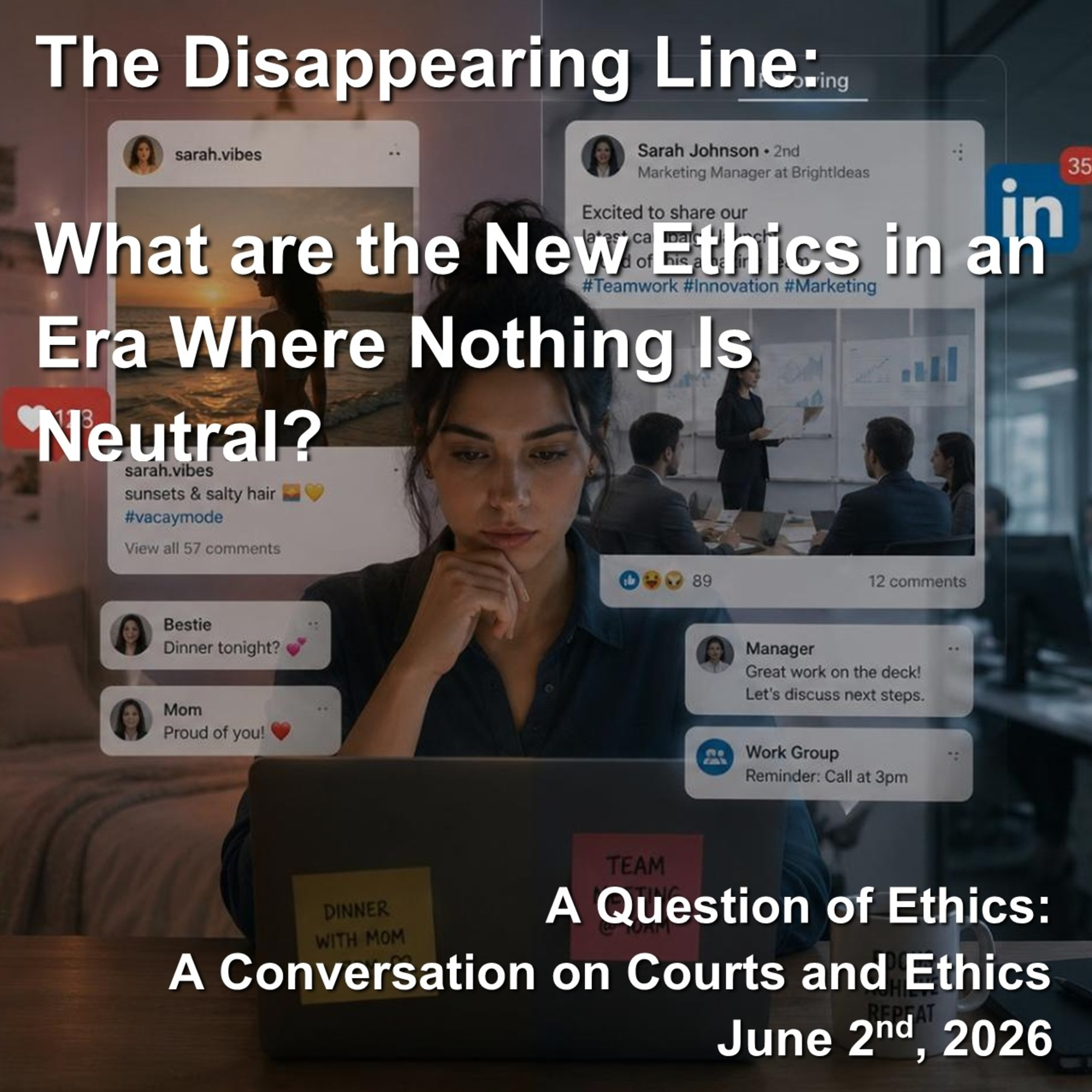
The Disappearing Line: What are the New Ethics in an Era Where Nothing Is Neutral?
from Court Leader's Advantage · host Peter C. Kiefer
Question of Ethics: A Conversation of Courts and Ethics:June 2nd Court ManagerThis episode of the Question of Ethics Conversation examines a fundamental ethical challenge facing court professionals today: how are their ethical responsibilities evolving inan age of social media with an increasingly politicization? Canon Four of the Model Code focuses on conduct that is unmistakably political: attending campaign rallies, canvassing for judges running for election, or advocating for ballot initiatives within the courthouse. We now operate in a landscape where nearly every issue is viewed through a political lens. Statements that once would have been considered civic, educational, or banal are now often interpreted as partisan. Today, they can trigger assumptions of perceived bias.At its core, Canon Four rests on a critical assumption: that court professionals can maintain a private sphere in which they exercise their First Amendment rights, separate from their official role. Nearly 40 years later, that assumption is severely strained.In an era defined by social media and the always-on visibility of the digital world, personal expression is no longer private. Opinions, political or otherwise, are broadcast instantly, permanently, and often without context. Anonymity isfragile at best. Even attempts to separate identities through pseudonyms or multiple accounts are increasingly common and increasingly ineffective. This episode does not claim to offer definitive answers. Instead, it confronts the complexity of the moment and frames questions that court professionals and the professionitself, must now grapple with: Can we, as court professionals, realistically be held accountable for navigating an ever-expanding universe of “political” issues, even down to opinions aboutcultural events or entertainment? · To what extent can we express our personal views without creating a perception of bias that undermines public trust? · How do we reconcile widely differing ethical standards across jurisdictions, roles, and court systems? What emerges is not just an ethics question, but a question of professional survival and institutional trust. One possible path forward is not to attempt an ever-expanding list of prohibitions, but to shift toward practical, principle-based guidance. This could include developing best practices, strengthening commentary within the Code, and emphasizing leadership judgment, mentorship, and open dialogue. Above all, the goal remains constant: to ensure that court professionals, regardless of personal beliefs, are perceived as fair, impartial, and worthy of the public’s trust. In a world where neutrality is harder to demonstrate, that responsibility has never been more important.On the CallToday:Creadell Webb, Chief Diversity, Equity, & Inclusion Officer for the 1st Judicial District Court in Philadelphia, PennsylvaniaKarl Thoennes, Court Administrator, 2nd Judicial Circuit Court in Sioux Falls, South DakotaTeshrie Kalisharan, Alternative Dispute Resolution Coordinator for the 9th Judicial Circuit Court in Orlando, Florida Norman Meyer, Retired Clerk of Court for the Bankruptcy Court for the District of New MexicoRoger Rand, IT Manager for the Multnomah County Court in Portland, OregonNathaniel Mingo, Director of Court Services for the Municipal Court in Riverdale, GeorgiaKelly Hutton, Deputy State Court Administrator for the North Dakota State Court System in Bismarck, North DakotaAccess the episode by going to the NACM website podcast link: https://www.nacmnet.org/podcastsBecome part of the Conversation. Submit your comments and questions to: [email protected]Join the Question of Ethics Conversation held after the Subcommittee meetings every fourth Thursday of the month at 4:00 pm ET.
Embed this episode
NOW PLAYING
The Disappearing Line: What are the New Ethics in an Era Where Nothing Is Neutral?
No transcript for this episode yet
Similar Episodes
No similar episodes found.