
EPISODE · Jul 11, 2025 · 13 MIN
The Dogs That Pulled History: A Genetic Chronicle of Greenland's Sled Dogs
from Evolutionary Insights by Anthropology.net · host Anthropology.net
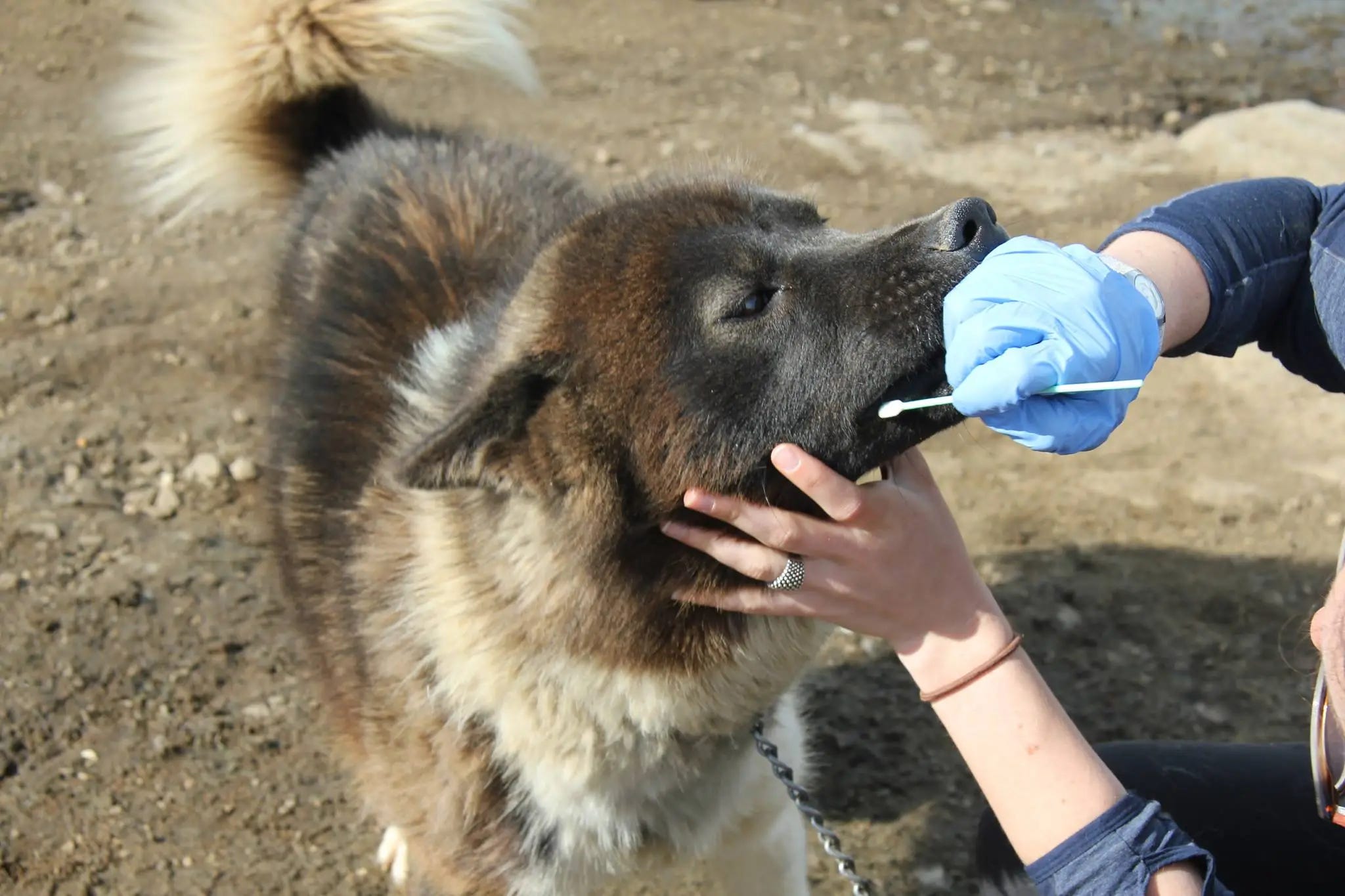
In the shifting light of Arctic winters, where sea ice fractures under the weight of wind and time, a unique dog breed has followed humans for nearly a thousand years. These are the Qimmit — the sled dogs of Greenland. More than companions or beasts of burden, they have been active participants in the long story of Inuit adaptation and migration. A new study published in Science maps their genetic history across nearly two millennia, and in doing so, provides a rare, canine-centered view of human resilience and cultural endurance.A Thousand-Year Partnership on IceGreenland's Qimmeq are not simply dogs that pull sleds. They are a genetically distinct population, isolated from European admixture and maintained across centuries of Arctic life. While other indigenous Arctic breeds, such as the Siberian husky or Canadian Inuit dog, have undergone interbreeding or transformed into domestic pets, Qimmit have remained remarkably consistent — bred by Inuit for work, not aesthetics.The new research, led by Tatiana Feuerborn and colleagues, analyzed 92 complete dog genomes, ranging from ancient archaeological specimens to modern dogs living with mushers today. It offers one of the most complete genetic time series for any dog population on Earth. As the authors note, these sled dogs "have continuously worked with the Inuit in Greenland for more than 800 years."Tracing the Trail of MigrationsFrom the Siberian tundra to the coastlines of Greenland, the Qimmeq genetic footprint follows the path of Inuit migration. The dogs’ genome reveals two waves of migration into Greenland from Canada, beginning around 1,200 years ago. That timeline challenges previous assumptions, placing Inuit arrival several centuries earlier than archaeological consensus once held.These migrations left their mark not only on the land but in the genomic structure of the sled dogs. The research team found four genetically distinct Qimmeq populations in Greenland today, corresponding to the northeast, north, west, and east — mirroring the settlement patterns of Inuit groups.In the northeast, where a precontact population once thrived, genetic data revealed deep isolation. When the Inuit disappeared from the region in the early 19th century, so too did their dogs. Later settlers reintroduced dogs from other regions, resulting in a marked discontinuity in the genetic record.Did Sled Dogs Mix with Wolves?For generations, stories have circulated of Greenlanders breeding wolves with their sled dogs to improve strength and stamina. Phenotypically, some sled dogs bear resemblance to their wild cousins. But when tested, the data told a more complex story.Yes, ancient Arctic dogs share more DNA with wolves than dogs from Africa or Europe, but the signal appears to predate the migration into North America. There is no compelling evidence of recent wolf-dog hybridization in the Qimmeq lineage.The Cost of Isolation and the Danger of DeclineToday, Qimmit populations are declining. Numbers fell from 25,000 in 2002 to just 13,000 by 2020. Snowmobiles, climate change, and changing lifestyles are reshaping Arctic life. But dogs offer something machines cannot: endurance without fuel, a nose that can smell prey beneath the ice, and a silence that doesn’t startle seals.Despite their long-term isolation, the genetic health of Qimmit is surprisingly robust. Inbreeding is relatively limited. Some subpopulations, especially in the northeast, show signs of past bottlenecks and elevated homozygosity, but overall diversity has been preserved. Their genomes reflect both hardship and adaptation — episodes of famine, disease, and cultural shifts are all visible in their genetic scars.Dogs as Cultural ProxiesPerhaps the most powerful insight from this study is not just about dogs, but about people. The structure of Qimmeq populations parallels that of Inuit communities. In their migrations, their isolations, and their resilience, dogs and humans have shared a fate.And the divergence patterns suggest something more provocative: the Inuit may have reached Greenland before the Norse settlers. If so, it would reshape historical narratives about who arrived first, and under what circumstances.A Genetic Line Worth PreservingThe Greenland Qimmeq is not just one of the oldest dog breeds still alive. It is a living thread connecting the past to the present. Genomics now offers a tool not just to trace that thread backward, but to ensure it continues.With careful management, breeding policies, and a recognition of the dogs' cultural value, there is a future for the Qimmeq. That future is not just canine. It is human too.Related Research:* Sinding, M. H. S., et al. (2020). Arctic-adapted dogs emerged at the Pleistocene-Holocene transition. Science, 368(6498), 1495–1499. https://doi.org/10.1126/science.aaz8599* Ni Leathlobhair, M., et al. (2018). The evolutionary history of dogs in the Americas. Science, 361(6397), 81–85. https://doi.org/10.1126/science.aao4776* Brown, S. K., Darwent, C. M., & Sacks, B. N. (2013). Ancient DNA evidence for genetic continuity in Arctic dogs. Journal of Archaeological Science, 40(2), 1279–1288. https://doi.org/10.1016/j.jas.2012.09.030* Ameen, C., et al. (2019). Specialized sledge dogs accompanied Inuit dispersal across the North American Arctic. Proceedings of the Royal Society B, 286(1917), 20191929. https://doi.org/10.1098/rspb.2019.1929 This is a public episode. If you'd like to discuss this with other subscribers or get access to bonus episodes, visit www.anthropology.net/subscribe
NOW PLAYING
The Dogs That Pulled History: A Genetic Chronicle of Greenland's Sled Dogs
No transcript for this episode yet
Similar Episodes
No similar episodes found.
Similar Podcasts
No similar podcasts found.