
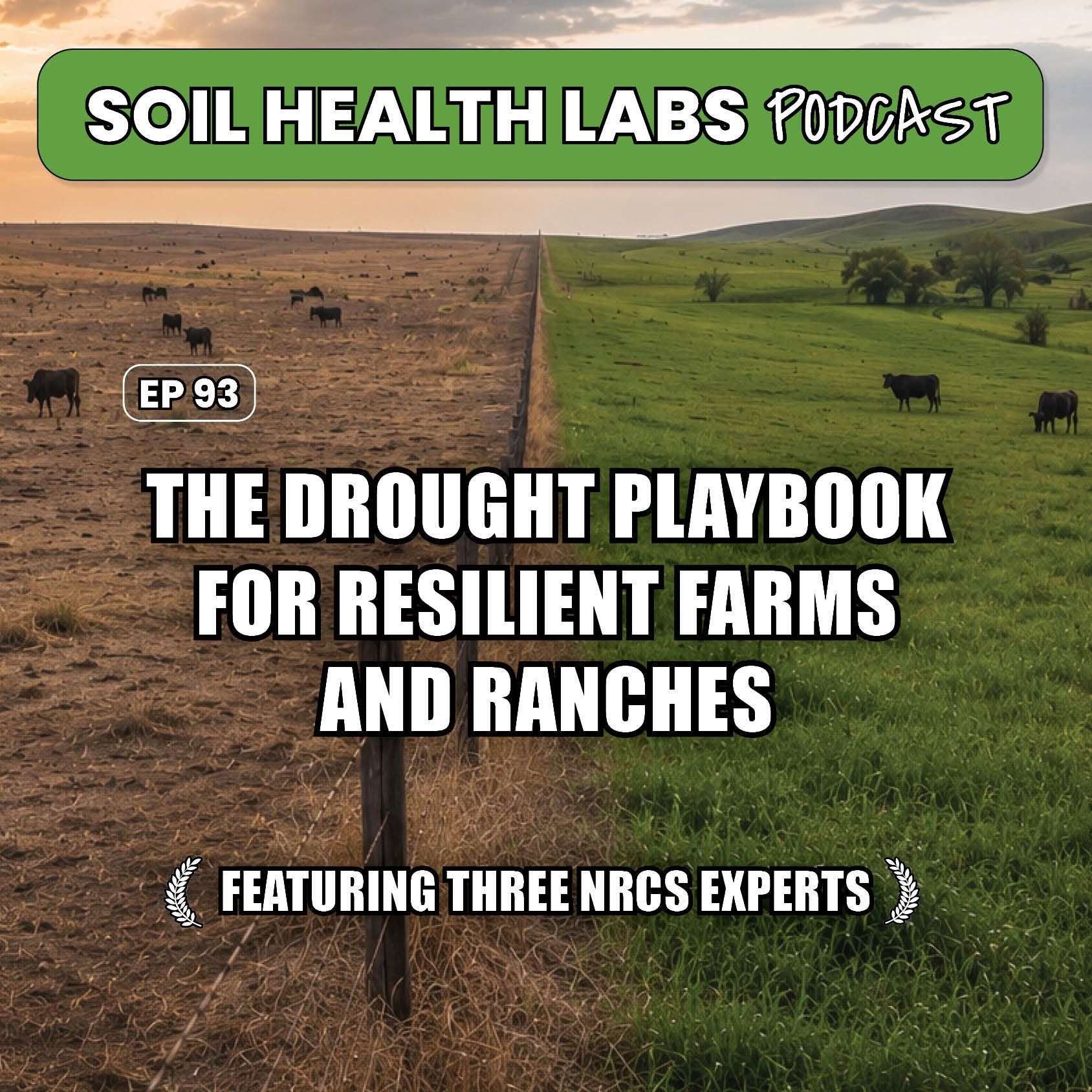
EPISODE · May 14, 2026 · 11 MIN
The Drought Playbook for Resilient Farms and Ranches
from Soil Health Labs · host Soil Health Labs
Drought doesn’t begin when the grass turns brown. It begins much earlier—when producers continue operating as though rain is guaranteed. In this short-form episode, three experienced South Dakota Natural Resource Conservation Service (NRCS) representatives—Tanse Herrmann, Marcia Deneke, and Emily Rohrer—share practical strategies for navigating dry conditions before they become a crisis. This conversation is focused on one central idea: Hope is not a drought plan. The discussion moves beyond panic and reaction into practical decision-making for both livestock and crop producers. From delaying pasture turnout and adjusting stocking rates to rethinking fertility timing, yield goals, crop plans, and forage options, this episode is about staying flexible while protecting both the resource and the bottom line. The speakers also explore how drought can create opportunities for collaboration between crop and livestock systems—including grazing standing crops, alternative forage options, and tools like the South Dakota Grazing Exchange. Throughout the episode, one message remains consistent: Act early. Stay flexible. Protect the resource. What You’ll Learn Why drought planning must begin before conditions become severe The importance of delaying turnout when grass is “green but not growing” Why realistic yield goals matter during dry years How split fertilizer applications can reduce risk Practical contingency planning for failed or stressed crops How grazing standing crops can create value while protecting soil Why residue management matters during drought The role of flexibility and alternative enterprises during uncertain years Key Insight Drought doesn’t just test a season. It tests the system. The operations most likely to weather difficult years are often the ones that planned early, stayed flexible, and protected their soil and forage base before conditions worsened. Go Deeper This conversation also inspired an article. To read, go here: 👉 “When the Rain Doesn’t Come: A Practical Drought Playbook for Farmers and Ranchers” https://www.growingresiliencesd.com/post/when-the-rain-doesn-t-come-a-practical-drought-playbook-for-farmers-and-ranchers Additional Resources Mentioned 👉 South Dakota Grazing Exchange: https://sdgrazingexchange.com 👉 SD Grassland Coalition Drought Planning Tools: https://droughtplansdgrass.org About the Speakers Tanse Herrmann is the South Dakota NRCS State Grazing Lands Soil Health Specialist, focused on grazing management, drought resilience, and long-term grassland function. Marcia Deneke serves as South Dakota NRCS State Agronomist, helping producers navigate agronomic decisions related to soil health, crop management, and risk reduction. Emily Rohrer is the South Dakota NRCS State Rangeland Management Specialist, working directly with producers on grazing systems, forage planning, and rangeland resilience. Together, they bring decades of practical, field-based experience helping producers adapt to changing conditions while protecting the long-term health of their operations.
Embed this episode
Ready to play
The Drought Playbook for Resilient Farms and Ranches
No transcript for this episode yet
Similar Episodes
No similar episodes found.
Similar Podcasts
No similar podcasts found.