
EPISODE · Nov 21, 2024 · 20 MIN
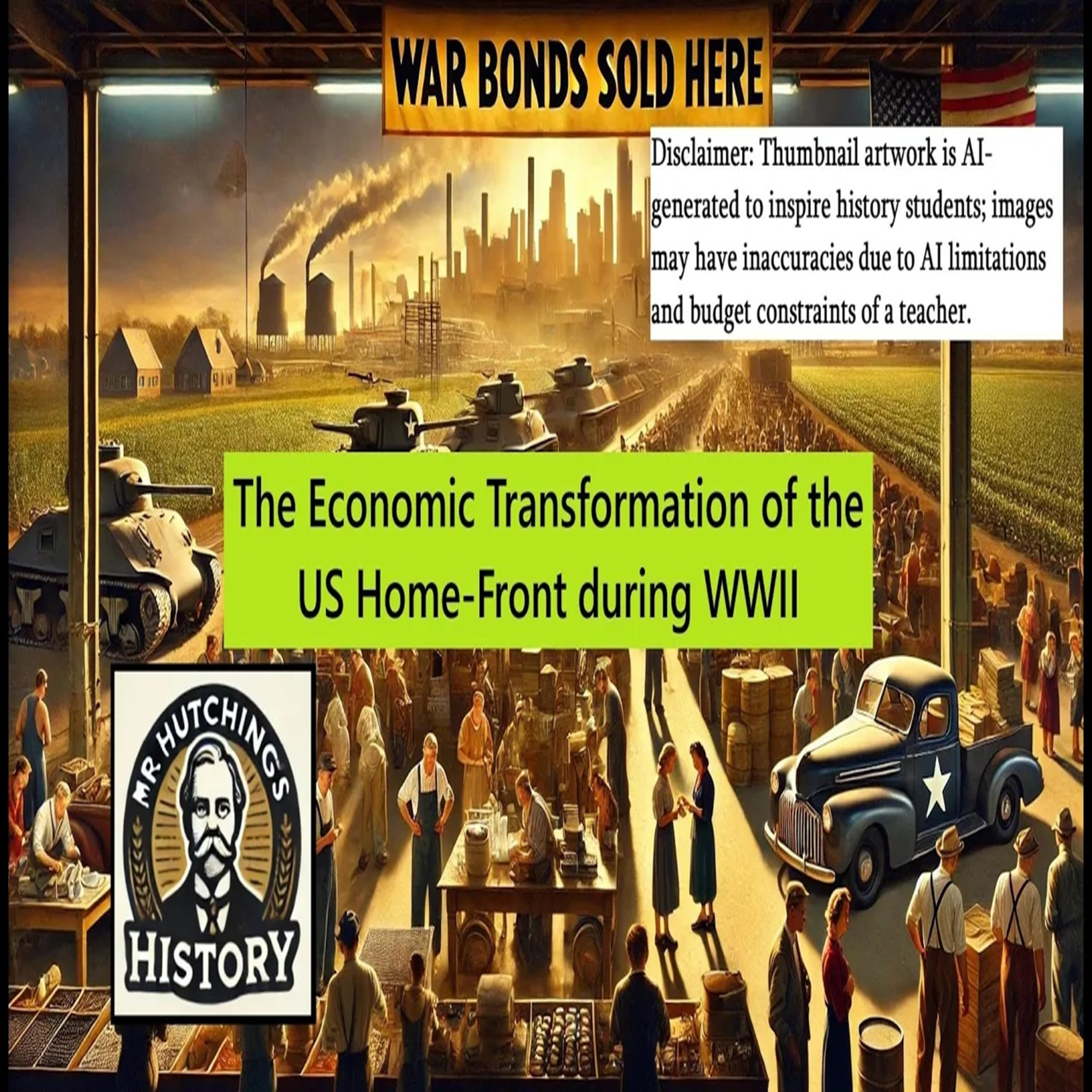
The Economic Transformation of the US Home-Front during WWII
from Mr. Hutchings History · host Produced, created, and written by Harold M. Hutchings
Welcome to Mr. Hutchings History! In this episode, we analyze the profound economic transformation of the United States during the Second World War. As the U.S. transitioned from the Great Depression to global economic leadership, the war reshaped industries, labor, and the workforce. From mass production of military goods to the mobilization of women and minorities, the U.S. economy evolved rapidly to support the war effort. We explore key institutions like the War Production Board, the impact of war bonds, and the role of rationing, all while highlighting social changes such as the rise of women in the workforce and the expansion of civil rights. We’ll also look at post-war planning, including the GI Bill and the creation of the World Bank, which set the stage for America’s economic dominance in the decades that followed. This episode delves into how WWII catalyzed the U.S.’s rise as a global economic superpower and explores various historical interpretations of the wartime economic mobilization. #WWIIUSHomefront #EconomicMobilization #WarEconomy #RooseveltsAmerica #WomenInWorkforce #MilitaryIndustrialComplex #GIBill #PostWarEconomy #WWIIImpact #USEconomy #LaborMobilization #SocialChange #HistoryOfTheUS #EconomicHistory #GlobalSuperpower #WWIISocialChange #RationingAndConservation #HistoryOfTheAmericas #USHistory #EconomicTransformation Works Cited Harrison, Mark. The Economics of World War II: Six Great Powers in International Comparison. Cambridge UP, 1998.Hogan, Michael J. A Cross of Iron: Harry S. Truman and the Origins of the National Security State, 1945-1954. Cambridge UP, 2000. Kennedy, David M. Freedom from Fear: The American People in Depression and War, 1929-1945. Oxford UP, 1999.Wilson, Mark R. Destructive Creation: American Business and the Winning of World War II. University of Pennsylvania Press, 2016.
Embed this episode
NOW PLAYING
The Economic Transformation of the US Home-Front during WWII
No transcript for this episode yet
Similar Episodes
No similar episodes found.
Similar Podcasts
No similar podcasts found.