The Gipsy Ground by Rich Holschuh episode artwork

EPISODE · Feb 16, 2019 · 7 MIN

The Gipsy Ground by Rich Holschuh

from The Brattleboro Historical Society Podcast · host Brattleboro Historical Society

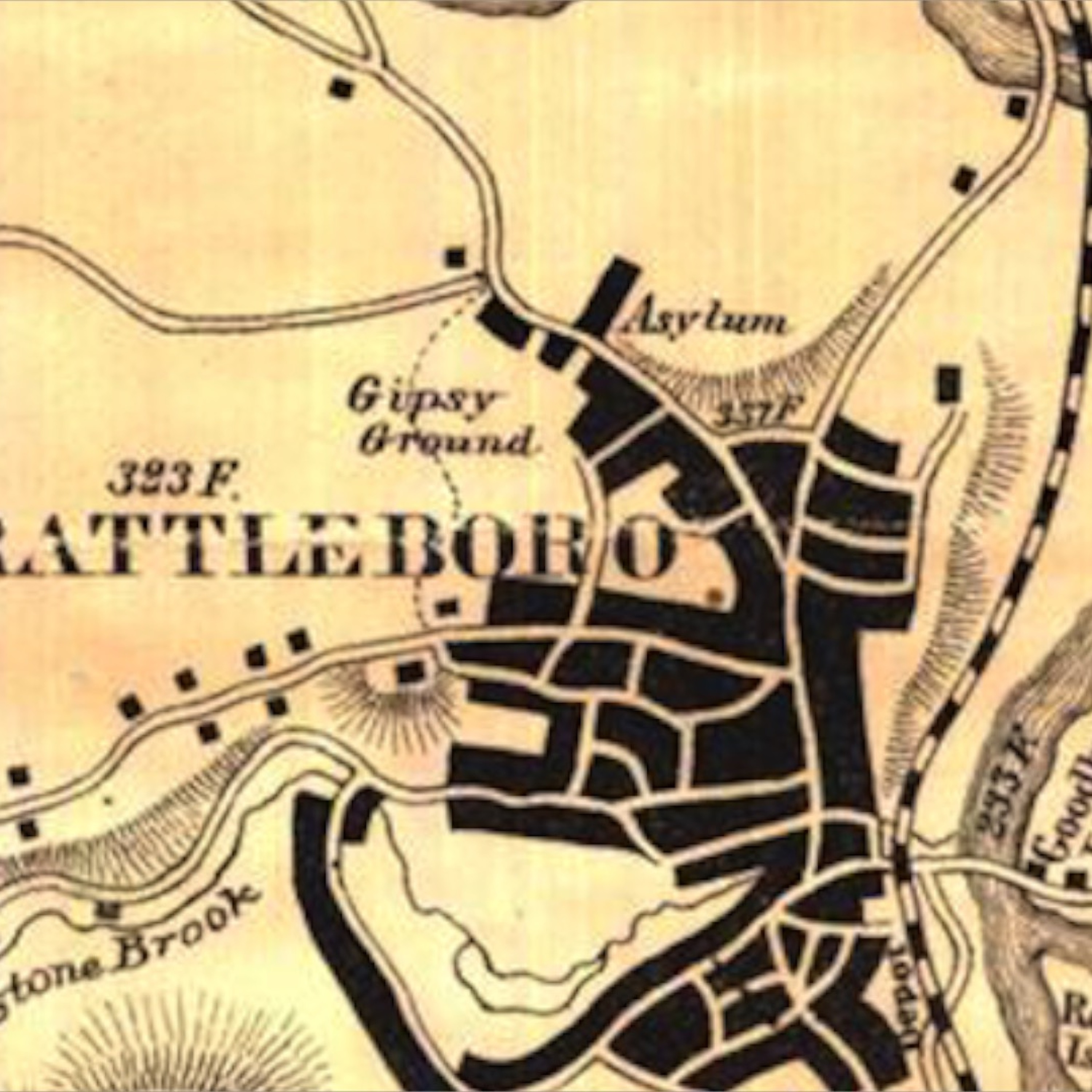
In Vermont, sociologists now recognize that the term “gypsy” was often applied to the indigenous Abenaki peoples, and their kin, some of whom adopted an itinerant peddler version of their annual subsistence cycles. In the nineteenth century, a local physician-cum-cartographer, Charles William Grau created a map of Brattleboro, noting an area off, what is today Cedar Street, as the “Gypsy Grounds.” If the the misapprehended Abenaki were in fact Dr. Grau’s, “Gypsies,” - and we know they were - than the misapplied moniker nevertheless hints at a truth within the Gypsy Grounds even deeper than Dr. Grau would ever imagine. The earliest European settlers understood lands around Brattleboro sheltered Abenaki homes and villages prior to influx of European settlers into southern Vermont. But labeling the Abenaki presence on these lands as pre-contact fails to express the magnitude of that history and character of this place. The Abenaki presence in this area doesn’t just predate European settlers, it predates western civilization. By a lot. As civic ideas started to slowly accrete in the ancient middle east, the Abenaki’s ancestors had already been living throughout this area for over 5,000 years. It is perhaps fitting that ancient peoples would seek and find safety and sustenance in the shadow of a formation old even by geologic standards. Today, upon the erstwhile Gypsy Grounds, we find a cornfield that is commandeered by cars to form a parking lot for two days each winter. And atop the Abenaki’s four-hundred-million year old outcropping of windward protection, rests Fred Harris’ ski jump, Harris Hill.

In Vermont, sociologists now recognize that the term “gypsy” was often applied to the indigenous Abenaki peoples, and their kin, some of whom adopted an itinerant peddler version of their annual subsistence cycles. In the nineteenth century, a local physician-cum-cartographer, Charles William Grau created a map of Brattleboro, noting an area off, what is today Cedar Street, as the “Gypsy Grounds.” If the the misapprehended Abenaki were in fact Dr. Grau’s, “Gypsies,” - and we know they were - than the misapplied moniker nevertheless hints at a truth within the Gypsy Grounds even deeper than Dr. Grau would ever imagine. The earliest European settlers understood lands around Brattleboro sheltered Abenaki homes and villages prior to influx of European settlers into southern Vermont. But labeling the Abenaki presence on these lands as pre-contact fails to express the magnitude of that history and character of this place. The Abenaki presence in this area doesn’t just predate European settlers, it predates western civilization. By a lot. As civic ideas started to slowly accrete in the ancient middle east, the Abenaki’s ancestors had already been living throughout this area for over 5,000 years. It is perhaps fitting that ancient peoples would seek and find safety and sustenance in the shadow of a formation old even by geologic standards. Today, upon the erstwhile Gypsy Grounds, we find a cornfield that is commandeered by cars to form a parking lot for two days each winter. And atop the Abenaki’s four-hundred-million year old outcropping of windward protection, rests Fred Harris’ ski jump, Harris Hill.

NOW PLAYING

The Gipsy Ground by Rich Holschuh

0:00 7:36

No transcript for this episode yet

We transcribe on demand. Request one and we'll notify you when it's ready — usually under 10 minutes.

No similar episodes found.

No similar podcasts found.

Frequently Asked Questions

How long is this episode of The Brattleboro Historical Society Podcast?

This episode is 7 minutes long.

When was this The Brattleboro Historical Society Podcast episode published?

This episode was published on February 16, 2019.

What is this episode about?

In Vermont, sociologists now recognize that the term “gypsy” was often applied to the indigenous Abenaki peoples, and their kin, some of whom adopted an itinerant peddler version of their annual subsistence cycles. In the nineteenth century, a local...

Can I download this The Brattleboro Historical Society Podcast episode?

Yes, you can download this episode by clicking the download button on the episode player, or subscribe to the podcast in your preferred podcast app for automatic downloads.
URL copied to clipboard!