
EPISODE · Feb 5, 2025 · 17 MIN
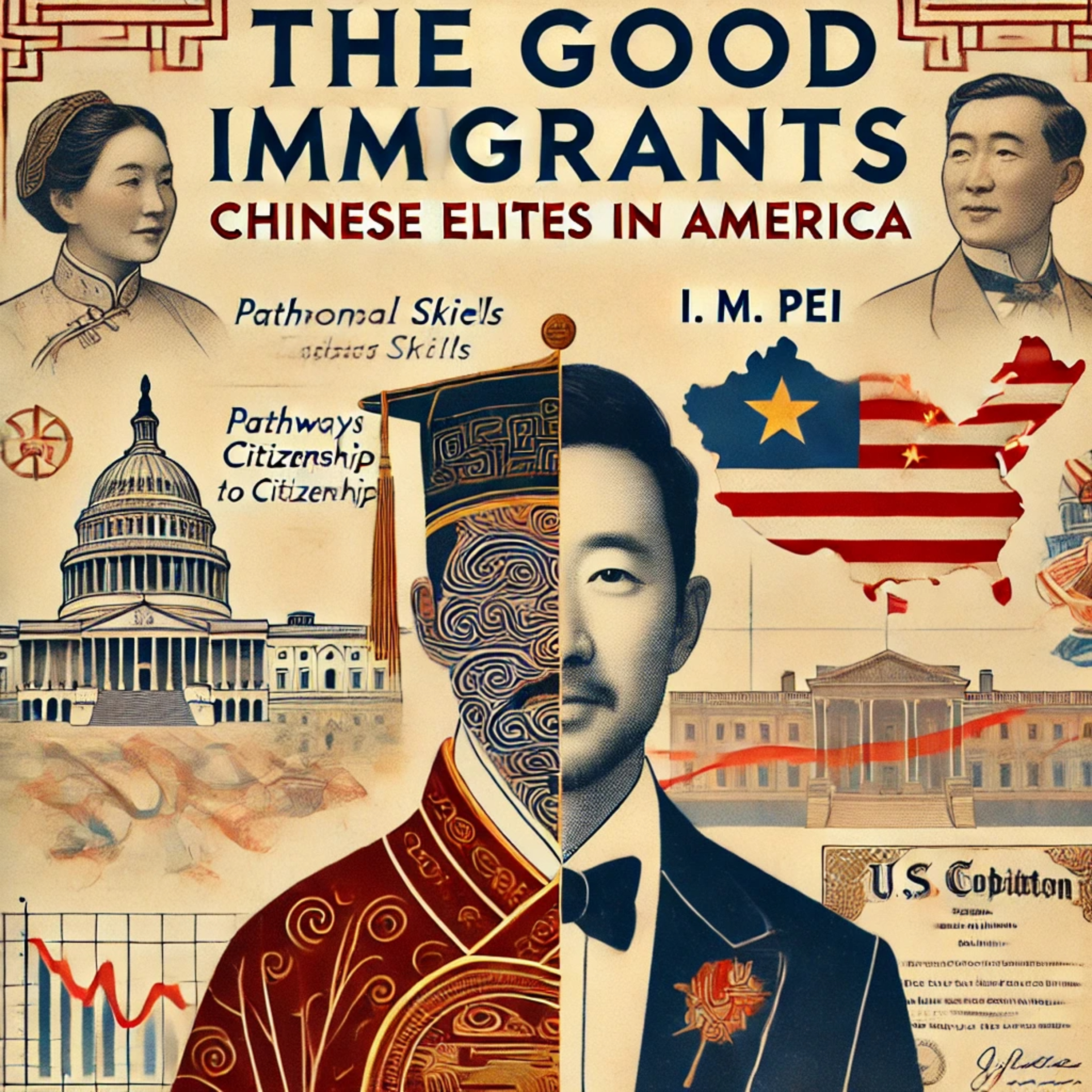
The Good Immigrants: How US Policies Shaped Chinese Elite Migration
from The New East Asian Studies Podcasts in the Age of AI · host Barton Qian
How did U.S. immigration policies cultivate the "model minority" narrative for Asian Americans? In this episode, we explore Madeline Hsu’s The Good Immigrants, which examines a century of Chinese elite migration to the U.S. through the lens of immigration exemptions for intellectuals, businessmen, and students. From the earliest restrictions targeting Chinese laborers to exemptions for those with professional skills or Western education, we discuss how U.S. policies shaped the characteristics of Chinese migrants. Through stories of figures like Madame Chiang Kai-shek and I. M. Pei, we delve into how geopolitical events such as World War II and the Cold War further transformed Chinese immigrants into symbols of American competitiveness and modernity. Join us as we uncover how talent and training created pathways to citizenship for a select few while reinforcing broader immigration inequalities. Chinese elite migration to the U.S. Immigration policies and Asian Americans Model minority narrative in immigration U.S. immigration exemptions for students Cold War and Chinese immigration Chinese professionals and American modernity History of Chinese immigrants in the U.S. 1965 Immigration Act and Asian Americans Immigration and American economic competitiveness Western-educated Chinese in the U.S. Madeline Hsu The Good Immigrants analysis Madame Chiang Kai-shek and U.S.-China relations I. M. Pei’s story as a Chinese immigrant Chinese students as Cold War refugees U.S. immigration laws and Chinese professionals Talent-based immigration during the Cold War American influence on Chinese modernization World War II and Chinese immigration policies Professional skills and pathways to citizenship Legacy of U.S. immigration exemptions Asian American Studies Race and Ethnicity
Embed this episode
Ready to play
The Good Immigrants: How US Policies Shaped Chinese Elite Migration
No transcript for this episode yet
Similar Episodes
No similar episodes found.
Similar Podcasts
No similar podcasts found.