
EPISODE · Feb 12, 2026 · 7 MIN
The ICE Grift: How the National Police Project Makes Us Poorer and Less Free
from Carl's Mind Chimes Magazine Podcasts · host Carl Cimini
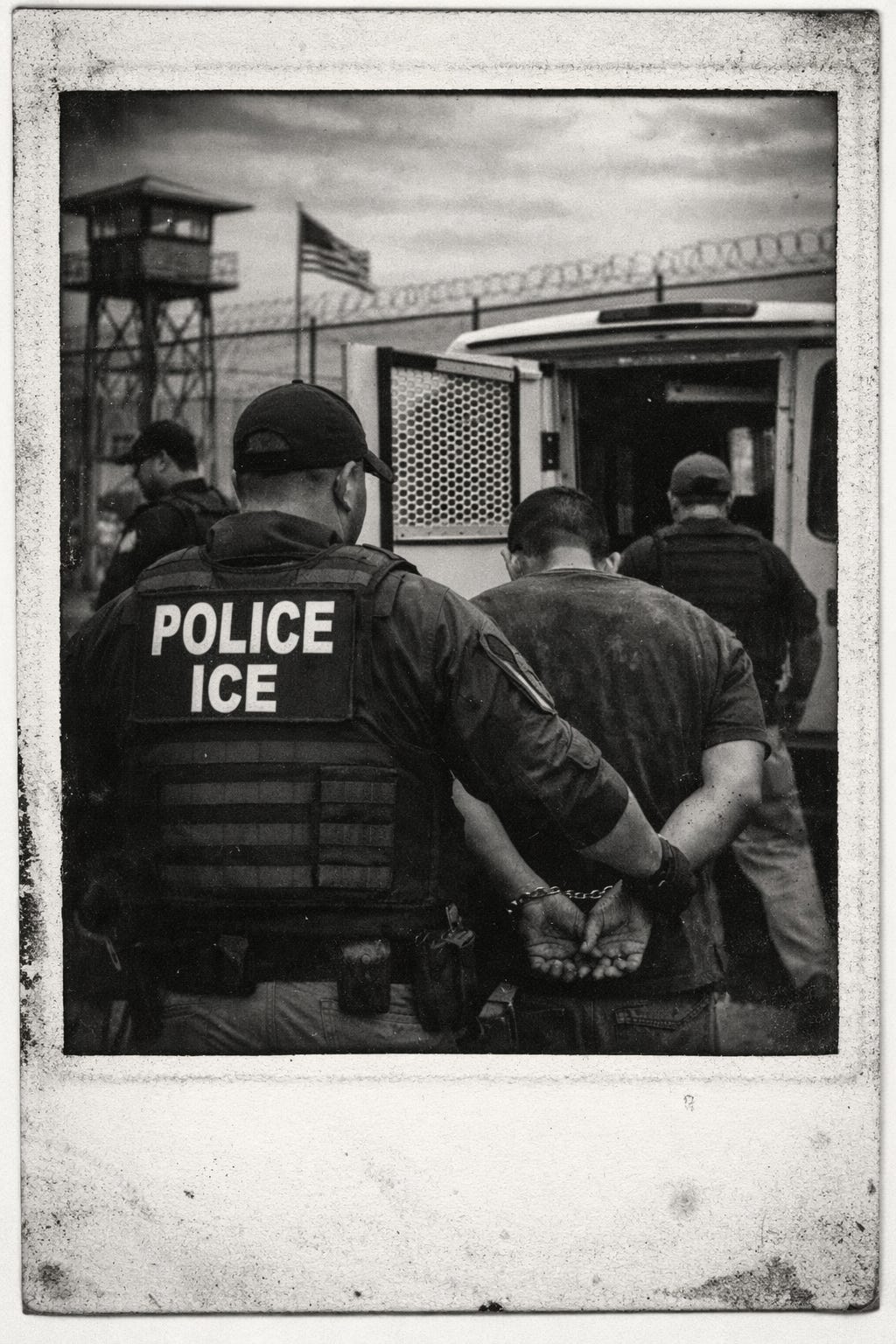
Best looking man on substackYou get to pay twice and lose your freedom at gunpointThere is an old political truth: you measure a society not by its threats, but by where it chooses to place its trust, and where it places its treasure. Right now, that measure has been thrown into sharp relief by the extraordinary expansion of U.S. Immigration and Customs Enforcement—better known as ICE. Not merely an agency, ICE is fast becoming America’s most heavily funded law enforcement body, consuming federal dollars at a scale that rivals our toughest military wings. This should trouble every one of us—not because we lack concern about crime or secure borders, but because of what this investment means for our shared democratic life.The so-called One Big Beautiful Bill passed by Congress in 2025 catapulted ICE’s funding into the stratosphere—pumping tens of billions into detention capacity, transportation, deportation operations, and city after city’s phone lines buzzing with recruitment drives. The result: a deportation apparatus with a budget larger than every other federal law enforcement agency combined and expanding rapidly year after year. But nuance is not surrender to good intentions. The question is not whether enforcement should exist—of course, a sovereign nation enforces its laws—but what it becomes when its scale and reach eclipse every other commitment we make as a republic.1. A Penal Colony in Plain SightConsider this: the architecture of ICE’s expansion looks less like measured enforcement and more like state-sponsored isolation. Thousands of detention beds stretch across the country; facilities filled with people awaiting hearings that may never come; parents separated from children; asylum seekers locked in cages far from any legal recourse. This is not incidental. The funding bill explicitly authorized billions to expand beds and hire tens of thousands of officers—turning civil immigration enforcement into a sprawling internal system reminiscent of a penal colony. A once-modest agency has evolved into a national apparatus whose primary product is detention—with little oversight and even less accountability. We see the human cost played out not in abstractions but in legal filings and courtroom crush: courts overwhelmed with habeas petitions as ICE detentions surge, tying up judges, public defenders, and prosecutors in a system that often fails to distinguish criminal from civil cases.2. The Double Dip Through Local Law EnforcementThe grift becomes clearer when we chart the flow of these federal dollars into local budgets and bodies:* ICE now offers incentives to local officers—salary reimbursement, bonuses, and promises of federal backing—to join task forces and cooperate with deportation operations. * Rural counties, already strapped for cash, find themselves pressured to participate, reimbursed by federal funds in ways that reshape their own policing priorities. * Entire local departments watch colleagues leave for ICE’s higher pay, or get pulled into joint operations, draining community law enforcement’s capacity to address local needs.This is not merely a drain on municipal budgets—it is a structural inefficiency. When your small police department loses officers to ICE, whose payroll it effectively subsidizes, the result is understaffed streets, hollowed-out community policing, and more money sent outward to replace the loss of trained local police with new hires at a rate commensurate with the pay rates of bully ICE officers. So your local taxes go up to cover the new replacement hires. 3. A Main Street Grift, Not a Public Safety ProjectThere is a stone-cold cruelty in calling this a public safety program. Because the evidence suggests that despite skyrocketing spending and swelling ranks of agents, the share of immigrants detained who have a criminal conviction has fallen, even as arrests climb. That means more people being corralled for civil violations rather than criminal threats to the public. Meanwhile, real threats—cybercrime, drug trafficking, violent crime—see key investigators reassigned to immigration enforcement. Southern District prosecutors and federal investigators are pulled off their lanes to meet arbitrary deportation quotas, even when they do little to improve community safety. And there is a further human calculus: entire communities—immigrant-owned businesses, schools, families—reel under the fear and economic disruption of operation after operation. In Minnesota, intensified ICE activities have hollowed out neighborhood commerce and spurred mass protests that demand a return to accountability and constitutional norms. 4. A Different Measure of LibertyWhat this all adds up to, when you step back and let the numbers settle like dust on a shuttered street, is a society that has traded fiscal and moral capital for militarized policing at home—a choice that makes everyone poorer, less secure, and less free.We are taught from cradle that freedom is not just the absence of threat but the presence of opportunity: the chance to walk your city without fear, to send your children to school without apprehension, to build a business without risking arbitrary detention. But when the mechanism of enforcement overshadows every other public good—health care, infrastructure, education, housing—then we must ask ourselves a simple question: who benefits?The answer is not hard to find: not the small shopkeeper shut out of commerce by fear; not the overstretched local police department who lost officers and resources; not the families whose economies are disrupted; not the taxpayers whose treasure subsidizes an ever-expanding federal police force.5. Vote for the World You Want to Live InIf this seems a bleak catalog, remember: democracy is not a ledger of deficits, but a measure of collective choice. When you vote, when you engage, when you speak—do so for a world that values people above unchecked power. For a nation that invests in well-being rather than punishment. For a society that builds bridges—legal, economic, cultural—rather than cells.Justice is not measured in cages built, agents hired, or budgets ballooned. It is measured in dignity sustained, rights protected, and communities strengthened.That is the world worth defending—and the one worth building.Footnotes* ICE’s funding surge under the One Big Beautiful Bill expanded the agency’s budget into unprecedented territory, making it the most heavily funded federal law enforcement agency. (Wikipedia)* Courts in Minnesota are overwhelmed by ICE detentions, revealing systemic strain on due process. (WIRED)* Federal incentives increasingly reimburse local law enforcement for cooperation with ICE, reshaping rural law enforcement priorities. (KCUR)* Studies show a declining proportion of ICE detainees with criminal convictions, even as arrests increase. (Brennan Center for Justice)* Economic and social disruptions from expanded ICE enforcement have sparked protests and eroded community commerce in cities like Minneapolis. (The Guardian)Carl’s Mind Chimes Magazine is a reader-supported publication. To receive new posts and support my work, consider becoming a free or paid subscriber. This is a public episode. If you'd like to discuss this with other subscribers or get access to bonus episodes, visit mindchimesmagazine.substack.com/subscribe
NOW PLAYING
The ICE Grift: How the National Police Project Makes Us Poorer and Less Free
No transcript for this episode yet
Similar Episodes
Sep 29, 2023 ·76m
Sep 29, 2023 ·73m
Sep 29, 2023 ·72m
Sep 29, 2023 ·75m
Sep 29, 2023 ·75m
Sep 29, 2023 ·73m