The “Inert” Material That Beat the King of Catalysts ⚗️💡 episode artwork

EPISODE · Mar 10, 2026 · 22 MIN

The “Inert” Material That Beat the King of Catalysts ⚗️💡

from The Deep Dive Lab: Unraveling Materials Science · host Son Hoang

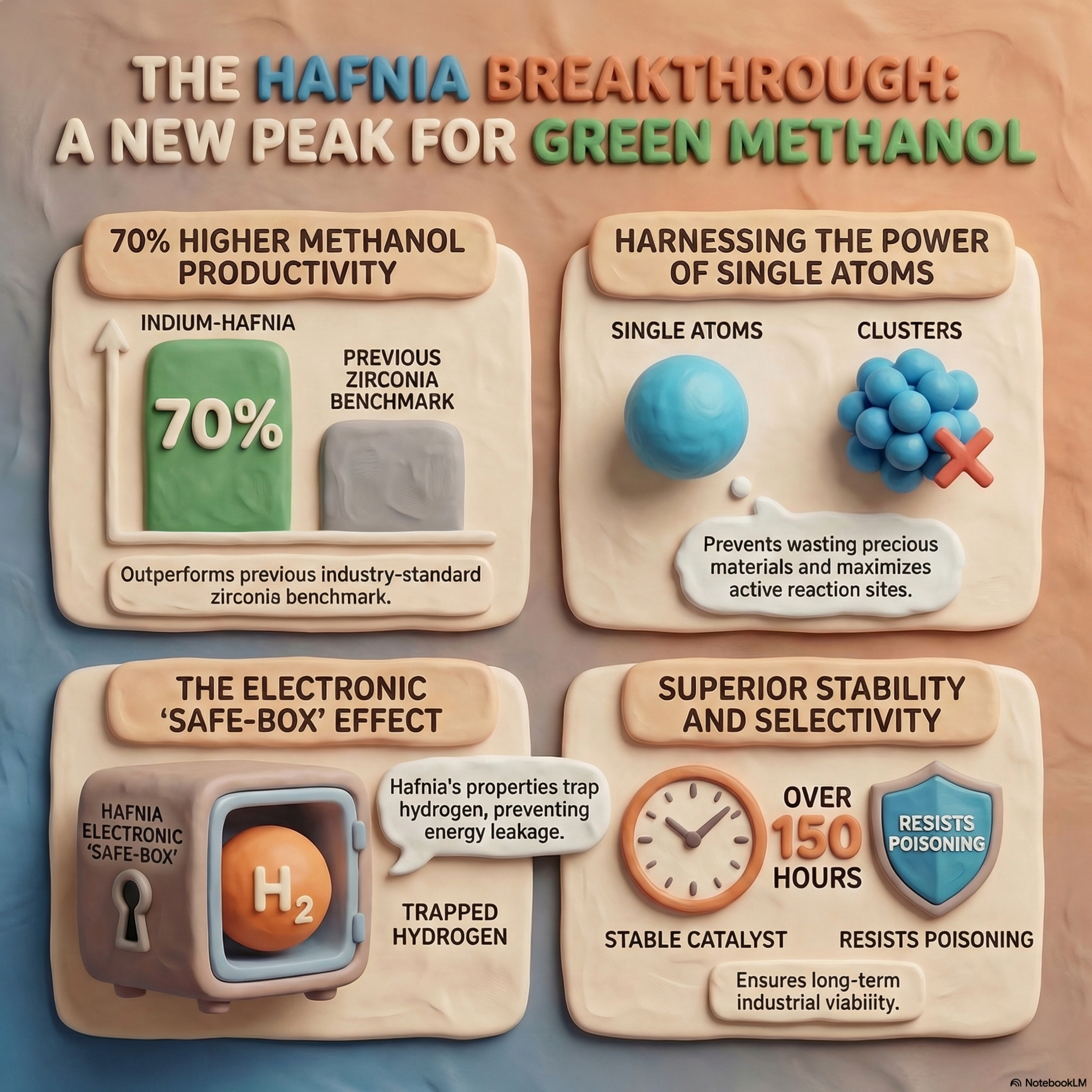
For nearly a decade, scientists believed the race to produce green methanol from CO₂ had hit a hard limit. The benchmark catalyst—based on zirconia—seemed impossible to beat.Then an unlikely challenger appeared: hafnia, a material best known as a high-κ dielectric used in semiconductor chips.Once dismissed as chemically inert, hafnia has now shattered the field’s performance ceiling. By anchoring single indium atoms onto flame-engineered hafnia surfaces, researchers achieved 70% higher methanol productivity—breaking a decade-long stagnation in catalyst design.The secret lies in hafnia’s electronic DNA. Its wide bandgap and high dielectric constant, famous for preventing electron leakage in microchips, now create a cooperative hydride–proton reservoir that keeps catalytic reactions highly active.Even more exciting, this platform may be universal. The same dielectric-supported single-atom strategy dramatically boosts other metals as well—showing 268× improvement for gallium systems and 137× for zinc systems.This discovery reveals something remarkable:the materials inside our electronics and processors may hold hidden solutions for the clean-energy transition.🎧 In this episode, we explore the moment when semiconductor physics meets green chemistry.Source:Single atoms of indium on hafnia enable superior CO₂-based methanol synthesis.Nature Nanotechnology (2026).#materialsScience #greenMethanol #catalysis #CO2Conversion #cleanEnergy #nanotechnology #singleAtomCatalysts #climateTech #deepdivelab

For nearly a decade, scientists believed the race to produce green methanol from CO₂ had hit a hard limit. The benchmark catalyst—based on zirconia—seemed impossible to beat.Then an unlikely challenger appeared: hafnia, a material best known as a high-κ dielectric used in semiconductor chips.Once dismissed as chemically inert, hafnia has now shattered the field’s performance ceiling. By anchoring single indium atoms onto flame-engineered hafnia surfaces, researchers achieved 70% higher methanol productivity—breaking a decade-long stagnation in catalyst design.The secret lies in hafnia’s electronic DNA. Its wide bandgap and high dielectric constant, famous for preventing electron leakage in microchips, now create a cooperative hydride–proton reservoir that keeps catalytic reactions highly active.Even more exciting, this platform may be universal. The same dielectric-supported single-atom strategy dramatically boosts other metals as well—showing 268× improvement for gallium systems and 137× for zinc systems.This discovery reveals something remarkable:the materials inside our electronics and processors may hold hidden solutions for the clean-energy transition.🎧 In this episode, we explore the moment when semiconductor physics meets green chemistry.Source:Single atoms of indium on hafnia enable superior CO₂-based methanol synthesis.Nature Nanotechnology (2026).#materialsScience #greenMethanol #catalysis #CO2Conversion #cleanEnergy #nanotechnology #singleAtomCatalysts #climateTech #deepdivelab

NOW PLAYING

The “Inert” Material That Beat the King of Catalysts ⚗️💡

0:00 22:46

No transcript for this episode yet

We transcribe on demand. Request one and we'll notify you when it's ready — usually under 10 minutes.

No similar episodes found.

No similar podcasts found.

Frequently Asked Questions

How long is this episode of The Deep Dive Lab: Unraveling Materials Science?

This episode is 22 minutes long.

When was this The Deep Dive Lab: Unraveling Materials Science episode published?

This episode was published on March 10, 2026.

What is this episode about?

For nearly a decade, scientists believed the race to produce green methanol from CO₂ had hit a hard limit. The benchmark catalyst—based on zirconia—seemed impossible to beat.Then an unlikely challenger appeared: hafnia, a material best known as a...

Can I download this The Deep Dive Lab: Unraveling Materials Science episode?

Yes, you can download this episode by clicking the download button on the episode player, or subscribe to the podcast in your preferred podcast app for automatic downloads.
URL copied to clipboard!