
EPISODE · Apr 22, 2026 · 37 MIN
The Information Exchange: Russian Dolls and Headless Tractors
from The Information Exchange · host Brendan Keeler, Pryce Ancona, and Brad Thorson
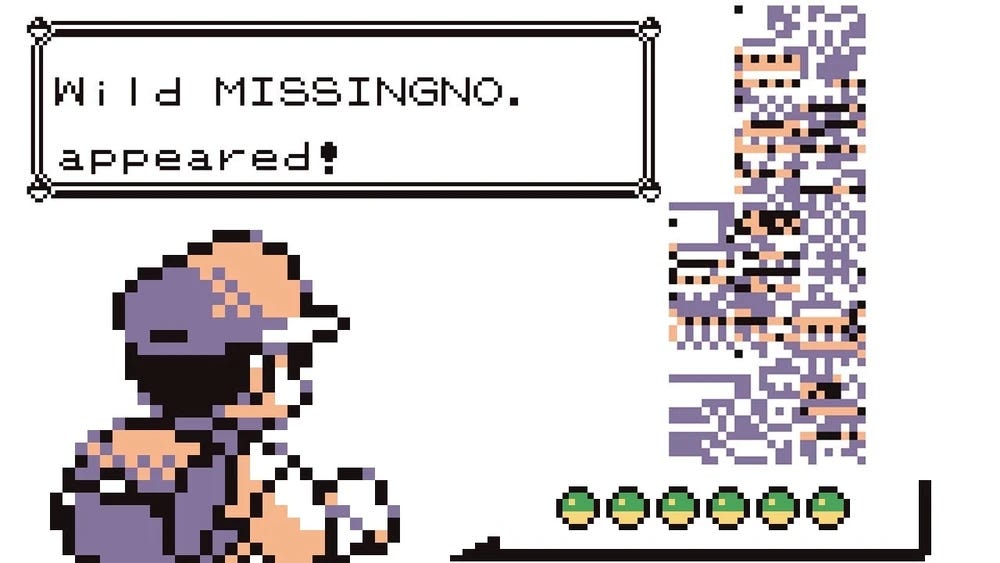
The Information Exchange does not sleep¹, because, well, CMS is absolutely dialed in lately:* Brad recaps the CMS Aligned Networks launch event in DC: CLEAR, ID.me, TEFCA rails, and Humana’s senior care demo all got stage time, but the question is what happens on the non-patient-access tracks before July* ACCESS approved its first cohort. Brendan plays optimist on CMMI’s willingness to swing big on outcome-aligned chronic care payments while Brad plays pessimist on lemon-dropping and the 50% withhold that could empty out year two. A Polymarket line gets opened at 60%.* CMS-0062 was supposed to be a tidy little drug rule. It is not. We walk through why it’s bigger than 0053, layers onto the 2024 prior auth rule, and in some places contradicts the claims attachments rule from three weeks ago, including the buried RFI to certify payer technology (HTI-2’s ghost returns)* Russian doll payers, Succession-level CMS subplots: why a single payer name hides 15 claims systems, why ERISA keeps TPAs out of reach no matter how well you wire things up, and whether HIIG and the HIPAA standards group are copacetic or knife-fighting over X12 vs. FHIR* John Deere lost its right-to-repair fight. Brad flagged it and Brendan connects it straight to the antitrust and information blocking playbook, diabetes device jailbreaking, and every system of record’s eventual discovery of platform rent extraction* Salesforce went headless. Agentforce opens the UI, APIs, and MCP layer. Brendan argues it’s a per-token pricing play, not altruism. Brad counters with the DoorDash problem and why Epic’s moat is the hospital’s local politics, not the software. Brendan plays foil: in some fraction of the multiverse, this looks as dumb in retrospect as cable companies building streamers.Are you curious about Brad’s Wisconsin farming roots? Wondering about the novel gambling-based business model for the podcast? Or wondering why Missingno is in your inbox? Listen to hear more.¹ Aside from the two week breaks between episodesRelevant Articles* CMS Health Tech Ecosystem First Wave Event* ACCESS Model Accepted Applicants* CMS-0062: The Entrée Has Arrived* CMS-0062: Same Drug, Two Standards* CMS-0062: An Intra-Agency Cold War Goes Hot* “Have you heard about the Pope?”* The Great Beheading Begins* The Infinite Rare Candies Glitch (Missingno)* The Door Dash Problem* How Interoperability Won on the FarmChapters* CMS Aligned Networks Takes the Stage (00:00): Brad reports back from Amy Gleason’s DC showcase, where CLEAR, ID.me, and a parade of startups demoed patient identity, TEFCA-powered history pulls, and QR-code check-ins. Payers and EHRs showed up, Humana ran a senior care coordination demo, and the crew reads the tea leaves on how much of the non-patient-access agenda is actually moving ahead of July.* ACCESS Approves Its First Cohort (03:20): CMMI’s outcome-aligned chronic care model (Advancing Chronic Care with Effective Scalable Solutions) lands its first participants. Brendan plays optimist on why ambitious failure is the point; Brad plays pessimist on lemon-dropping and the 50% withhold pushing providers out in year two. A Polymarket line on success gets opened at 60%.* CMS-0062, Not Just a Drug Rule (09:14): The rule that was supposed to be a tidy RTPB cleanup turns out to be bigger than 0053, layering onto the 2024 prior auth rule and contradicting the claims attachments rule from three weeks prior. The gang maps the scope: Medicare Advantage, Medicaid, CHIP, parts of ACA, and why ERISA keeps employer plans out of reach no matter how well the TPAs wire things up.* Payers as Russian Dolls (13:16): Why a single payer name can hide fifteen claims systems and five acquired Medicaid plans, why PBM and plan rails look nothing alike, and why CPT-2 codes keep haunting Brad’s career. Pryce makes the case for shifting regulatory focus from EHRs to the entities actually holding the risk and the purse strings.* Certifying Payer Tech (16:14): : The ghost of HTI-2 returns! An RFI buried in 0062 proposes extending health IT certification to payer technology, a ZombieHTI-2 idea that would turn payer vendors into potential information blocking actors. Brad and Pryce go thumbs up; Brendan predicts a deafening “no way in hell” from payer tech comment letters.* Step Therapy, ADT, and Succession-Level CMS Subplots (22:28): The other RFIs get a quick pass: step therapy portability as the killer payer-to-payer use case, ADT notifications getting another look, and the telling fact that 0062 tells you to use FHIR Da Vinci for prior auth while 0053 just blessed X12 for attachments. HIIG vs. the HIPAA standards group: copacetic swap or internal knife fight?* John Deere and the Right to Repair (23:59): A Wisconsin boy’s late-night text turns into a clean antitrust parallel. Farmers buying forty-year-old tractors to escape dealer lock-in, diabetes devices getting jailbroken, and why every system of record eventually rediscovers platform rent extraction. Brendan lands it on interoperability as the throughline.* Salesforce Goes Headless (And So Will Everyone Else) (26:38): Agentforce opens the UI, APIs, and MCP layer, and Brendan argues this isn’t altruism: per-token agent pricing beats per-seat licensing at scale, and systems of record would rather capture the agent economy than get scraped by computer-use bots. Pryce extends it to EHR nurse-bot licensure and the commoditization of the front end.* Why the Moat Probably Holds (31:14): Brad counters with the DoorDash problem: operational embeddedness is the real moat, and Salesforce opening up mostly makes it harder for four dudes in a garage to dislodge decades of Fortune 500 data. Epic’s value extends past the software into the hospital system’s local politics, ordinances, and employer relationships.* The Cable Companies Building Streamers Risk (33:59): Brendan plays foil: SaaS has maybe four assets (UI, data, schema, business logic), and Salesforce is giving away two to four of them with only a legal agreement standing between them and an upstart. He doesn’t have conviction, but in some fraction of the multiverse this looks as dumb in retrospect as the streaming wars.* Kalshi Bets and Signoff (35:57): Closing odds, a final pitch for the podcast’s gambling-funded future, and the observation that the American economy is now just healthcare and gambling anyway.TranscriptWe ran the transcript through an LLM to smooth it out. So it’s a rough approximation of the conversation (and in many cases significantly clearer than our rambling), but notably diverges from the word-by-word blows quite a bit.Brendan Keeler (00:00): Ladies and gentlemen, we are back. This episode is going to be CMS-titled, because we’re going to talk a lot about the Centers for Medicare and Medicaid Services. Brad, last week you were boots on the ground in DC. There was an event. What went down?Brad (00:12): Yeah. We missed you all last week because CMS had a big event to celebrate the first launch of applications leveraging CMS Aligned Networks. Amy Gleason brought together a couple hundred people in DC. Much of it was to reiterate the goals of CMS Aligned Networks, introduce some potential new avenues that they could push on, and then allow vendors to show what they were doing with the new rails that CMS is trying to put in place. A ton of it was focused on patient access. That’s something Amy’s been very transparent and consistent about. So we saw CLEAR and ID.me get a lot of screen time, showing patients being able to verify their identity through those solutions and then use the TEFCA rails to pull down their patient history, along with some of the workflows that enables: patients getting faster answers for care questions from AI, checking in and providing a longitudinal patient record at the front desk using a QR code, some scheduling solutions. It really covered the map. Oura did a demo, yes. That was a particularly excellent use case or demo that they showed. One of the things that’s clear is that many of the major payers and EHRs were represented and consistently shown.Pryce (01:22): Wearable technology, you know.Brad (01:38): But there also are a number of startups that are finding quick paths to market access. So overall, some of the things I took away: Amy has been hard at work for the last nine months trying to get people going on these. And while there’s progress, there’s still a long way to go to get this to tie together into a cohesive strategy.Pryce (01:52): Thank you, Amy.Brad (02:01): CMS, just across the board, with the number of things they’re trying to do, has really pushed their technical team to be able to support things like claims data, provider networks, patients pulling all of their medical history. Nobody expects the government to be at the forefront of those things, and I think they’re showing that they can move quickly and they want to.Brendan Keeler (02:22): One question I think is pretty prevalent in the industry, and I certainly have it: we’re seeing a lot of success via the CMS Health Tech Ecosystem for patient access and Kill the Clipboard. That’s where a lot of those demos are focused. What about the other things? You said payers were there. Did they demo? Were they showing participation, or was it more silent wait-and-watch and maybe do stuff as we get closer to the July date?Brad (02:49): Humana had a couple of demos. There was an application for senior care coordination that’s AI-driven. And they showed scheduling through their Medicare providers. It was nice to see some providers trying to expose their networks and enable scheduling.Brendan Keeler (03:06): CMS is kind of firing on all cylinders. They have the event, and the CMS Health Tech Ecosystem continues to rip and do things, but CMS is big and sprawling and multifaceted. Pryce, what else is going on?Pryce (03:20): ACCESS, right? We just heard this week about the first participants who were approved to participate in the ACCESS program. And this is, as we mentioned in the last podcast, one of those brilliant backronyms. ACCESS stands for Advancing Chronic Care with Effective Scalable Solutions. That one’s good. I like that a lot. But this is one of those payment models CMS released earlier this year. And then they said, hey, if you want to participate in this new program, the payment model whereby we say, hey, we will give you payments if your organization participates in ACCESS and proves outcomes with members that are being cared for by traditional Medicare. So these are outcome-aligned payments. This isn’t like, well, we’ll give you a payment if you give Pryce an Oura ring, or we’ll give you a payment if you see Pryce for an encounter. It’s: we will give you a payment if you can prove to us that Pryce’s blood pressure was X and has fallen to Y. They’re trying to incentivize the fact that, especially with the proliferation of these tools that can automate a lot, like AI, or these tools that are literally in the hands of people, if everyone can care for themselves and reduce the burden on a provider, it might take five minutes to look over these numbers. But really, Oura or Whoop, these companies can start participating in a way where they say, I’m going to sign up as a Medicare Part B provider in some form or fashion. I don’t think Oura was even in the initial list of accepted applicants. But the point here is that the groups who have been accepted are planning to use distribution of technology to relieve the burden that is otherwise centralized on one provider to care for a thousand people who are all over 65 and trying to be cheap, in terms of healthcare costs. So that was exciting from this week, but I didn’t go much deeper. What did you all hear?Brendan Keeler (05:11): Well, just a piece of color: a couple of weeks ago, when they released the financials, there was all this controversy of, how could it be so low? It’s so low. But that is really freaking cool. Because if it works, even if it works for one or two of these groups, then we’ve proven something. We’ve proven finally that we don’t need to take status quo pricing or slightly adjusted pricing. We can do something extremely ambitious and achieve better outcomes. People’s bar for success is, oh, it has to math out to be what it is today. And it’s like, no, no, no. CMS is saying this is an experiment, because that’s what CMMI does best: experiments. A lot of times failures, but sometimes successes. And this one in particular is very ambitious by saying we’re going to take a big old swing at this in ways we haven’t before. So I get why people are not happy that it doesn’t pattern-match prior structures they have in the employer market or with CMS and other types of programs. But that’s why we’re doing it this way. And if it doesn’t math out, you don’t want to take that risk, Godspeed, go some different direction, do what’s being done today. But if you do and you can make it work, well, you’ve just changed healthcare maybe.Brad (06:23): We have to have an optimist on this podcast. So I’m nominating Brendan for that. There are some things about this that are really cool. We called out the usage of nationwide rails, HIEs or TEFCA, for reporting this data back. Really cool. I’m not going to make everybody sit through my story about trying to run an HbA1c testing program with one of the largest payers in the country, and they wanted CPT codes, CPT-2 codes, but they couldn’t actually ingest those codes. So they knew they were getting HbA1c tests, but not what the actual risk of their patient population is.Brendan Keeler (06:59): I think you’re making us sit through the story.Brad (07:02): No, well, it’s much longer. It’s much longer. We are going to get some data about these patients, but I think there are difficulties with CMS trying to be the one to drive innovation models, in part because of who the patient population is. I’ve tried to get my parents to use Apple Watches, and they know how to put it on the wrist, but they’re not setting up any health monitoring.Brad (07:24): There are incentives to enroll specific types of patients, which is probably a really small percentage of the patient population. And if you enroll a patient into the program and your cohort is non-compliant, or you’re not seeing the outcomes, 50% of your payments are being held till the end of the year. And there’s a very strong incentive for those providers to just pull out of the program. It’s probably not going to be one of these extremes, but I think we could see year two of ACCESS being barren and not having a whole lot of people who want to participate in it because there’s too much uncertainty about the payments. And then the question is, did we actually get enough data to say this is an effective type of program for us to run? Or do we find that digital health providers are really good at lemon-dropping? They’re very good at selecting the patients who know how to use technology, who are going to be very compliant. And we see reductions in HbA1c and depression and anxiety and MSK pain scores, which make the model seem way more effective than if it were rolled out to a larger population. Which is not to say we shouldn’t be doing these things. CMS has taken a lot of bets right now, and I want to see ACCESS succeed. I am more on the pessimistic side here than Brendan is.Pryce (08:43): Who wouldn’t?Brendan Keeler (08:46): Well, we’re turning on the Brendan-Keeler-patented probability market, or whatever it’s called. Pryce (08:54): Polymarket.Brendan Keeler (08:46): We’re going to Polymarket this b***h and do it at like 60% to start. So if you want in, let us know, because that’s what we’re, that’s what we’re monetizing and paying for ACCESS with, actually.Brad (09:05): That’s how we’re funding the podcast. Pryce (09:06): That’s great. Yeah. It’s going to, we’re going to reduce everyone’s hypertension, increase gambling addiction. That’s the goal.Brendan Keeler (09:14): We’re not going to go down that rabbit hole because I have a lot to say about bringing back one of the oldest sins of mankind.Brad (09:22): Speaking of sins, have you heard about the Pope? Sorry, go ahead. Go ahead, Pryce.Pryce (09:16): Hahaha. Okay. Well, speaking of CMS being so busy, speaking of CMS being so busy, Brendan wrote a slew of amazing articles, I thought, regarding 0062. CMS 0062 is the newest proposed rule from CMS. Tell us a little bit about that, Brendan. I particularly love that multiple people have called out that it sort of came out under the guise of real-time prescription benefits, but it has way more than that in it. So what’s on the menu?Brendan Keeler (09:53): Yeah, it’s fun because we just had a CMS rule three weeks ago, 0053, the claims attachments. So it’s like, oh, they must be good for a minute. But no, no, 0062. It’s been waiting in the wings for almost a year. It’s been chilling with OMB since the spring 2025 unified agenda, OMB being part of the agency that reviews rules to make sure they’re compliant and they stitch together and no one’s going to sue them. It sat around for a year, which is a long time, but the Trump admin had a deregulatory order that meant no new regulation, which this is. But they got through now. And in the interim, the person really pushing it from the CMS side, Alex Mugge, went to work for Oracle. So this rule, you’re kind of squinting at it. It was coming, the last remaining bit, it seemed like, from 9115, the CMS patient access rule, which added the ability to pull claims data from payers. This is the first rule that regulated payers to say, hey, add interoperability, sort of clinical interoperability. And then we had 0057, the prior auth rule, which in 2024 said, okay, now we’re going to do payer-payer data exchange, we’re going to do payer-to-provider data exchange, we’re going to do prior authorization for medical procedures. It’s all FHIR-based. And so then the last remaining thing is, well, what are we going to do about drugs? What are we going to do about medications? And so this rule on paper was just going to be a little tiny rule to say, here’s what we’re doing about drugs. But no, no, no, no, no. This is a big one. This is bigger than 0053. It compounds and expands and really takes some big cuts layering on top of the prior auth rule of 2024, and in some ways contradicts the rule we saw only three weeks ago.Pryce (11:38): Quick reminder: all of these rules, because they’re written by CMS, really just apply to payers who are taking on risk from CMS, AKA Medicare Advantage. And they would apply to providers who want full reimbursement or MIPS incentives and things like that from CMS. So we’re still talking about a massive market-shifting trend, but affecting 40% of payments or encounters or however you want to split it down the middle. Is that right?Brendan Keeler (12:04): More specifically, I mean, only small parts of this really even touch providers. The ADT notifications of 9115 touch providers. Most of it, almost all of it, is CMS plans. Medicare, Medicaid, CHIP, ACA, but only parts of ACA, because if it’s state-run or state-based exchanges, the same regulatory hooks aren’t in there. So that ends up being 48, 49% of insured Americans, but certainly not all the employer-based plans, certainly not even all the federal plans. FEHB is not regulated by this because CMS doesn’t have authority. You’re like, wow, we’re going to have electronic prior authorization everywhere. And it’s like, well, will we? Maybe not. But it’s really, really hard to regulate employer-based plans in any capacity because of ERISA kind of making them immune in many ways to regulation, or requiring what’s called Tri-Agency coordination between the Department of Labor and CMS and others.Brad (13:00): The hope here is that if they have to make this change for a TPA who can do this for the federal government, they can also expose it to their employers. Fingers crossed.Pryce (13:10): Okay, I’m checking off TPA and tri-agency something on my bingo card.Brendan Keeler (13:16): I mean, you would assume that’d be the case, but if you actually think about payers, they’re like the Russian dolls. What are those called? You pull them back and there’s just another layer and another layer, and they have 15 different systems. They acquired their employer plans they acquired five years ago and have totally different systems than their Medicaid plans, which have totally different systems. So you wire it up for just the CMS plans, and you’re not technically set up to communicate and do those things with the systems they might use for employer-based.Brad (13:44): Yeah, remember when I was talking about CPT-2 codes earlier? Yeah.Brendan Keeler (13:48): Full circle.Pryce (13:50): Galaxy brain.Brendan Keeler (13:51): Pryce, when you were reading it, did any of the articles or topics stick out to you?Pryce (13:56): Gosh, a lot of it did. I was basically Slacking you the entire time because I was so excited by it. Just from a broad-strokes perspective, you were just saying a lot of this doesn’t really affect providers. For the majority of my health IT career, it’s like, we regulate EHRs, we regulate EHRs, open up EHRs. And still today, people love to be mad about or excited about what any EHR can or cannot execute on as it pertains to interoperability and what’s regulated. But I love to see this turn and focus towards payers for a lot of different reasons. From my perspective, payers have much, much less detailed clinical information about patients, about their members, than the actual acute care facility that I spent 10 days in. Hopkins EHR is going to have a lot more provider notes, vitals. They’re going to have all my lab results, who was the nurse working when I was in the middle of the night or something like that. But payers are the one ultimately carrying the risk for each of these patients, or members as they would call them. And therefore have this nice, especially if they just received claims, they have this nice sort of linear story to tell about, at least for anything that needed to be reimbursed by insurance, what service was provided, for what reason, what diagnosis. And that information starts to piece together the bones of a very clear clinical story that my psychiatrist and my endocrinologist and my PCP each only have a third of. And then you layer on the fact that, since they are holding the purse strings and they are the one who decides when and why you would be allowed to get an MRI through utilization management and prior authorization. I do like to see that CMS is acknowledging that these folks need to be as involved in patient care and turning the inflection point of healthcare costs in the other direction. Because they see it all. Even if they’re not getting detailed information, they’re trying to. They’re getting more and more through these evolving utilities that we have coming into place, like the prior authorization rule and Da Vinci exchanges, or eventually TEFCA will support Operations use. Maybe you’re not an optimist on that one, Brendan, but I thought it was sweet to see them.Brendan Keeler (16:07): We’ll figure it out somehow. We’ll figure it out somehow.Pryce (16:10): Yeah, turning the focus to payers was exciting for me.Brendan Keeler (16:14): One of the RFIs in there was to certify payer technology. And that was a big deal because that was proposed last administration in HTI-2. Then we said no, no, no, all the ideas in HTI-2, that is verboten. Like that is gone. We’re wiping away most of it. And then we see a lot of them sneaking back up into HTI-5, probably more in HTI-6, in terms of FHIR Subscriptions, which were proposed in HTI-2. And here we see the proposal to expand the certification criteria to potentially hit other types of entities beyond certified health IT / EHR type tech for providers, to payers. There’s a lot of implications, but yeah, are you for or against? Thumbs up or thumbs down?Brad (16:56): I know we talked about payers being Russian nesting dolls. This administration is focused, and I guess last administration was focused, a lot on drug pricing. The payers own PBMs. Maybe the answer to this is they acquired them. It’s a completely different tech stack. One of the things that stuck out to me, because I really haven’t spent much time on the payer side at all, is the different exchange methods between the plans and the PBMs with providers. One of the places that honestly I got stuck reading the pieces is understanding why there are such different communication rails between PBM, payer, and provider. And I don’t know if either of you can speak to that for other people who sort of got lost in the sauce reading Health API Guy.Brendan Keeler (17:39): They’re different because they’re different entities. They just do different things and interact with different types of, like, interact with pharmacies instead of with providers. And so as you have different business types, different software emerges to support them. Just because organizations are vertically integrated and just purchased, conglomerate style, all these other types, doesn’t mean that suddenly their software is homogenous. Quite the opposite. As they become very conglomerate-y — conglomerate-y is not really an adjective, but we’re going to make it one — then they hit the limits of what commercial off-the-shelf software can provide. And they need to glue together disparate software, which doesn’t always go well, which is quite difficult. And so you see integration platforms as a service. You see Redox is in the provider space. You see Flume Health, I think, is in the payer space to stitch things together. Rhapsody. And that’s just when you’ve hit the boundaries of there being enough of the type of entity that you are, with all the business needs, where you could have one piece of software. And we’re lucky or not lucky, depending on your view, that on the provider side, the systems of record have developed to encompass a ton of the functionality that business type needs. But that’s not the case in every industry.Brad (18:50): And so do you expect that Da Vinci, NCPDP, those standards will continue to exist in a health IT-regulated, like the payer world falls under regulated health IT?Brendan Keeler (19:03): That would be to cement it in, and also turn the makers of payer technology into potential information blockers. They could be actors under the information blocking statute. And so I think we’re going to see a ton of payers who make tech, and payer technology vendors, comment on this rule and say, no way in hell, do not do that. We’ll do anything else. You want us to submit to CMS directly, we’ll do it.Brad (19:24): Okay, now I know my answer. I’ll let Pryce answer first.Pryce (19:28): Do I want them to have to do it? Yeah, I guess so. I mean, I’m not like a big fan of creating more regulation, but I am a big fan of playing whack-a-mole with whoever’s dominating the market or driving up costs. If we’re going to force the provider side of this equation to be so compliant and own so much of the costs of care, like total cost of care, and own so much of the burden, the administrative burden of utilization management, then yeah, I would love to see the other systems that are deciding when and why, and they seem like a total black box. I could go on for 20 minutes right now about Cigna and how they never reimbursed me appropriately, well, my wife appropriately, for her perfectly healthy home birth. So yeah, I’m big, shaking my fist like, you’re going to play ball the way that the rest of us want you to. Just because you have the most money right now doesn’t mean that you get to call the shots on what technology gets used and how. And to Brendan’s point, I mean, it would be a huge regulatory burden on them because their systems are so fragmented. One payer could really be 25 Medicaid plans that had been bought over the last 10 years and shoved under one name. And they all have 15 different claims adjudication systems. But damn it, I want people working together. And I don’t really care. I don’t really give a damn about capitalism when it comes to that. So sorry, Kat McDavitt and whoever.Brendan Keeler (20:54): What about you, Brad? Brad (20:57): Hey, listen, if it puts them under information blocking, then Cigna, Epic, John Deere, they’re all in the crosshairs. I’m for it, yeah. So many of the entrenched players did not capture market share purely through ingenuity. So much of it was driven by regulatory capture already. This feels like it is evening the playing field and introducing players who can drive down costs. Let’s go back to ACCESS. It’s been impossible for Oura or Whoop to find a way in. If they truly think that they can reduce chronic care costs, great, let’s give them a path in. So now I guess I’m pro-ACCESS.Pryce (21:45): Let me flip this back to you, Brendan. Take out your crystal ball. There’s no chance we’re going to start certifying payer technology as a result of this proposed rule, right? What do you think?Brendan Keeler (21:57): Correct. This is just an RFI. So in the rule, there are requests for information to inform future rules. That was one interesting one. There was one about step therapy. So step therapy being whether that could transfer between payers if you’re on these regimens, and you don’t have to go restart and change things over. And so that would be a killer use case for the payer-payer data exchange, if that’s able to be enabled through there.Pryce (22:25): You’re like, that would be a killer use case if we could even get it off the ground in a meaningful way at all. Keep going.Brendan Keeler (22:28): That’s right. That’s right. And then ADT notifications, I think they’re revisiting what they’ve done before and saying, is this good enough in terms of where we need to be with a nationwide capability for ADT notifications? So yeah, we had the rule itself that’s proposed. It says use NCPDP here, get rid of X12, use FHIR Da Vinci, which contradicts in some ways the 0053 rule from only a couple of weeks ago. And that’s because this rule comes from different parts of CMS. So much like payers are Russian dolls with many parts, so is CMS. CMS has different groups with different mandates, different authority, and different prerogatives. And so Amy Gleason’s group, the CMS Health Tech Ecosystem, is very different from the group that owns the HIPAA Administrative Standards, which released the 0053 rule a couple of weeks ago that chose to go and promote X12 as a standard there.Brendan Keeler (23:21): And here we see HIIG and this interoperability group that started under Seema Verma and the first Trump admin and grew into this mandate of promoting interoperability for payers. They’re very pro-FHIR, as we can see. And they’re saying actually not just let’s go do more FHIR. They’re actually saying, let’s take something that’s X12 prior authorization, let’s make it full FHIR. You can create Succession-level subplots of what’s going on in CMS, or it could just be, you know, they’re copacetic and they just agreed to do a little swap there. Who knows?Pryce (23:51): Who knows, we’ll have to get the dirty deets from someone. Reach out to us if you were listening to any of those crazy conversations about X12 and FHIR. Go ahead.Brendan Keeler (23:59): Brad, you mentioned randomly John Deere. What was that all about?Brad (24:03): Well, I have to have some random things to text you about late at night. And I come from the great land of farming, Wisconsin. A John Deere article about the right to repair came across a feed of mine Sunday, maybe? And I had been seeing stories about John Deere forcing farmers to use their dealerships for any sort of maintenance. I wouldn’t say I’ve been tightly following it, but huge decision basically forcing John Deere to open up their drivers. I don’t know that they have to open source anything, but they have to allow third parties to do repairs on the machinery, which is probably a huge hit to their business, but a boon for people who have bought this machinery and then just been screwed when it broke down in the middle of the field. I felt like it was a very natural corollary to information blocking in our industry, and also used car dealerships. But yeah, threw it over the fence to see whether or not it said anything to you.Brendan Keeler (25:03): I mean, right. I was rock-solid. I have an antitrust and information blocking presentation that I give, and in there, well, there’s this parallel to this right-to-repair movement that is out there. So you nailed it. Brad (25:17): Have I seen this? .Brendan Keeler (25:30): No, I don’t think you’ve seen it, it is crazy. I went back and looked, but totally, it is the ability to share diagnostics from the software of John Deere with independent repair men and women. It was not enabled. You had to go get the certified John Deere technician. And so that sort of lock-in occurs in software of all varieties. You have it with diabetes devices that people have to jailbreak to even just fix it themselves or understand their data. And you certainly have it in software of all kinds, of all verticals, for all systems of record, where they lock it in to try and maintain a platform advantage. And they sometimes do it for good reasons, security or privacy, but oftentimes for self-serving reasons. So tremendous win in terms of antitrust and against John Deere, enforcing openness for our farmers as they have many other burdens on them at this time. And just a great win for interoperability, that we hope to see replicated, that we hope to see open ecosystems promoted to allow for co-opetition, cheaper prices for consumers and users of different devices. Yeah, send more over my desk of that variety.Brad (26:25): Bye! Did you actually find the reporting? Would this apply to other manufacturers like Caterpillar, or was John Deere just so egregious in their behavior that they got singled out?Brendan Keeler (26:38): John Deere was so egregious in their behavior that people were going off-market to go buy 40-year-old tractors so that they didn’t have the lock-in. Let’s go broader. We just saw another ecosystem changing dramatically. Did any of you read today’s article about Salesforce?Pryce (26:46): Mmm, you got to get that jailbroken tractor, you know.Brad (26:50): Remote market distortion.Pryce (27:05): I saw enough to know what’s going on. When Brendan starts talking about headless software, he’s getting excited. Doesn’t matter what industry it’s in.Brad (27:13): We’re making a little stretch here, but now that anybody can have access to John Deere diagnostics, is the John Deere tractor not going headless?Brendan Keeler (27:21): HeadlessTractors.com. So we did see Salesforce make this announcement about their Agentforce platform, where they said, you don’t have to use our UI. We’re now going to, we realized we have to open up. We have to be really open and headless with our CRM. And you can connect at the UI layer and integrate whatever custom components and visuals you want. You can integrate your agents to have them running over our software via RPA or APIs or MCP, you name it, we did it all. At first blush, you’re like, whoa, sweet. That is awesome. But let’s make no mistake. Marc Benioff likes making money just as much as anyone else. So he’s not benevolent. He’s got to keep that tower going. So it’s not benevolent altruism. It is because systems of record see the writing on the wall and see that...Pryce (28:00): Probably more.Brendan Keeler (28:12): ...I can charge you a per-seat license and make X per seat, or I can charge you a per-token, per-action agent pricing. And then if I make your business successful, that line is exponentially higher over time than the per-seat licensing. So the shift is to make more money. The shift is to enable these businesses to be successful for sure, but to capture the value that’s coming from agents manipulating systems of record. Because if they don’t provide that tooling, which Salesforce now has, then people are just going to run roughshod over it with computer use and computer vision. And guys, we see it all the time in terms of browser-based EHRs already getting scraped up the wazoo. So I have to think EHRs and other systems of record are going to follow suit. They’re going to build these ecosystems to do the same thing.Pryce (28:54): Mm-hmm. Or at least in their policies and procedures, they have to say, robotic process automation or agentic AI is permissive only if you have special user accounts that are for these robots, which maintain certain security points and maybe get charged a different licensure level. Because to Brendan’s point, it’s one thing to say every nurse license costs this much. Well, what if you have a nurse that does 10 times as much work, 24/7, because really it’s just Claude in the background or something? Well, you got to change the pricing model a little bit. And that’s okay. I still want to see these groups adapt to realize so much of my value has traditionally been tied up in how the user interacts with sort of the backend that they don’t see. And now it’s like, everyone needs to realize the front end is becoming commoditized. I am starting to be in my car all the time and thinking, I don’t want Google to search things. My son’s asking me how to do the glitch in Pokemon Blue so he can duplicate his rare candies. And I just want to be like, hey Claude, how do you do this? I don’t even want to interact with software, really. I want to think that I’m just saying a question out loud and getting an answer in response. And that’s what people are going to continually want from their Salesforce, from their EHR, from their tractors. They don’t want to have to go to the brand-new platinum John Deere dealership to get a diagnosis that says your spark plug’s out. They’re like, let me do it. All of these different industries sort of dance to the same beat here of, we’re going to have to change the way that we imagine humans and software interacting. And there will be fewer pinch points. Like, you have to go to Humana to ask permission for this MRI, or you have to go to John Deere to figure out what’s wrong, or you have to open up your phone to ask a question. There’s going to be fewer of those. And the more the data is opened up, the more that databases are opened up, the easier they are to interact with. I mean, everything has to change from a commercial perspective to support that.Brad (31:14): There’s just a lot of businesses where the way that they were able to price isn’t necessarily driving value. Nilay Patel from The Verge talks about the DoorDash problem all the time. Parts of the business of getting delivery drivers or drivers on the road to do these tasks is incredibly complicated. Uber and Lyft have to incentivize people. Sometimes they take a loss on the trip just so that they know they have enough drivers on the road. The task of what food is available down the street at every single restaurant is a fairly solved problem. And if DoorDash’s value of charging a management fee is that they created that database, well, LLMs can just use it for now, but it’s a fairly easy service to replicate. Whereas you have something like the systems of record, I think are in a very strong place. Like the restaurant industry: Toast or Square are in operations of that business. They’re doing something. They’re helping that business be more effective. I think for tools like Salesforce or EHRs, the reason to open up is if they are embedded enough in driving the P&L of that business, they’re not going anywhere. And there are probably more ways for them to make money. They’ll have a ton of seats, they’ll have a bunch of agents. Salesforce moving on this is only going to make it harder for upstarts in the industry who are saying, we’re an agent for CRM, to break through. We can obviously watch their earnings and they’ll probably go up. But more than anything, a lot of these major players opening up, they are just making it harder for anybody to come in and introduce a competing piece of software, and helping their customers who are already entrenched in whatever industry they are stay there. Which is, I’m not saying that’s bad. This cycle, it may look like Salesforce is in trouble or Epic might be in trouble, but the reality is the ecosystem in which they play, the way that the hospital system knows their local population, they know their local politicians, they know the ordinances, they’re participating with employers in that area, that is value that extends beyond the use of Epic. But they have designed Epic to help them more deeply integrate with those systems. So I don’t know what my...Pryce (33:29): Hmm. You’re saying that the skeleton of all these systems is already customized. Like, who cares what it looks like? Put makeup on it. Yeah. Yeah.Brad (33:37): Yeah, and right, it’s great for them in the short term. I don’t know, Salesforce sells 20% less seats, but the reality is, there’s not some CRM that four dudes in their garage are building today that suddenly all of the Fortune 500 companies are going to decide, let me dump decades and decades of data.Brendan Keeler (33:59): I do want to just play foil, and where that’s optimism, maybe be pessimism here. How does this become like all the cable companies running to build a streamer during the pandemic? It could be something like that, where now in retrospect, how dumb were you? You just gave away your business model. Well, if you are allowing it and becoming open, and your data schema is open, and you are giving away the user interface layer, then at a certain point, it is trivial to vibe-code a replacement for software. When you intrinsically understand workflows and data concepts.Brad (34:31): Well, that’s the part that’s different. What is the workflow for me consuming content? I pick up my remote and I click around. The barrier to entry in B2B software is just so much higher than building a streamer. They bought a shitload of content and they made it really easy to access.Brendan Keeler (34:49): I just meant less that it will be exactly like that, and more that if this action of all these systems of record saying, yeah, we’re going to monetize by opening up and giving away the layer, it could look as dumb as them all moving and creating a streamer rather than using the bundle on cable. I think that reality is because there are only three assets to SaaS. There’s the user interface IP. There’s the data and database layer IP (I guess four assets, that’s everything), the data layer as data and also the structure. And then the middle layer being workflow, the business logic. And the more you give up of them, the less you actually have that is unique to you. And right now I’m hearing Salesforce giving away two or three or four of those layers that give a lot, it’s a lot of trust that only a legal agreement is in between an upstart and their disruption. So that’s just something to think about. I don’t know if I believe it. I don’t have conviction there. I actually think everything you said is probably how I view the world and what I’ve written before. But some fraction of what might be possible here in the multiverse is disruption.Brad (35:57): So what are our Kalshi bets for this part?Brendan Keeler (35:59): Yeah! 5%, 5%!Pryce (36:02): You know, they’re opening all of this up and they’ve got an MCP layer and the API layer. But each of those, they’re not opening up the database layer. They’re opening up some abstraction of the business logic’s interaction with the database layer. So you don’t really necessarily know which columns you’re writing to and when and how, and what the CRUD logic and things like that is. If you’re using an MCP call, it’s just kind of like, and then on the backend, yeah, on the front end, I kind of got to talk to an LLM and said, or an agent did this. But then on the backend, these companies are purposefully abstracting plenty of their secret sauce for...Brendan Keeler (36:40): Ultimately, is openness building dependency with your surrounding ecosystem? Or is it allowing one of them to slide the knife in easier? We shall see. But there’s an argument to be made either way.Pryce (36:52): Yeah. Let’s bet on it.Brendan Keeler (36:54): Okay. What should the name of our betting site be, since the American economy is only healthcare and gambling now. Anyway, on that very positive note, I think we’ve gotta wrap. Everyone have a great week or weekend, whenever you’re listening to this. See ya. Get full access to Health API Guy at healthapiguy.substack.com/subscribe
NOW PLAYING
The Information Exchange: Russian Dolls and Headless Tractors
No transcript for this episode yet
Similar Episodes
Mar 26, 2026 ·1m
Mar 19, 2026 ·34m
Feb 18, 2026 ·11m
Feb 11, 2026 ·45m