
EPISODE · Nov 22, 2024 · 14 MIN
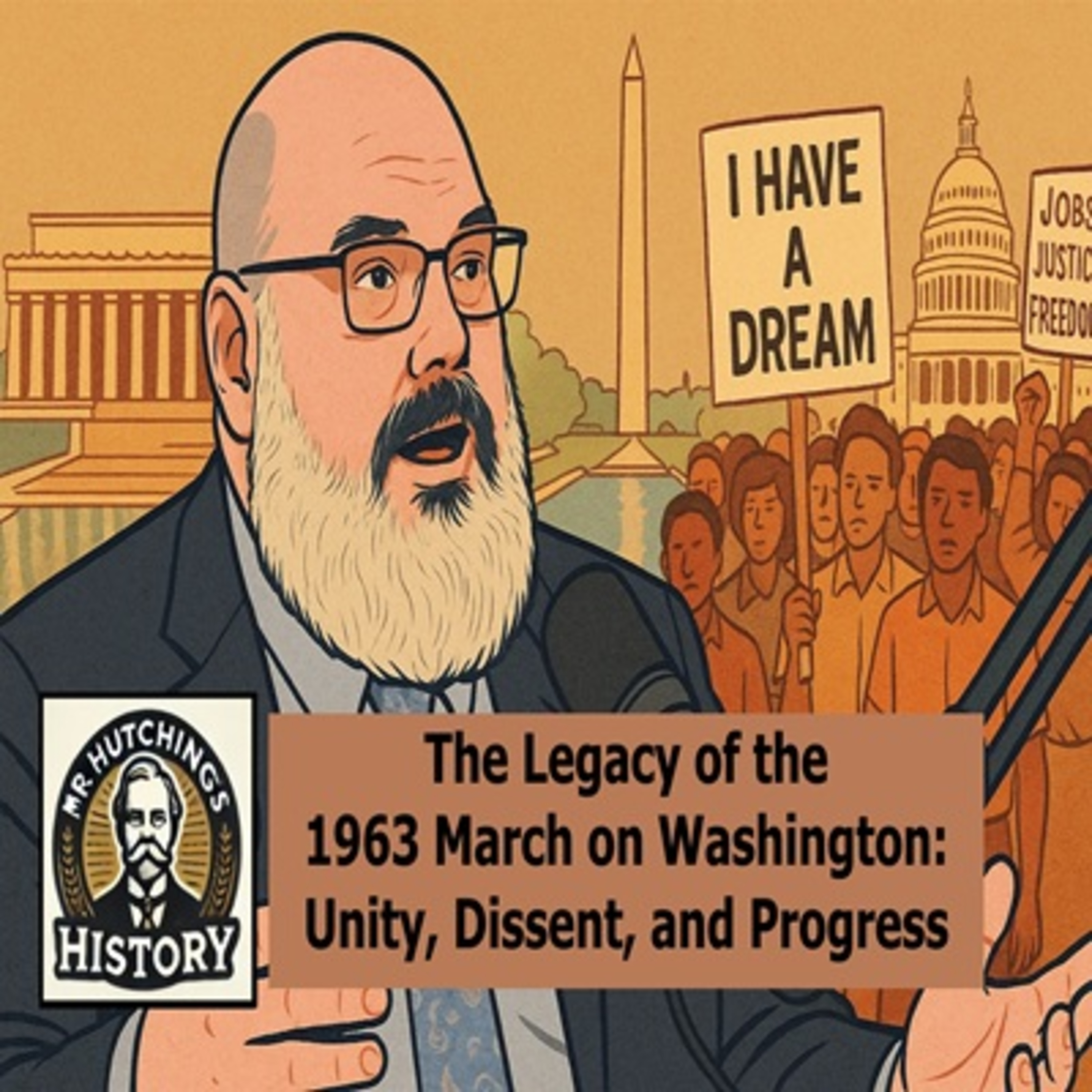
The Legacy of the 1963 March on Washington: Unity, Dissent, and Progress
from Mr. Hutchings History · host Produced, created, and written by Harold M. Hutchings
Join Mr. Hutchings History as we examine the significance and complexities of the 1963 March on Washington for Jobs and Freedom. Held on August 28, 1963, this historic event brought together a diverse coalition of leaders, including Martin Luther King Jr., and over 250,000 participants in a powerful call for civil rights and economic justice. Best known for King’s iconic “I Have a Dream” speech, the march became a symbol of unity and hope while sparking debates about its impact and strategy. In this episode, we explore the march’s planning, its immediate outcomes, and its legacy in shaping public opinion and civil rights legislation. We also discuss Malcolm X’s critiques and the historiographical interpretations that reveal both its triumphs and limitations. #Paper3HLoption2 #HistoryoftheAmericas #MarchOnWashington1963 #CivilRightsMovement #IHaveADream #MartinLutherKingJr #CivilRightsAct1964 #SocialJustice #NonviolentProtest #AmericanHistory #JobsAndFreedom #BlackHistory #SNCC #SCLC #Equality Works Cited Fairclough, Adam. Better Day Coming: Blacks and Equality, 1890-2000. Penguin, 2001. Garrow, David J. Bearing the Cross: Martin Luther King Jr. and the Southern Christian Leadership Conference. William Morrow, 1986. Malcolm X. The Autobiography of Malcolm X. Penguin, 1965. Payne, Charles M. I’ve Got the Light of Freedom: The Organizing Tradition and the Mississippi Freedom Struggle. University of California Press, 1995. Zinn, Howard. A People’s History of the United States. Harper & Row, 1980.
Embed this episode
NOW PLAYING
The Legacy of the 1963 March on Washington: Unity, Dissent, and Progress
No transcript for this episode yet
Similar Episodes
No similar episodes found.
Similar Podcasts
No similar podcasts found.