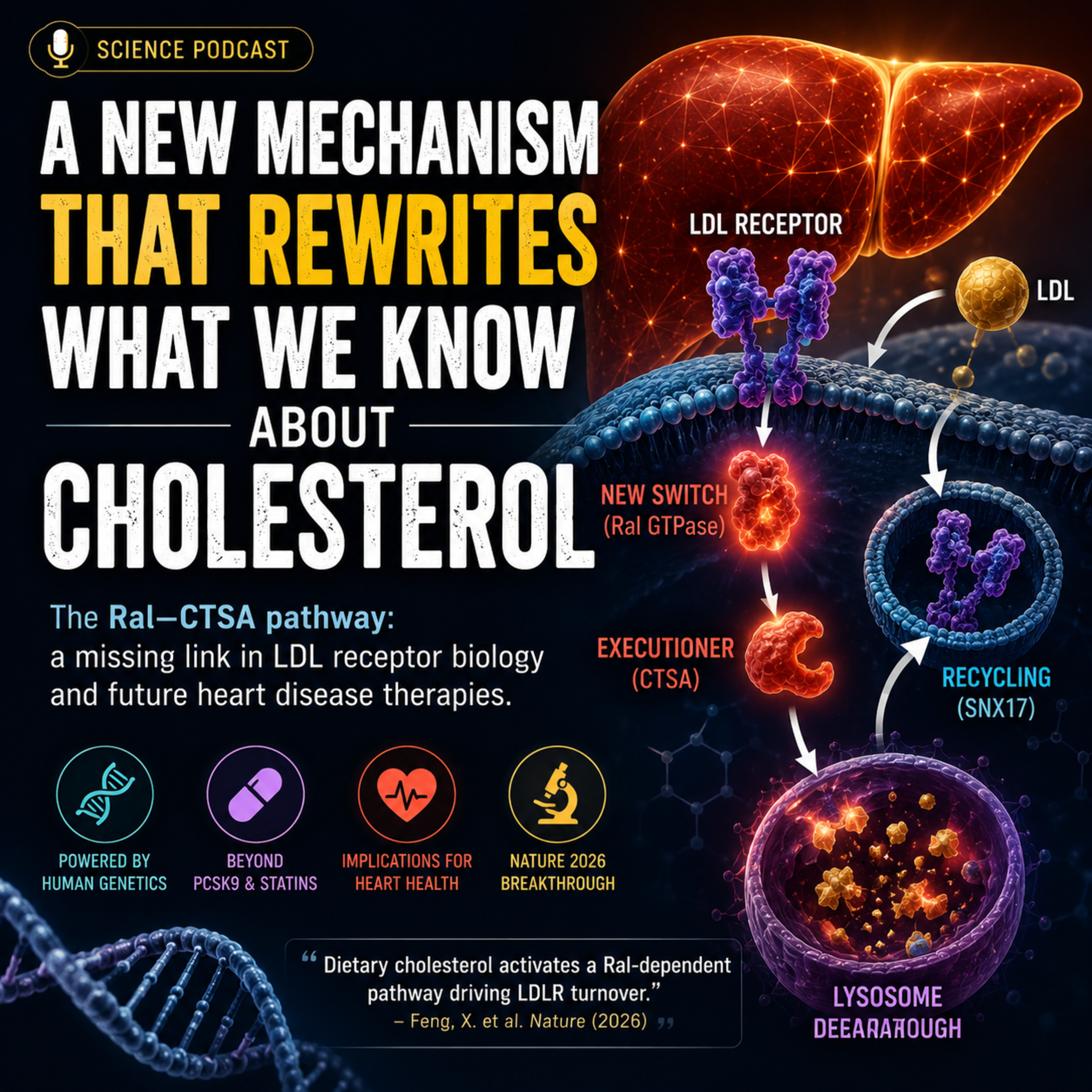
The Missing Pathway in Cholesterol Biology: How Ral GTPases Control LDL Receptor Destruction episode artwork

EPISODE · Jun 29, 2026 · 19 MIN

The Missing Pathway in Cholesterol Biology: How Ral GTPases Control LDL Receptor Destruction

from The Deep Dive Lab: Unraveling Materials Science · host Son Hoang

For decades, cholesterol research has centered on LDL receptor production and the PCSK9 pathway. A landmark 2026 study published in Nature reveals an entirely new layer of regulation: a cholesterol-sensitive RAS–Ral signaling pathway that actively determines whether LDL receptors are recycled or destroyed.In this episode, we unpack the molecular mechanism linking membrane cholesterol sensing, RalA/RalB activation, SNX17-mediated receptor recycling, lysosomal trafficking, and Cathepsin A (CTSA)-dependent degradation. We also examine why this pathway operates independently of both transcriptional regulation and PCSK9, potentially explaining why current lipid-lowering therapies reach a therapeutic ceiling.Finally, we explore human genetic evidence from GWAS and discuss how targeting Ral or CTSA may represent a new class of therapies for dyslipidemia and cardiovascular disease.Reference:Feng X. et al. (2026). Dietary cholesterol activates a Ral-dependent pathway driving LDLR turnover. Nature.#Nature #LDLR #RalGTPase #CTSA #Metabolism #CardiovascularResearch #MolecularBiology #LipidMetabolism #SciencePodcast 🧬

For decades, cholesterol research has centered on LDL receptor production and the PCSK9 pathway. A landmark 2026 study published in Nature reveals an entirely new layer of regulation: a cholesterol-sensitive RAS–Ral signaling pathway that actively determines whether LDL receptors are recycled or destroyed.In this episode, we unpack the molecular mechanism linking membrane cholesterol sensing, RalA/RalB activation, SNX17-mediated receptor recycling, lysosomal trafficking, and Cathepsin A (CTSA)-dependent degradation. We also examine why this pathway operates independently of both transcriptional regulation and PCSK9, potentially explaining why current lipid-lowering therapies reach a therapeutic ceiling.Finally, we explore human genetic evidence from GWAS and discuss how targeting Ral or CTSA may represent a new class of therapies for dyslipidemia and cardiovascular disease.Reference:Feng X. et al. (2026). Dietary cholesterol activates a Ral-dependent pathway driving LDLR turnover. Nature.#Nature #LDLR #RalGTPase #CTSA #Metabolism #CardiovascularResearch #MolecularBiology #LipidMetabolism #SciencePodcast 🧬

NOW PLAYING

The Missing Pathway in Cholesterol Biology: How Ral GTPases Control LDL Receptor Destruction

0:00 19:41

No transcript for this episode yet

We transcribe on demand. Request one and we'll notify you when it's ready — usually under 10 minutes.

No similar episodes found.

No similar podcasts found.

Frequently Asked Questions

How long is this episode of The Deep Dive Lab: Unraveling Materials Science?

This episode is 19 minutes long.

When was this The Deep Dive Lab: Unraveling Materials Science episode published?

This episode was published on June 29, 2026.

What is this episode about?

For decades, cholesterol research has centered on LDL receptor production and the PCSK9 pathway. A landmark 2026 study published in Nature reveals an entirely new layer of regulation: a cholesterol-sensitive RAS–Ral signaling pathway that actively...

Can I download this The Deep Dive Lab: Unraveling Materials Science episode?

Yes, you can download this episode by clicking the download button on the episode player, or subscribe to the podcast in your preferred podcast app for automatic downloads.
URL copied to clipboard!