
EPISODE · May 1, 2025 · 16 MIN
The Month of May
from Eutopia Today · host V.
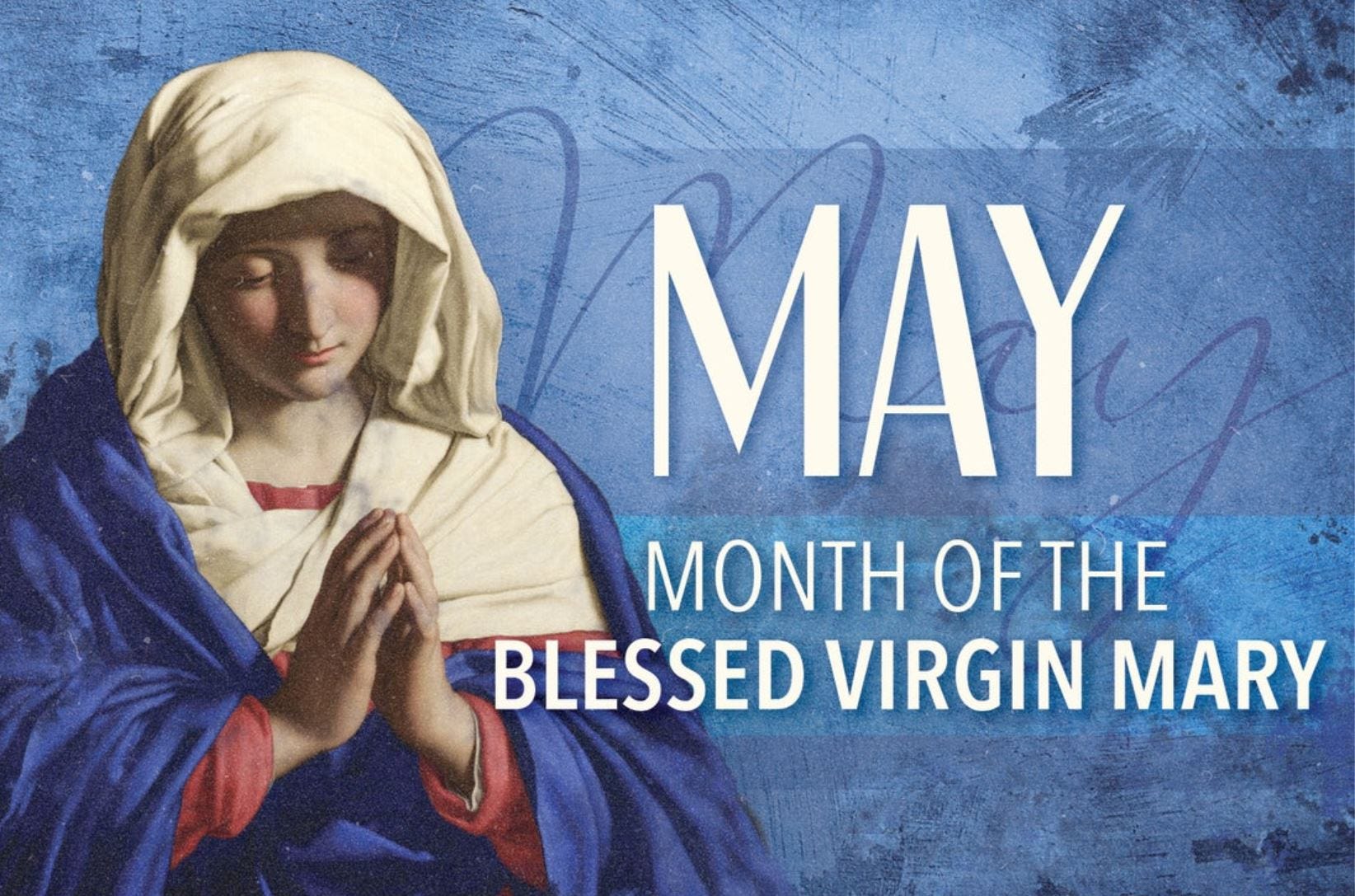
MayThe Month of Our Lady"Today we begin the month dedicated to Our Lady a favourite of popular devotion. In accord with a long-standing tradition of devotion, parishes and families continue to make the month of May a 'Marian' month, celebrating it with many devout liturgical, catechetical and pastoral initiatives!"~Pope John Paul IIFor centuries, the Catholic Church has set aside the entire month of Mary to honor Mary, Mother of God. Not just a day in May, mind you, but the entire month.The pious practice of honoring Mary during the month of May has been especially recommended by the Popes. Pius XII made frequent reference to it and in his great Encyclical on the Sacred Liturgy (Mediator Dei) characterized it as one of "other exercises of piety which although not strictly belonging to the Sacred Liturgy, are nevertheless of special import and dignity, and may be considered in a certain way to be an addition to the liturgical cult: they have been approved and praised over and over again by the Apostolic See and by the Bishops"The practice was granted a partial indulgence by Pius VII in 1815 and a plenary indulgence by Pius IX in 1859. With the complete revision of indulgences in 1966 and the decreased emphasis on specific indulgences, it no longer carries an indulgence; however it certainly falls within the category of the First General Grant of Indulgences. (A partial indulgence is granted to the faithful who, in the performance of their duties and in bearing the trials of life, raise their mind with humble confidence to God, adding — even if only mentally — some pious invocation.During this period, the tradition of Tricesimum, or “Thirty-Day Devotion to Mary,” came into being. Also called, “Lady Month,” the event was held from August 15-September 14 and is still observed in some areas.In 1945, Pope Pius XII solidified May as a Marian month after establishing the feast of the Queenship of Mary on May 31st. After the Second Vatican Council, this feast was moved to August 22, while May 31st became the feast of the Visitation of Mary.Significant Dates in May* May 13 Our Lady of Fatima* May 13 Our Lady of the Blessed SacramentAnd Mary said: Behold the handmaid of the Lord; be it done to me according to thy word. And the angel departed from her. ~ Luke 1:38And thy own soul a sword shall pierce, that, out of many hearts, thoughts may be revealed. ~ Luke 2:35And Mary said, My soul magnifies the Lord~Luke 1:46“We may seek graces, but we shall never find them without the intercession of the Mary.”~Saint Cajetan “Some people are so foolish that they think they can go through life without the help of the Blessed Mother. Love the Madonna and pray the Rosary, for her Rosary is the weapon against the evils of the world today. All graces given by God pass through the Blessed Mother.”~Padre Pio“But his heart burned with the desire to establish perpetual adoration of Jesus in the Blessed Sacrament exposed upon a royal throne and surrounded by a large court of adorers. On February 2, 1851, at the shrine of Fourvière, the Most-Blessed Virgin had made him [St. Peter Julian Eymard] understand its necessity. ‘All the mysteries of my Son have a religious order of men to honor them. The Eucharist alone has none…’”“Give us this day our supersubstantial bread.” —Matthew 6:11 (Douay-Rheims Bible)You must never separate what God has so perfectly united. So closely are Jesus and Mary bound up with each other that whoever beholds Jesus sees Mary; whoever loves Jesus, loves Mary; whoever has devotion to Jesus, has devotion to Mary. – St. John Eudes "Mary guides the faithful to the Eucharist."~Pope John Paul IIThis weekend is the First Friday and First Saturday of the Month! First Friday It is no wonder, therefore, that our predecessors have constantly defended this most approved form of devotion — the pious devotion of the faithful toward the Most Sacred Heart of Jesus [and] the custom of receiving Holy Communion on the first Friday of every month at the desire of Christ Jesus, a custom which now prevails everywhere.—Pope Pius XI Miserentissimus RedemptorTHE 12 PROMISES of the Most Sacred Heart of Jesus1. will give them all the graces necessary in their state of life.2. will establish peace in their homes.3. I will comfort them in all their afflictions.4. I will be their secure refuge during life, and above all, in death.5. I will bestow abundant blessings upon all their undertakings.6. Sinners will find in My Heart the source and infinite ocean of mercy.7. Lukewarm souls shall become fervent.8. Fervent souls shall quickly mount to high perfection.9. I will bless every place in which an image of My Heart is exposed and honored.10. I will give to priests the gift of touching the most hardened hearts.11. Those who shall promote this devotion shall have their names written in My Heart.12. I promise you in the excessive mercy of My Heart that My all powerful love will grant to all those who receive Holy Communion on the First Fridays in nine consecutive months the grace of final perseverance; they shall not die in My disgrace, nor without receiving their sacraments. My divine Heart shall be the safe refuge in this last moment.For more information on the First Friday Devotion click here or the link below. First SaturdayFive consecutive Saturdays in reparation to the Immaculate Heart of MaryThe practice of the First Saturday devotion was requested by Our Lady of Fatima. who appeared to three shepherd children in Fatima, Portugal, multiple times starting in 1917.She said to Lucia, the oldest of the three children:“I shall come to ask . . . that on the First Saturday of every month, Communions of reparation be made in atonement for the sins of the world.”Years later she repeated her request to Sr. Lucia, the only one still living of the three young Fatima seers, while she was a postulant sister living in a convent in Spain:"Look, my daughter, at my Heart, surrounded with thorns with which ungrateful men pierce me at very moment by their blasphemies and ingratitude. You at least try to console me, and say that I promise to assist at the hour of death, with the graces necessary for salvation, all those who, on the first Saturday of five consecutive months, shall confess, receive Holy Communion, recite five decades of the rosary, and keep me company for 15 minutes while meditating on the 15 mysteries of the rosary, with the intention of making reparation to me.”CONDITIONS TO FULFILL THE FIRST SATURDAY DEVOTIONThere are five requirements to obtain this promise from the Immaculate Heart of Mary. On five consecutive first Saturdays of the month, one should:1. Have the intention of consoling the Immaculate Heart in a spirit of reparation.2. Go to confession (within eight days before or after the first Saturday).3. Receive Holy Communion.4. Say five decades of the Holy Rosary.5. Meditate for 15 minutes on the mysteries of the Holy Rosary with the goal of keeping Our Lady company (for example, while in church or before an image or statue of Our Lady).You can get more information on the First Saturday Devotion by clicking here or the link below. “But his heart burned with the desire to establish perpetual adoration of Jesus in the Blessed Sacrament exposed upon a royal throne and surrounded by a large court of adorers. On February 2, 1851, at the shrine of Fourvière, the Most-Blessed Virgin had made him [St. Peter Julian Eymard] understand its necessity. ‘All the mysteries of my Son have a religious order of men to honor them. The Eucharist alone has none…’”OUR LADY OF THE MOST BLESSED SACRAMENTBehold the new title given to Mary by the Very Reverend Pierre-Julien Eymard, Founder of the Society of the Most Blessed Sacrament.This admirable man was born at Mure, Isere, in 1811. After embracing the ecclesiastical state and exercising the sacred ministry for some time, he entered into the Society of Mary, where for seventeen years he afforded an example of all the religious virtues. But God destined him to be the Father of a new family. As soon as the divine will was clearly known to him, Père Eymard accepted unhesitatingly all the trouble and labor which the founding of such a Society would cost him, and to it he gave the name, Society of the Religious of the Most Blessed Sacrament. To glorify the Most Holy Eucharist, is its end. By what means? By solemn and perpetual Exposition of the August Sacrament. It has, also, an exterior apostolate, embracing all the works directly relating to this essential end.This holy institution commenced in Paris, in 1856, in an humble locality given provisionally by Archbishop Sibour. In 1862, Père Eymard, having already a sufficient number of disciples, opened a novitiate. On the 8th of May of the following year, His Holiness, Pius IX, after having heard the Sacred Congregation of Bishops and Regulars, granted the Decree of Approbation to the said Society.The life of the pious Founder was not of long duration. But before his death God gave him the consolation of seeing his religious family consolidated and extended. On 1 August 1868, he died the death of the just, consumed with the love of Jesus in the Eucharist.Among the pious legacies which Père Eymard left to his religious family, there was one which today more especially claims our attention, since we are in the month of May, and that is the devotion to Our Lady of the Most Blessed Sacrament.May 1, 1868, being at Saint-Maurice, a house of retreat which he had opened in a pleasant situation far from the noise of the city, and the turmoil of the world, Père Eymard began the pious exercises of the Month of Mary, and closed his burning exhortation with these words: "O let us honor Mary under the title, Our Lady of the Most Blessed Sacrament! Yes, let us say with confidence, let us say with love: Our Lady of the Most Blessed Sacrament, Mother and Model of Adorers, pray for us who have recourse to thee!"Père Eymard was radiant, his words trembling with emotion, his heart over flowing with joy, for he had discharged a debt of gratitude to Mary, his Mother, to Mary who had given him Jesus in the Sacrament, who had sustained and encouraged him with maternal solicitude in the founding of his pious and edifying Society. Upon the point of bidding adieu to his children, and leaving them a powerful means of serving their Master better, he added to Mary's diadem a jewel not less beautiful than glorious.Our Lady of the Most Blessed Sacrament is the new title of a thing very old, says the Father.We have good reason to venerate all the mysteries of the life of the Mother of God. Contemplative souls have found an example in the life of Mary of Nazareth, as desolate hearts have done in Our Lady of Dolors. In all Mary's actions, there is a grace which sweetly attracts us to honor and imitate them, each according to his vocation.Now, Mary lived over twenty years after the Ascension of her Divine Son. By what were her long days of exile occupied, and what grace does this important part of our Mother's life comprise?The Acts of the Apostles seem to indicate it with sufficient clearness. "The first Christians," we then read, "lived in peace, union, and the most ardent charity, sighing after martyrdom, and in order to prepare themselves for it, persevering in the breaking of the Bread: Perseverantes in communicatione fractionis pants." - Acts 2:42To live of the Eucharist and by the Eucharist, to gather round the tabernacle in order to chant hymns and sacred canticles, this was the distinctive characteristic of the primitive Church. The Holy Spirit records it in the sublime ecclesiastical history written by Saint Luke, and such is, also, the resume of the Blessed Virgin's last years. She found again in the Adorable Host the blessed fruit of her womb, and in the life of union with Our Lord in His tabernacle, the happy days of Bethlehem and Nazareth.O yes! It was Mary, above all, who persevered in the breaking of the Bread. She is the great model for the adorers of the Blessed Sacrament.We shall now briefly enumerate some of the reasons that justify the title, Our Lady of the Blessed Sacrament, given to Mary by Père Eymard.Mary is the Mother of Jesus, de qua natus est Jesus. We believe, and our faith is our sweetest joy, that the Adorable Body of Our Lord, really present in the Eucharist, is the same Body that was formed of the most pure blood of Mary, that was nourished with her substance and her virginal milk. It is for this reason that Saint Augustine says, Caro Jesu caro est Marise, et ipsam Marise carnem nobis manducandam dedit ad salutem. "The flesh of Jesus is the flesh of Mary, and the Saviour gives us this flesh of Mary as the food of our salvation."In the same sense spoke Saint Ambrose, Saint Anselm, Richard of Saint Laurence, and the theologians Suarez, Kick, Schurlog, Zelada, Vega, Cornelius a Lapide, and others.The Church in her Liturgy for Corpus Christi, repeats for that day the Preface of the Nativity of Our Lord, which speaks of the flesh given by Mary to the Word Incarnate. The Doxology of the Hymn of the Divine Office for this feast, after having chanted the love and the glories of Jesus in the Eucharist, turns to the Virgin as to the cause of the Gift that we receive at the altar: Jesu tibi sit gloria, qui natus es de Virgine.These reasons and others, which we are forced to omit for want of space, authorize the new title given to Mary by Pere Eymard. We have found them commented upon with wonderful erudition in one of the works of the Bibliothèque, published by the Religious of the Most Blessed Sacrament.The Lord Bishops of Angers and Arras have granted forty days’ Indulgence to the Faithful of their respective dioceses, and we accordingly do the same in our own for as often as the following invocation is recited:Our Lady of the Most Blessed Sacrament, Mother and Model of Adorers, pray for us who have recourse to thee!Salamanca, fourth day and first Saturday of the month of May, consecrated to Mary, 1872.- Cardinal Joaquín Lluch y Garriga, Diocese of Salamanca, Spain, 4 May 1872Preparatory MeditationThe month of Mary is the month of blessings and graces, for all graces come to us through Mary, as Saint Bernard and all the saints assure us. It is a feast of thirty days in honor of the Mother of God, and it will prepare us for the succeeding lovely month of the Blessed Sacrament.I. Because we make profession of especially honoring the Holy Eucharist, it does not follow that we should have less devotion to the Blessed Virgin. Far from it! He would be guilty of blasphemy who would say: "As for me, the Blessed Sacrament suffices. I have no need of Mary." Where shall we find Jesus on earth if not in Mary's arms. Did she not give us the Eucharist? Was it not her consent to the Incarnation of the Word in her pure womb that inaugurated the great mystery of reparation to God and union with us, which Jesus accomplished by His mortal life, and that He continues in the Eucharist?Without Mary, we shall not find Jesus, for she possesses Him in her heart. There He takes His delight, and they who wish to know His inmost virtues, His sacred and privileged love, must seek them in the heart of Mary. They who love that good Mother will find Jesus in her pure heart.We must never separate Jesus from Mary. We can go to Him only through her. I even maintain that the more we love the Eucharist, the more we ought to love Mary. We love all that our friend loves. Now, is there a creature better loved by God, a mother more tenderly thought of by her son, than was Mary by Jesus?Oh yes, Our Lord would be very much pained if we, the servants of His Eucharistic Life, did not greatly honor Mary, since she is His Mother. He owes every thing to her in the order of His Incarnation, His human nature. It is by the flesh that she gave Him that He has so glorified His Father, that He has saved us, and that He continues to nourish and save the world by the Blessed Sacrament.He wishes us to honor her so much the more now as, during His mortal life, He seems to have neglected it Himself. He truly honored His Mother very much in private; but in public He left her in the shade, since He had, before all, to assert and support His dignity as God.But at the present day, Our Lord wishes us in some way to indemnify the Blessed Virgin for all that He did not do for her exteriorly; and we are bound (there is here question of salvation) to honor her as the Mother of God and our own Mother.II. But since, as adorers, we are more especially devoted to the service of the Eucharist, it is in this quality that we owe particular devotedness to Mary. Religious of the Most Blessed Sacrament, servants of the Blessed Sacrament, associates of the Blessed Sacrament, we are by our state adorers of the Eucharist. This is our beautiful title blessed by Pius IX. Adorers what does that mean? It means that we are attached to the Adorable Person of Our Lord living in the Eucharist. But if we belong to the Son, we belong to the Mother, also; we adore the Son, we ought to honor the Mother, also; and we are obliged, in order to persevere in the grace of our vocation and participate in it fully, to render to the Blessed Virgin very special honor under the title: Our Lady of the Blessed Sacrament.This devotion is not spread, nor is it explicitly defined as yet in the Church. Since devotion to Mary follows the worship of Jesus, it also follows its various phases and developments.When we honor Our Lord on the Cross, we pray to Our Lady of Seven Dolors. When we honor His life submissive and retired at Nazareth, it is Our Lady of the Hidden Life that we take for model. The Blessed Virgin follows all the conditions of her Son.We have never yet saluted Our Lady by this beautiful title: Our Lady of the Most Blessed Sacrament. But the devotion to the Eucharist is spreading. Never was it greater or more general than in our time. It is taking hew increase everywhere. It is the grace that the Immaculate Conception has brought to the world. Devotion to the Blessed Sacrament is not new, but there is, without doubt, a great and new manifestation of the Holy Eucharist. The hidden God comes forth from His tabernacle. He is everywhere exposed by day and by night. The Eucharist is to be the source of salvation for this opening century. The worship of the Eucharist will be the glory, the grandeur of this age.Devotion to Our Lady of the Most Blessed Sacrament will grow with the worship of the Eucharist. I have not found this devotion treated in any work. I have never heard it spoken of except in the revelations of Mother Mary of Jesus, where I read something of Mary's Communion, and in the Acts of the Apostles where we see Mary in the Cenacle.III. What did the Blessed Virgin do in the Cenacle? She adored. She was the Mother and the Queen of adorers. She was, in a word, Our Lady of the Most Blessed Sacrament. Our occupation during this month will be, to honor her under this beautiful title, to meditate on what she did, to inquire how Our Lord received her adoration. We shall discover the perfect union of those two hearts, that of Jesus and that of Mary, lost in one love, and one single life. Piety must raise the mysterious veil that hides the adoring life of Mary.We are astonished that the Acts of the Apostles say nothing of it, but are satisfied with leaving Mary in the Cenacle. Ah! it is because her whole life in the Cenacle was one of love and adoration.Why speak again of love and adoration? How shall we express that reign of God in the soul and that life of the soul in God? It cannot be explained. Language has no words to express the delights of heaven, and it is the same with the life of Mary in the Cenacle. Saint Luke tells us only that she lived and prayed there. Prayer and the love of study formed the essence of her life. Let us suppose that all that is most powerful in love, all that is most holy and perfect in the virtues, and attribute it to Mary. But because Mary lived there in union with the Most Blessed Sacrament for more than twenty years, all her virtues took the Eucharistic character. They were nourished by Communion, adoration, and constant union with our Eucharistic Jesus. Mary's virtues acquired in the Cenacle their highest perfection, almost limitless, surpassed only by that of the virtues of Jesus Christ.Let us ask Our Lord to reveal to us what passed between Him and His Mother in the Cenacle. He will tell us some of those wonders, not all, for we could not bear them, but a few, and they will fill us with joy.O how happy we should be, could we make a month of Maria Adoratrix! Meditation is necessary for that, and much prayer. One must understand, also, the thanksgiving of Mary's love. I greatly desire this, but for such a work a longer preparation would be required.IV. All the mysteries of Mary's life live again in the Cenacle. If we meditate on the birth of her Son in Bethlehem, let us continue the Gospel and be hold the Eucharistic birth of that same Son on the altar. Is our subject, "The Flight into Egypt?" Well, then, do we not see that Our Lord is still in the midst of strangers and barbarians in those cities and countries in which the churches are closed, and no one goes to visit Him? Think again on His hidden life at Nazareth. Do we not find Him ever more hidden in His Eucharistic life? Consider all the other mysteries of Mary's life as connected with the Eucharist, and reflect on the part that she took therein.The essential point is to seek out and practice Our Lady's virtues. Let us take them in order, the lowest, the smallest. We know them. We shall afterward rise by degrees to her interior virtues, even to her love.Then let us daily offer up some sacrifice. Let us foresee something that will cost. There are some that we know in advance; for instance, to such a thing, to see such a person. Offer this sacrifice. The Blessed Virgin will be satisfied. It will be one more flower for the crown that she wishes to offer to her Son in our name on His day, the beautiful feast of Corpus Christi.If we foresee no special sacrifices, let us maintain ourselves in generous dispositions to accept all that the good God will send us. Let us be watchful to catch on the wing that bird from heaven. It is a messenger from God, bringing us a grace and a crown of thorns. We must welcome them. A sacrifice foreseen makes us reason, and reasoning diminishes its value. But those that we make generously, without premeditation and without deliberation, are of more value.The good God wants to surprise us. He says to us: "Hold thyself in readiness!" And the faithful soul is disposed for all that the good God wills. Love loves to surprise. Let us never lose these sacrifices, and for that it suffices to be generous. A generous soul O how beautiful! God is glorified by it, and He says of her as of Job, with sentiments of joy and admiration: "Hast thou seen My servant Job?" The soul that loves, allows none of these sacrifices to pass. She has, so to say, her eye in the air. She feels that a cross is coming, and she prepares to receive it well.Let us, then, honor the Blessed Virgin by a daily sacrifice. Let us go through her to Our Lord, take shelter behind her, hide under her mantle, clothe ourselves with her virtues, be, as it were, her shadow. Let us offer all her actions, all her merits, all her virtues to Our Lord. We have only to draw on Mary, and to say to Jesus: "I offer Thee the riches that my Mother has acquired for me," and Our Lord will be very much pleased with us.Practice. Let us fulfill all our Eucharistic duties in union with Our Lady of the Most Blessed Sacrament.Aspiration. Hail Mary, of whom was born our Eucharistic Jesus!Our Lady of Fatima May 13 Feast of Our Lady of Fatima “Before her birth, the Prophets proclaimed the glory of Mary. They compared her to the sun.Indeed, the appearance of the Blessed Virgin can be compared to the beautiful ray of sunshine on the cloudy afternoon”.~Saint John Vianney When it comes to Our Lady of Fatima and Her Significance, what more can I say? STAY TUNED! This is a public episode. If you would like to discuss this with other subscribers or get access to bonus episodes, visit eutopiatoday.substack.com
NOW PLAYING
The Month of May
No transcript for this episode yet
Similar Episodes
Jul 20, 2024 ·51m
Mar 14, 2024 ·37m
Feb 24, 2024 ·34m
Jan 20, 2024 ·43m
Jan 8, 2024 ·61m