
EPISODE · Apr 19, 2026 · 20 MIN
The Multi-Tenant Copilot Trap: Mastering Global AI Governance
from M365.FM - Modern work, security, and productivity with Microsoft 365 · host Mirko Peters - Founder of m365.fm, m365.show and m365con.net
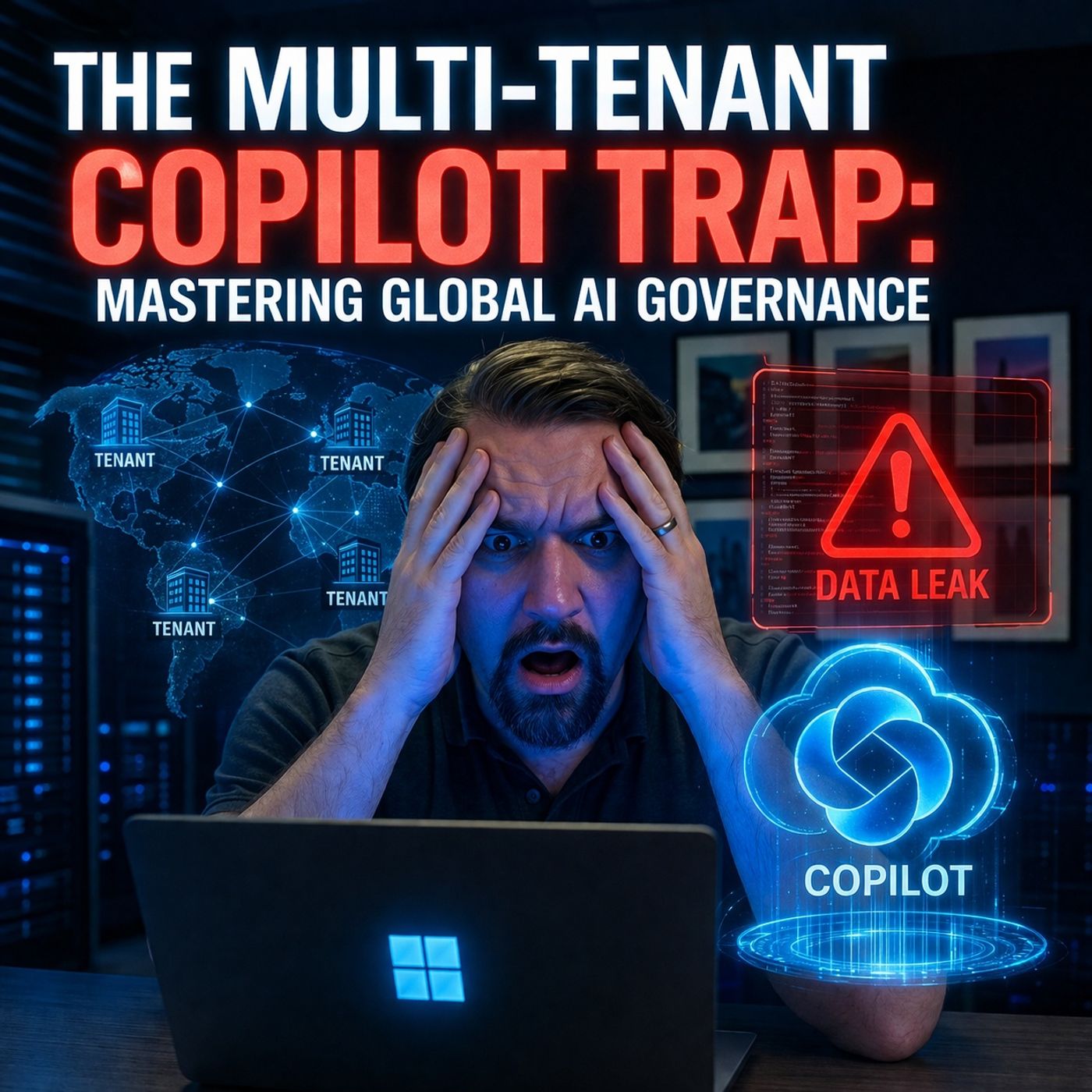
Microsoft 365 Copilot is not a rollout decision. It is a governance decision with a very short runway. Most leadership teams approach it as enablement, but Copilot operates on the environment exactly as it exists today—not as you intend it to be tomorrow. In multi-tenant organizations, this creates a structural problem. AI operates within tenant boundaries, while risk moves across them. What looks like one unified Microsoft 365 environment is, in reality, a collection of independent systems with different controls, different maturity levels, and different exposure. In this episode, Mirko Peters breaks down why the illusion of a global AI control plane is dangerous, how governance drift accelerates with Copilot, and what model actually works when you need to scale safely across multiple tenants.🧠 CORE IDEAMost organizations believe they are enabling AI across one environment. They are not. They are activating AI across multiple independent governance systems that only appear connected.AI works within tenant boundariesRisk moves across tenant boundariesGovernance does not automatically follow identity👉 Copilot does not unify your environment👉 It exposes the differences inside it⚠️ THE MULTI-TENANT COPILOT TRAP The trap starts with familiarity. Everything looks connected—same vendor, same branding, shared identity. This creates the illusion of central control. But underneath:There is no single global AI admin centerGovernance is fragmented across Purview, Entra, and admin portalsEach tenant enforces its own version of policy and data controlWhat you actually have:Multiple AI environmentsMultiple policy realitiesMultiple levels of risk👉 You don’t have one enterprise AI system👉 You have sovereign AI islands inside one company🧩 WHY THIS BREAKS GOVERNANCE When tenants drift, governance stops being comparable. Each tenant reports “we are governed”—but means something different:Audit enabled vs. audit usableLabels created vs. labels appliedIdentity connected vs. control alignedCopilot deployed vs. Copilot governedThis creates structural misreporting:Leadership sees one programReality is multiple operating conditionsEvidence becomes inconsistent👉 Reporting doesn’t lie intentionally👉 It lies structurally🔄 WHY MANUAL GOVERNANCE FAILS AT SCALE The natural response is to govern tenant by tenant. This feels disciplined—but it is not scalable. Manual governance creates variation over time:Each team interprets standards differentlyEach tenant moves at a different speedLocal exceptions accumulate quietlyWhat looks like control is actually repetition. And repetition produces drift:Policy driftAccess driftRollout drift👉 Human effort creates activity👉 Not consistency⚡ WHY COPILOT ACCELERATES THE PROBLEM Copilot does not wait for governance maturity. It operates on what already exists:Existing permissionsExisting oversharingExisting labeling gapsExisting audit limitationsThe moment users start prompting:Hidden exposure becomes visibleOvershared content becomes accessibleInconsistent controls become operational👉 AI does not create risk👉 It removes the friction that used to hide it🔐 WHY IDENTITY DOES NOT SOLVE GOVERNANCE Many organizations assume identity is the solution. If users can move across tenants, governance should follow. It does not.Copilot operates within a single tenant contextPermissions are enforced per tenantData grounding is tenant-specificWhat this means:Identity can traverseGovernance cannotEven multitenant capabilities today show clear limitations:No full cross-tenant policy enforcementLimited authentication scenariosGaps in connectors and analyticsIncomplete audit visibility👉 Cross-tenant identity is not cross-tenant intelligence🏗️ THE MODEL THAT ACTUALLY WORKS To scale safely, governance must match reality. That means adopting a hub-and-spoke model.THE HUB:Defines global policy standardsOwns audit baselines and label taxonomySets rollout criteria and enforcement rulesMeasures governance across all tenantsTHE SPOKES:Execute governance locally within each tenantApply standards to real environmentsRun remediation and validationHandle exceptions through a controlled processKey rule:No Copilot rollout without validated audit loggingNo rollout without oversharing reviewNo rollout without baseline label coverage👉 Global does not mean one portal👉 It means one governance system📊 WHAT LEADERS MUST MEASURE Governance only works if it produces shared, comparable metrics. Key metrics:Oversharing reductionObservability coverage across tenantsTime-to-policy enforcementLabel coverage consistencyAccess drift rateWhat matters:Exposure must decrease before AI expandsLogging must exist before scalePolicy must apply everywhere—not eventually👉 If you cannot measure it across tenants Become a supporter of this podcast: https://www.spreaker.com/podcast/m365-fm-modern-work-security-and-productivity-with-microsoft-365--6704921/support.
Embed this episode
What this episode covers
Microsoft 365 Copilot is not a rollout decision. It is a governance decision with a very short runway. Most leadership teams approach it as enablement, but Copilot operates on the environment exactly as it exists today—not as you intend it to be tomorrow. In multi-tenant organizations, this creates a structural problem. AI operates within tenant boundaries, while risk moves across them. What looks like one unified Microsoft 365 environment is, in reality, a collection of independent systems with different controls, different maturity levels, and different exposure. In this episode, Mirko Peters breaks down why the illusion of a global AI control plane is dangerous, how governance drift accelerates with Copilot, and what model actually works when you need to scale safely across multiple tenants. 🧠 CORE IDEA Most organizations believe they are enabling AI across one environment. They are not. They are activating AI across multiple independent governance systems that only appear connected. AI works within tenant boundaries Risk moves across tenant boundaries Governance does not automatically follow identity 👉 Copilot does not unify your environment 👉 It exposes the differences inside it ⚠️ THE MULTI-TENANT COPILOT TRAP The trap starts with familiarity. Everything looks connected—same vendor, same branding, shared identity. This creates the illusion of central control. But underneath: There is no single global AI admin center Governance is fragmented across Purview, Entra, and admin portals Each tenant enforces its own version of policy and data control What you actually have: Multiple AI environments Multiple policy realities Multiple levels of risk 👉 You don’t have one enterprise AI system 👉 You have sovereign AI islands inside one company 🧩 WHY THIS BREAKS GOVERNANCE When tenants drift, governance stops being comparable. Each tenant reports “we are governed”—but means something different: Audit enabled vs. audit usable Labels created vs. labels applied Identity connected vs. control aligned Copilot deployed vs. Copilot governed This creates structural misreporting: Leadership sees one program Reality is multiple operating conditions Evidence becomes inconsistent 👉 Reporting doesn’t lie intentionally 👉 It lies structurally 🔄 WHY MANUAL GOVERNANCE FAILS AT SCALE The natural response is to govern tenant by tenant. This feels disciplined—but it is not scalable. Manual governance creates variation over time: Each team interprets standards differently Each tenant moves at a different speed Local exceptions accumulate quietly What looks like control is actually repetition. And repetition produces drift: Policy drift Access drift Rollout drift 👉 Human effort creates activity 👉 Not consistency ⚡ WHY COPILOT ACCELERATES THE PROBLEM Copilot does not wait for governance maturity. It operates on what already exists: Existing permissions Existing oversharing Existing labeling gaps Existing audit limitations The moment users start prompting: Hidden exposure becomes visible Overshared content becomes accessible Inconsistent controls become operational 👉 AI does not create risk 👉 It removes the friction that used to hide it 🔐 WHY IDENTITY DOES NOT SOLVE GOVERNANCE Many organizations assume identity is the solution. If users can move across tenants, governance should follow. It does not. Copilot operates within a single tenant context Permissions are enforced per...
NOW PLAYING
The Multi-Tenant Copilot Trap: Mastering Global AI Governance
No transcript for this episode yet
Similar Episodes
No similar episodes found.
Similar Podcasts
No similar podcasts found.