PodParley PodParley

The Past

One of my favorite movies from recent years was A Separation, an Iranian film about the breaking apart of a family that ended up winning the foreign film Oscar, the first picture from that country to win an Academy Award. In cases of stunning success like this, I sometimes wonder if the filmmaker can follow it up. With his new film called The Past, writer/director Asghar Farhadi proves that he’s no flash in the pan. It’s similar in its compassion, patience, multiple perspectives, and narrative mastery, but if anything it is even deeper and more complex than its predecessor. It would seem that Farhadi, like other great Iranian directors, has chosen to experience the artistic freedom afforded by producing a film outside of his native land and its many restrictions. The Past takes place in France, and portrays the relationships of men of Middle Eastern descent with a French woman. It has a flavor of both cultural connection and unspoken exile. Ahmad, played by the excellent Ali Mosaffa, is returning from Tehran after four years apart from his wife Marie, played by Berenice Bejo. She needs him to sign divorce papers, but there is ambiguity here, as she has neglected to book a hotel room as he asked, and instead has him stay at her cozy, cluttered home in a Paris suburb. Ahmad wanted to come in person, if only to see his two stepdaughters from Marie’s first marriage, and upon arrival he meets a third child, a little boy named Fouad, the son of a new boyfriend, that he learns of for the first time: Samir, played by Tahar Rahim. Near the beginning of the film, Marie almost gets to an accident backing out of a parking lot without looking, and this is a clever symbol for the movie’s title and main theme: how the rear view of life, the past, continues to have painful repercussions that we can’t control in the present. Among the complications are the sullen hostility of the older stepdaughter, Lucie, towards her mom; and the fact that Samir is still married to a woman who is hospitalized with a coma after a suicide attempt. The plot description sounds almost like soap opera, but the director is so skillful at making emotional connections through the dialogue and the scenes rather than through exposition, that everything seems effortlessly natural. All the characters, as Renoir famously said, have their reasons, and it’s remarkable how we keep thinking we understand the relationships and the events, only to be astonished by new revelations and new layers of meaning. The one word I would use to describe this film’s style, the artist’s attitude towards his story, is tenderness. Here, within this odd extended family, this very personal world, is much grief, anger, misapprehension of one’s own motives, and deception, all of course with the best intentions. The tenderness comes through most of all reflected in the children—two scenes with adults trying to talk to the little boy and find out what’s wrong, have a beauty, honesty, and respect for the dignity of children that are rarely seen in the movies. The Past shines a light on the goodness within that makes us human.

An episode of the Flicks with The Film Snob podcast, hosted by Chris Dashiell, titled "The Past" was published on April 18, 2014.

April 18, 2014 · Flicks with The Film Snob

0:00 / 0:00

One of my favorite movies from recent years was A Separation, an Iranian film about the breaking apart of a family that ended up winning the foreign film Oscar, the first picture from that country to win an Academy Award. In cases of stunning success like this, I sometimes wonder if the filmmaker can follow it up. With his new film called The Past, writer/director Asghar Farhadi proves that he’s no flash in the pan. It’s similar in its compassion, patience, multiple perspectives, and narrative mastery, but if anything it is even deeper and more complex than its predecessor. It would seem that Farhadi, like other great Iranian directors, has chosen to experience the artistic freedom afforded by producing a film outside of his native land and its many restrictions. The Past takes place in France, and portrays the relationships of men of Middle Eastern descent with a French woman. It has a flavor of both cultural connection and unspoken exile. Ahmad, played by the excellent Ali Mosaffa, is returning from Tehran after four years apart from his wife Marie, played by Berenice Bejo. She needs him to sign divorce papers, but there is ambiguity here, as she has neglected to book a hotel room as he asked, and instead has him stay at her cozy, cluttered home in a Paris suburb. Ahmad wanted to come in person, if only to see his two stepdaughters from Marie’s first marriage, and upon arrival he meets a third child, a little boy named Fouad, the son of a new boyfriend, that he learns of for the first time: Samir, played by Tahar Rahim. Near the beginning of the film, Marie almost gets to an accident backing out of a parking lot without looking, and this is a clever symbol for the movie’s title and main theme: how the rear view of life, the past, continues to have painful repercussions that we can’t control in the present. Among the complications are the sullen hostility of the older stepdaughter, Lucie, towards her mom; and the fact that Samir is still married to a woman who is hospitalized with a coma after a suicide attempt. The plot description sounds almost like soap opera, but the director is so skillful at making emotional connections through the dialogue and the scenes rather than through exposition, that everything seems effortlessly natural. All the characters, as Renoir famously said, have their reasons, and it’s remarkable how we keep thinking we understand the relationships and the events, only to be astonished by new revelations and new layers of meaning. The one word I would use to describe this film’s style, the artist’s attitude towards his story, is tenderness. Here, within this odd extended family, this very personal world, is much grief, anger, misapprehension of one’s own motives, and deception, all of course with the best intentions. The tenderness comes through most of all reflected in the children—two scenes with adults trying to talk to the little boy and find out what’s wrong, have a beauty, honesty, and respect for the dignity of children that are rarely seen in the movies. The Past shines a light on the goodness within that makes us human.

past One of my favorite movies from recent years was A Separation, an Iranian film about the breaking apart of a family that ended up winning the foreign film Oscar, the first picture from that country to win an Academy Award. In cases of stunning success like this, I sometimes wonder if the filmmaker can follow it up. With his new film called The Past, writer/director Asghar Farhadi proves that he’s no flash in the pan. It’s similar in its compassion, patience, multiple perspectives, and narrative mastery, but if anything it is even deeper and more complex than its predecessor.

It would seem that Farhadi, like other great Iranian directors, has chosen to experience the artistic freedom afforded by producing a film outside of his native land and its many restrictions. The Past takes place in France, and portrays the relationships of men of Middle Eastern descent with a French woman. It has a flavor of both cultural connection and unspoken exile.
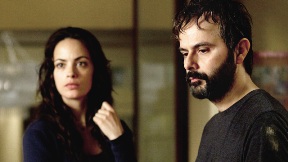
Ahmad, played by the excellent Ali Mosaffa, is returning from Tehran after four years apart from his wife Marie, played by Berenice Bejo. She needs him to sign divorce papers, but there is ambiguity here, as she has neglected to book a hotel room as he asked, and instead has him stay at her cozy, cluttered home in a Paris suburb. Ahmad wanted to come in person, if only to see his two stepdaughters from Marie’s first marriage, and upon arrival he meets a third child, a little boy named Fouad, the son of a new boyfriend, that he learns of for the first time: Samir, played by Tahar Rahim.

Near the beginning of the film, Marie almost gets to an accident backing out of a parking lot without looking, and this is a clever symbol for the movie’s title and main theme: how the rear view of life, the past, continues to have painful repercussions that we can’t control in the present. Among the complications are the sullen hostility of the older stepdaughter, Lucie, towards her mom; and the fact that Samir is still married to a woman who is hospitalized with a coma after a suicide attempt. The plot description sounds almost like soap opera, but the director is so skillful at making emotional connections through the dialogue and the scenes rather than through exposition, that everything seems effortlessly natural. All the characters, as Renoir famously said, have their reasons, and it’s remarkable how we keep thinking we understand the relationships and the events, only to be astonished by new revelations and new layers of meaning.

The one word I would use to describe this film’s style, the artist’s attitude towards his story, is tenderness. Here, within this odd extended family, this very personal world, is much grief, anger, misapprehension of one’s own motives, and deception, all of course with the best intentions. The tenderness comes through most of all reflected in the children—two scenes with adults trying to talk to the little boy and find out what’s wrong, have a beauty, honesty, and respect for the dignity of children that are rarely seen in the movies. The Past shines a light on the goodness within that makes us human.

Future Flicks with Billiam The SomewhatNerdy Podcast Network Future Flicks is a podcast about flicks that come out, wait for it, in the future! In this podcast your host Billiam from SomewhatNerdy.com will go over all the movies coming out during the week, tell you his pick, and throw in his thoughts and occasionally trivia and news. He’ll also throw in a movie review every podcast or two for a suggestion on what to watch during a night in. So check out Future Flicks because why use Google to tell you what movies are coming out when you can have an opinionated Nerd do it for you. Box Office Premiere Podcasts Box Office is a weekly film show on Virgin Media Two, which takes a look at the pick of the flicks in cinemas, along with a host of fun film features. Flick Switch Flickswitch Flick Switch is far more than a rigging rental company. We have built our business on delivering high quality solutions with years of experience in a wide variety of markets, including film, television, live events, international touring and theatre.With our years of experience in audio, lighting, screens, sets, (and the list goes on) we can go further than just the support rigging. We are also able to rig the equipment too. Planning and installing the power and data distribution, fixtures, fly systems and other equipment, fine tuning, focusing and operating.When you engage Flick Switch yo Mark Fricks - The Road Less Traveled Mark Fricks Federal Employees - The Retirement Road Less Traveled with Financial Adviser and Federal Employee Advocate Mark Fricks. Mark Shares the mission behind the 2nd edition of The Book "The Road Less Traveled." This is a Financial Roadmap for Federal Employees seeking a secure retirement.
URL copied to clipboard!