The Physics That Killed 3D—and the AI That Brought It Back episode artwork

EPISODE · Dec 8, 2025 · 9 MIN

The Physics That Killed 3D—and the AI That Brought It Back

from The Deep Dive Lab: Unraveling Materials Science · host Son Hoang

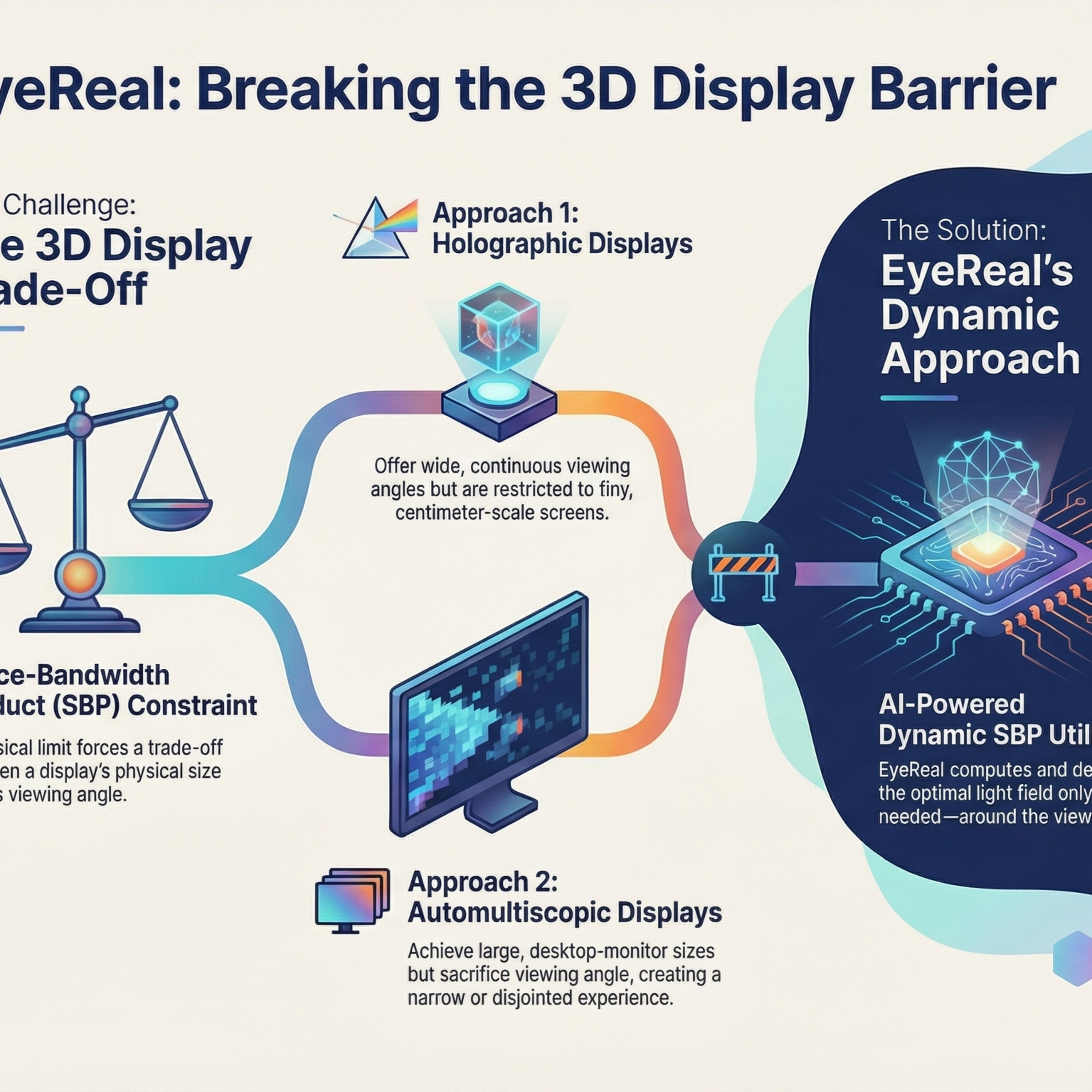
For decades, the dream of real holographic-style displays—3D visuals you can see from anywhere, without wearing goofy glasses—kept crashing into a brutal law of optics: the space–bandwidth product (SBP). This fundamental limit forced scientists to choose: big screen OR wide viewing angle. Never both.But a 2025 Nature breakthrough changes everything. In this episode, we unpack EyeReal, an AI-powered system that stops trying to fight physics… and instead works with it. By focusing light only where the viewer’s eyes actually are, EyeReal achieves ultrawide, over-100° viewing angles using simple consumer-grade LCD stacks—no exotic holographic hardware needed.We explore how this approach may also fix the dreaded 3D headache by delivering true focal cues and reducing the vergence–accommodation conflict.Is this the moment when holographic displays finally become a mainstream reality?#AIRevolution #3DDisplay #HolographicFuture #DeepLearning #NaturePaper #EyeReal #TechPodcast #DisplayTechnology #SBPLimit #PhysicsAndAI #Innovation2025 #NoMore3DGlasses Source: Glasses-free 3D display with ultrawide viewing range using deep learning. Nature volume 648, pages 76–83 (2025).

For decades, the dream of real holographic-style displays—3D visuals you can see from anywhere, without wearing goofy glasses—kept crashing into a brutal law of optics: the space–bandwidth product (SBP). This fundamental limit forced scientists to choose: big screen OR wide viewing angle. Never both.But a 2025 Nature breakthrough changes everything. In this episode, we unpack EyeReal, an AI-powered system that stops trying to fight physics… and instead works with it. By focusing light only where the viewer’s eyes actually are, EyeReal achieves ultrawide, over-100° viewing angles using simple consumer-grade LCD stacks—no exotic holographic hardware needed.We explore how this approach may also fix the dreaded 3D headache by delivering true focal cues and reducing the vergence–accommodation conflict.Is this the moment when holographic displays finally become a mainstream reality?#AIRevolution #3DDisplay #HolographicFuture #DeepLearning #NaturePaper #EyeReal #TechPodcast #DisplayTechnology #SBPLimit #PhysicsAndAI #Innovation2025 #NoMore3DGlasses Source: Glasses-free 3D display with ultrawide viewing range using deep learning. Nature volume 648, pages 76–83 (2025).

NOW PLAYING

The Physics That Killed 3D—and the AI That Brought It Back

0:00 9:26

No transcript for this episode yet

We transcribe on demand. Request one and we'll notify you when it's ready — usually under 10 minutes.

No similar episodes found.

No similar podcasts found.

Frequently Asked Questions

How long is this episode of The Deep Dive Lab: Unraveling Materials Science?

This episode is 9 minutes long.

When was this The Deep Dive Lab: Unraveling Materials Science episode published?

This episode was published on December 8, 2025.

What is this episode about?

For decades, the dream of real holographic-style displays—3D visuals you can see from anywhere, without wearing goofy glasses—kept crashing into a brutal law of optics: the space–bandwidth product (SBP). This fundamental limit forced scientists to...

Can I download this The Deep Dive Lab: Unraveling Materials Science episode?

Yes, you can download this episode by clicking the download button on the episode player, or subscribe to the podcast in your preferred podcast app for automatic downloads.
URL copied to clipboard!