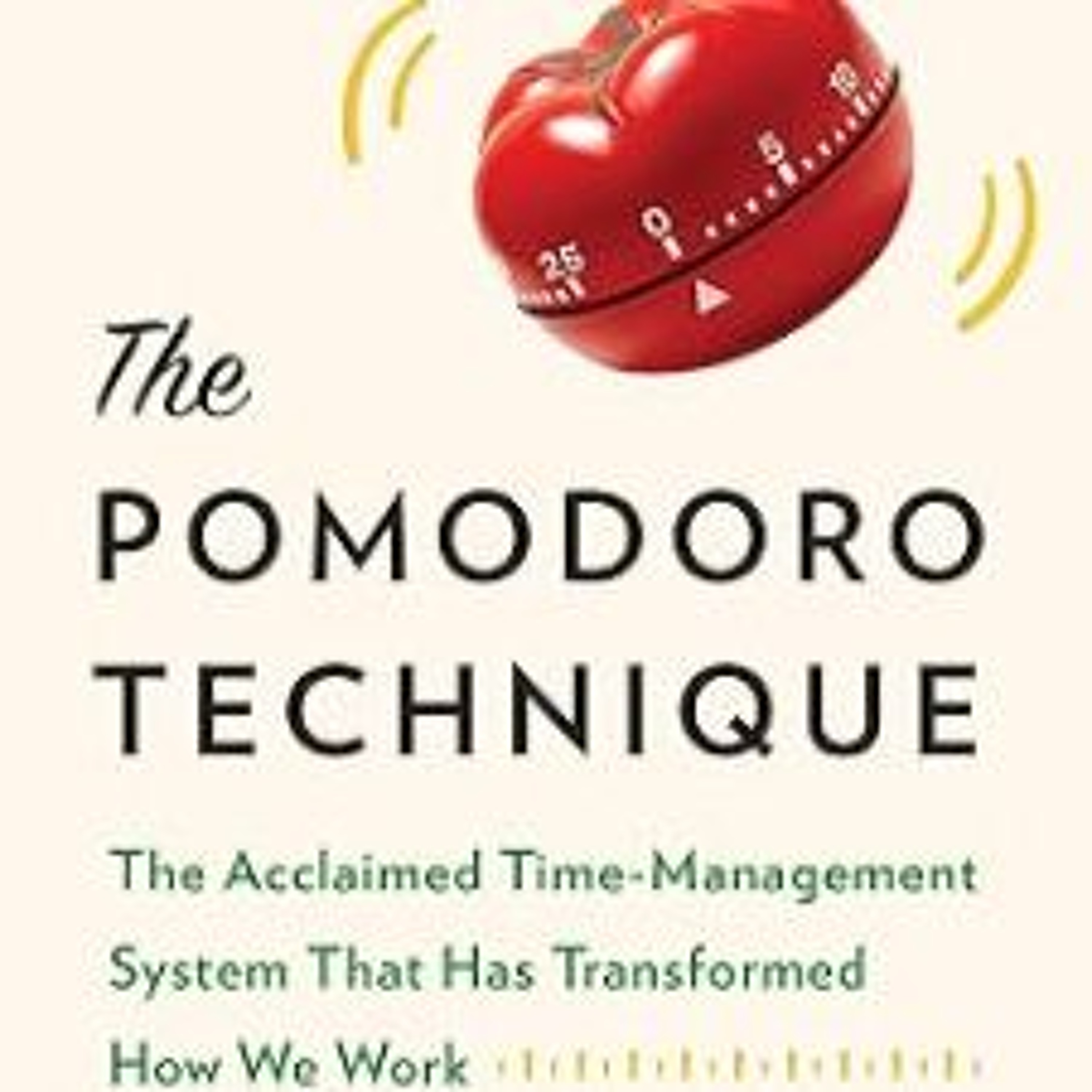
The Pomodoro Technique episode artwork

EPISODE · May 13, 2024 · 5 MIN

The Pomodoro Technique

from Canada's Keynote Humorist · host Judy Croon Podcast

The Pomodoro Technique by Francesco Cirillo The Acclaimed Time-Management System That Has Transformed How We Work. What does a tomato and productivity have to do with each other? The Pomodoro Technique (named after a tomato) is a cool way to help you get stuff done during the day. It breaks down big tasks into smaller ones so you don't feel overwhelmed. By using this technique, you'll be able to manage your time better and feel more in control of your work. This will make you a better worker and make your work more fun. When you break your bigger task into smaller tasks, each of these smaller tasks or time intervals is called a pomodoro, which comes from the Italian word for tomato. This technique was created by a university student who used a tomato-shaped kitchen timer to help him stay focused and productive. Why do Italians call the tomato a pomodoro? Let me tell you! Apparently in 1548, a Tuscan steward described the tomato as pomi d’oro which translated means golden fruit. That later became pomodoro. But I digress. See, this is why I need help with productivity. Who invented the Pomodoro Technique? Francesco Cirillo (the gentleman who came up with this technique) thought of it when he was in university in the 1980s. He had trouble staying focused and organized, so he created the Pomodoro Technique to help him stay focussed. Nowadays, he has a website where he teaches people how to use his technique to be more productive. Check it out PomodoroTechnique.com To start using the Pomodoro Technique, all you need is a timer and two lists. Your timer doesn’t have to be a fancy tomato-shaped one like in the original Pomodoro Technique. You can use a stopwatch or even your phone. Make sure it makes noise when the 25 minutes are up. This helps your brain switch between working and relaxing. Next, make two lists. The first list is your To Do Today list. This list has all the things you want to get done that day. For example, you might have outline presentation structure - 4 pomodori or pay bills - 1 pomodoro. Where do these tasks come from? They come from your inventory list. This list has all the tasks you want to do now or in the future. You'll need to learn how to estimate how many pomodori each task will take. Your estimates might not be perfect at first, but you'll get better with practice. To stay motivated, switch up your tasks. If a big task like time management presentation will take 20 pomodori, break it into smaller parts. It's more rewarding to finish a smaller task than to work all day on one big task without finishing it. By the way, I don’t use this two-list technique. I just use the Pomodoro technique until I get one big thing done and off my plate. Wow, I’m using a lot of food references. Now I’m hungry. So, when do you take a bigger break? Longer breaks, typically 15 to 30 minutes are taken after 4 tomatoes or 4 consecutive Pomodoros. The Pomodoro technique is basically set up to help you stay focussed. Each Pomodoro should be dedicated to one task only. The idea of 5-minute break every 25 minutes is not only to give your brain a break but to also give you a feeling of accomplishment. So, is the Pomodoro technique effective? A number of experts say that it’s a good focus tool to help with ADHD. It’s effective in providing measurable time increments as well as a reward system. What are the drawbacks to the Pomodoro Technique? Some people take longer to get into a project so 25 minutes doesn’t feel long enough. So, now that I’ve described this wonderful time saving technique, let’s get onto the big burning question, what’s the difference between pomodoro and red sauce? Well, typically pomodoro is a thicker sauce and thus more spreadable that marinara -which makes pomodoro a more common choice for pizza sauce.

The Pomodoro Technique by Francesco Cirillo The Acclaimed Time-Management System That Has Transformed How We Work. What does a tomato and productivity have to do with each other? The Pomodoro Technique (named after a tomato) is a cool way to help you get stuff done during the day. It breaks down big tasks into smaller ones so you don't feel overwhelmed. By using this technique, you'll be able to manage your time better and feel more in control of your work. This will make you a better worker and make your work more fun. When you break your bigger task into smaller tasks, each of these smaller tasks or time intervals is called a pomodoro, which comes from the Italian word for tomato. This technique was created by a university student who used a tomato-shaped kitchen timer to help him stay focused and productive. Why do Italians call the tomato a pomodoro? Let me tell you! Apparently in 1548, a Tuscan steward described the tomato as pomi d’oro which translated means golden fruit. That later became pomodoro. But I digress. See, this is why I need help with productivity. Who invented the Pomodoro Technique? Francesco Cirillo (the gentleman who came up with this technique) thought of it when he was in university in the 1980s. He had trouble staying focused and organized, so he created the Pomodoro Technique to help him stay focussed. Nowadays, he has a website where he teaches people how to use his technique to be more productive. Check it out PomodoroTechnique.com To start using the Pomodoro Technique, all you need is a timer and two lists. Your timer doesn’t have to be a fancy tomato-shaped one like in the original Pomodoro Technique. You can use a stopwatch or even your phone. Make sure it makes noise when the 25 minutes are up. This helps your brain switch between working and relaxing. Next, make two lists. The first list is your To Do Today list. This list has all the things you want to get done that day. For example, you might have outline presentation structure - 4 pomodori or pay bills - 1 pomodoro. Where do these tasks come from? They come from your inventory list. This list has all the tasks you want to do now or in the future. You'll need to learn how to estimate how many pomodori each task will take. Your estimates might not be perfect at first, but you'll get better with practice. To stay motivated, switch up your tasks. If a big task like time management presentation will take 20 pomodori, break it into smaller parts. It's more rewarding to finish a smaller task than to work all day on one big task without finishing it. By the way, I don’t use this two-list technique. I just use the Pomodoro technique until I get one big thing done and off my plate. Wow, I’m using a lot of food references. Now I’m hungry. So, when do you take a bigger break? Longer breaks, typically 15 to 30 minutes are taken after 4 tomatoes or 4 consecutive Pomodoros. The Pomodoro technique is basically set up to help you stay focussed. Each Pomodoro should be dedicated to one task only. The idea of 5-minute break every 25 minutes is not only to give your brain a break but to also give you a feeling of accomplishment. So, is the Pomodoro technique effective? A number of experts say that it’s a good focus tool to help with ADHD. It’s effective in providing measurable time increments as well as a reward system. What are the drawbacks to the Pomodoro Technique? Some people take longer to get into a project so 25 minutes doesn’t feel long enough. So, now that I’ve described this wonderful time saving technique, let’s get onto the big burning question, what’s the difference between pomodoro and red sauce? Well, typically pomodoro is a thicker sauce and thus more spreadable that marinara -which makes pomodoro a more common choice for pizza sauce.

NOW PLAYING

The Pomodoro Technique

0:00 5:56

No transcript for this episode yet

We transcribe on demand. Request one and we'll notify you when it's ready — usually under 10 minutes.

TV 2 - Veien til EM TV 2 og Moderne Media Velkommen til TV 2's EM podkast. Dette er tidenes første EM-podkast fra TV 2. I dagene før kamper skal Jesper Mathisen, Jan-Henrik Børslid og Espen Solbakken m/gjester lade opp. God fornøyelse! For annonsering: [email protected] booking: [email protected] Generally American (A Journey in American English) Christopher M. Chandler, Kris Schauer Hello, Hola, Guten Tag, Bonjour, こんにちは !Welcome everyone, this is a podcast for those wanting to learn about U.S. culture through Standard American English, also known as General American. We talk about various different topics related to the U.S. and the U.S.'s relations with other countries. My co-host and I would like to think of this as more of a journey because you never know where it’ll take us. Plus, since the journey’s more important than the end or the start, we hope that you’ll be willing to join us! Let’s see where it takes us! The Lavigne Show The Lavigne Show Welcome to The Lavigne Show Podcast!We delve deep into the pursuit of justice in Canada, offering insightful discussions, interviews with guests from across the country and the world, and critical analyses of the legal system—all while saving you time.Catch the Show:For the full, unedited live experience, join TheLavigneShow onTheLavigneShow.comYouTubeRumbleXFacebook LiveTwitchBecome a Member for Exclusive Content at TheLavigneShow.comJoin Us in Pursuing the Truth People Watching with Megan J. Robinson Megan J. Robinson Welcome to People Watching, a podcast where we figure out what it looks like to become the role model we’ve always wanted by talking with real people who've found real role models in their own lives. Together, we cut through all the noise and identify better sources of hope, creativity, and wisdom as we explore how we learn to make decisions about the kind of life we want to live. So join us! Let's do some people watching. www.r215coaching.com

Frequently Asked Questions

How long is this episode of Canada's Keynote Humorist?

This episode is 5 minutes long.

When was this Canada's Keynote Humorist episode published?

This episode was published on May 13, 2024.

What is this episode about?

The Pomodoro Technique by Francesco Cirillo The Acclaimed Time-Management System That Has Transformed How We Work. What does a tomato and productivity have to do with each other? The Pomodoro Technique (named after a tomato) is a cool way to...

Can I download this Canada's Keynote Humorist episode?

Yes, you can download this episode by clicking the download button on the episode player, or subscribe to the podcast in your preferred podcast app for automatic downloads.
URL copied to clipboard!