PodParley PodParley

The Radical Reformation - Part 1b

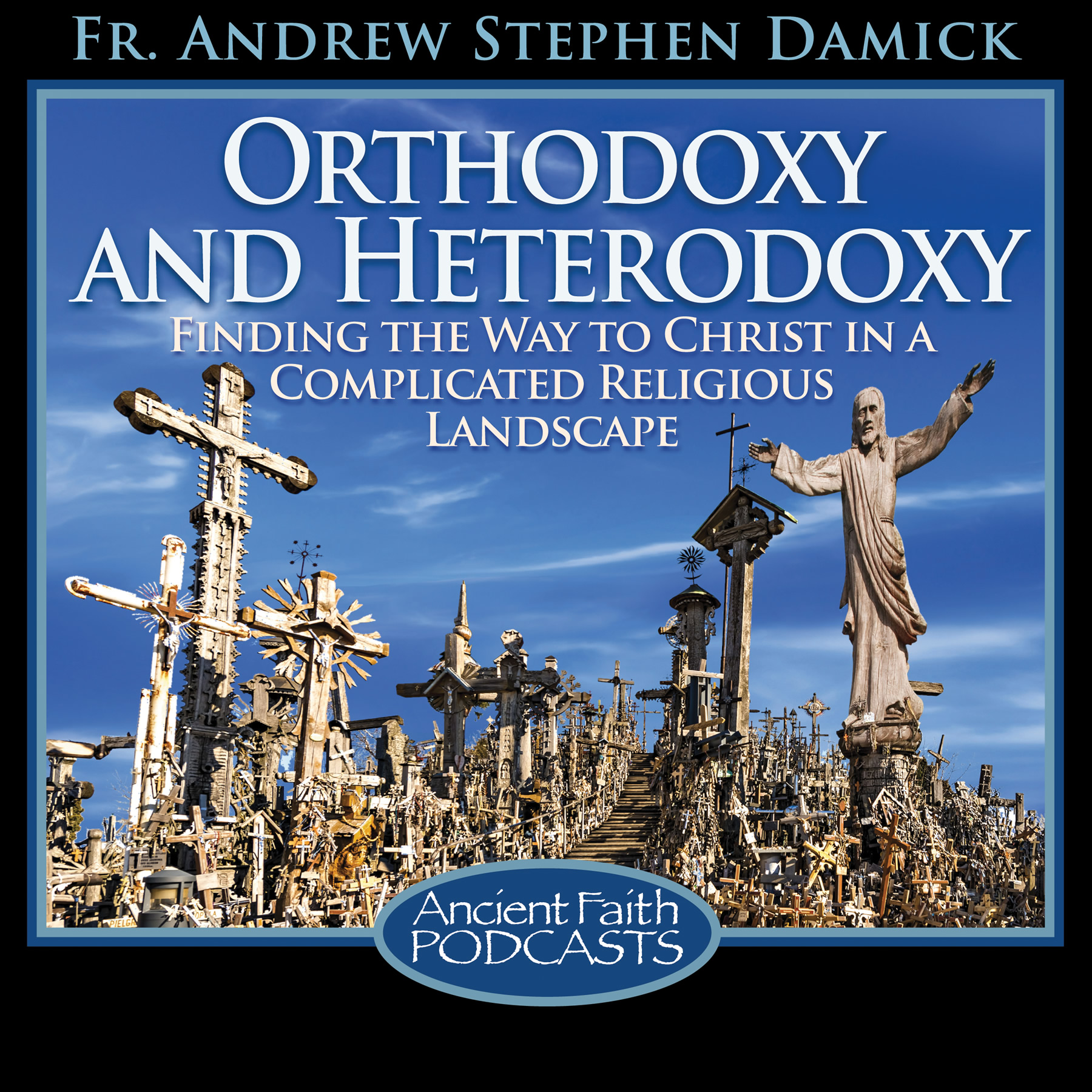
Fr. Andrew continues his survey of the Radical Reformation by discussing the impact of Antinomianism and the theory of the Great Apostasy.

An episode of the Orthodoxy and Heterodoxy podcast, hosted by Fr. Andrew Stephen Damick, titled "The Radical Reformation - Part 1b" was published on February 7, 2016.

February 7, 2016 · Orthodoxy and Heterodoxy

0:00 / 0:00

Fr. Andrew continues his survey of the Radical Reformation by discussing the impact of Antinomianism and the theory of the Great Apostasy.

Fr. Andrew continues his survey of the Radical Reformation by discussing the impact of Antinomianism and the theory of the Great Apostasy.
Romans 14:1-23

Apr 11, 2026 ·38m

Romans 15:1-33

Apr 11, 2026 ·49m

Romans 16:1-27

Apr 11, 2026 ·24m

Romans 7:1-25

Apr 11, 2026 ·53m

Romans 8:1-18

Apr 11, 2026 ·46m

Romans 8:19-39

Apr 11, 2026 ·51m

Big Ideas with Ben Weingarten ChangeUp Media LLC Big Ideas with Ben Weingarten features compelling long-form conversations with exceptional thinkers and doers on the most important ideas and issues of our time, and all time. Discussions focus on topics ranging from national security and foreign affairs, to economics and politics and philosophy and culture with a classical Liberal bent and a grounding in history. Big Ideas with Ben Weingarten challenges the prevailing progressive orthodoxy with a contrarian conservative/libertarian counter-narrative based in individual liberty, limited government, free enterprise and a strong, national interest-oriented and prudently used defense. Host Ben Weingarten is a Senior Fellow at the London Center for Policy Research, Senior Contributor at The Federalist and Founder & CEO of ChangeUp Media, a conservative media consulting and production company. Heretics G. K. Chesterton The Author Gilbert Keith Chesterton was born in London, England on the 29th of May, 1874. Though he considered himself a mere "rollicking journalist," he was actually a prolific and gifted writer in virtually every area of literature. A man of strong opinions and enormously talented at defending them, his exuberant personality nevertheless allowed him to maintain warm friendships with people--such as George Bernard Shaw and H. G. Wells--with whom he vehemently disagreed. Chesterton had no difficulty standing up for what he believed. He was one of the few journalists to oppose the Boer War. His 1922 "Eugenics and Other Evils" attacked what was at that time the most progressive of all ideas, the idea that the human race could and should breed a superior version of itself. In the Nazi experience, history demonstrated the wisdom of his once "reactionary" views.Chesterton wrote several works of Christian apologetics, the best known of which are "Orthodoxy", "Heretics", and "The Ev The Orthodox Faith Saint John of Damascus The Orthodox Faith is the classic epitome of the Early Greek Fathers. Writing just before the last of the truly Ecumenical Councils (787), he remains to this day, the last of the Eastern theologians whole-heartedly received by the West. This work, then, is an ecumenical touchstone that remains authoritative in Eastern Orthodoxy, Roman Catholicism (through Peter Lombard's Sentances) and in all Reformation Churches interested in purging late medieval accretions and returning to the developed orthodoxy of Creedal Christianity. (Summary by Jonathan Lange) Commentary on the Epistle to the Romans, A by John Calvin (1509 - 1564) LibriVox Of all commentators I believe John Calvin to be the most candid...He was no trimmer and pruner of texts. He gave their meaning as far as he knew it. His honest intention was to translate the Hebrew and the Greek originals as accurately as he possibly could, and then to give the meaning which would naturally be conveyed by such Greek and Hebrew words: he laboured, in fact, to declare, not his own mind upon the Spirit's words, but the mind of the Spirit as couched in those words. Dr. King very truly says of him, "No writer ever dealt more fairly and honestly by the Word of God. He is scrupulously careful to let it speak for itself, and to guard against every tendency of his own mind to put upon it a questionable meaning for the sake of establishing some doctrine which he feels to be important, or some theory which he is anxious to uphold. This is one of his prime excellencies. He will not maintain any doctrine, however orthodox and essential, by a text of Scripture which to him appears o
URL copied to clipboard!