
EPISODE · May 1, 2026 · 33 MIN
The real barrier to supplier diversity isn't supply, it's cynicism
from Built Different · host Tough Leaf
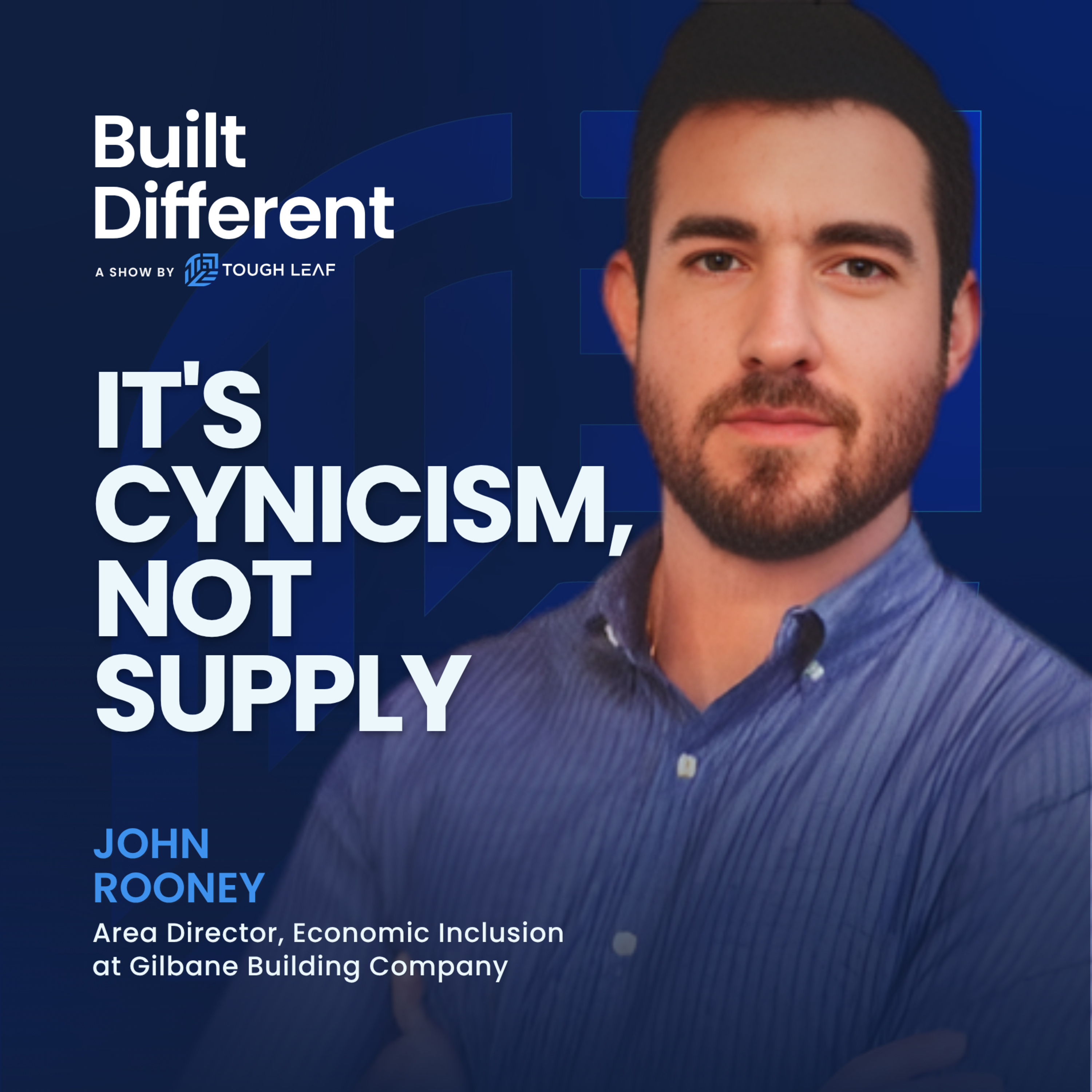
When a $300,000 carpentry package requires the same insurance thresholds as a $40 million foundation scope, small businesses get locked out before they can even bid. At Gilbane, the economic inclusion team built an API integration between their financial system and the state's compliance tracking platform, automating contract awards, change orders, and payment tracking to eliminate thousands of hours of manual data entry on large projects and shift from rear-view-mirror reporting to real-time decision-making.John Rooney, Area Director of Economic Inclusion, tells Wissam Akra, CEO at Tough Leaf, how he went from regulator at the NYC Economic Development Corporation to implementer at Gilbane, where the team set a 20% baseline participation goal across all projects and built the systems to actually enforce it. John argues the industry's reliance on a single participation rate misses the full picture. Firms need a basket of portfolio-level metrics paired with human success stories to break the cynicism that keeps inclusion work stuck as a checkbox exercise. He's currently wrapping up a guide called Intentional Building that codifies Gilbane's approach.Topics discussed:Familiarity bias that keeps teams rehiring underperformers over qualified unknownsDisproportionate insurance requirements that lock small businesses out of biddingAPI integration between financial and compliance systems for automated trackingReal-time data visibility to take corrective action during buyout, not afterTracking contractor commitments from bid negotiation through award through paymentMulti-directional compliance systems where second-tier subs can flag issues to the CMMeasuring a basket of portfolio-level metrics beyond a single participation ratePairing data-driven accountability with success stories to counter industry cynicism
Embed this episode
NOW PLAYING
The real barrier to supplier diversity isn't supply, it's cynicism
No transcript for this episode yet
Similar Episodes
No similar episodes found.
Similar Podcasts
No similar podcasts found.