
EPISODE · Mar 28, 2019 · 1H 3M
THE RIPPLE EFFECT: Water as a tool for peace and sustainable development
from Friends of Europe podcasts · host Friends of Europe
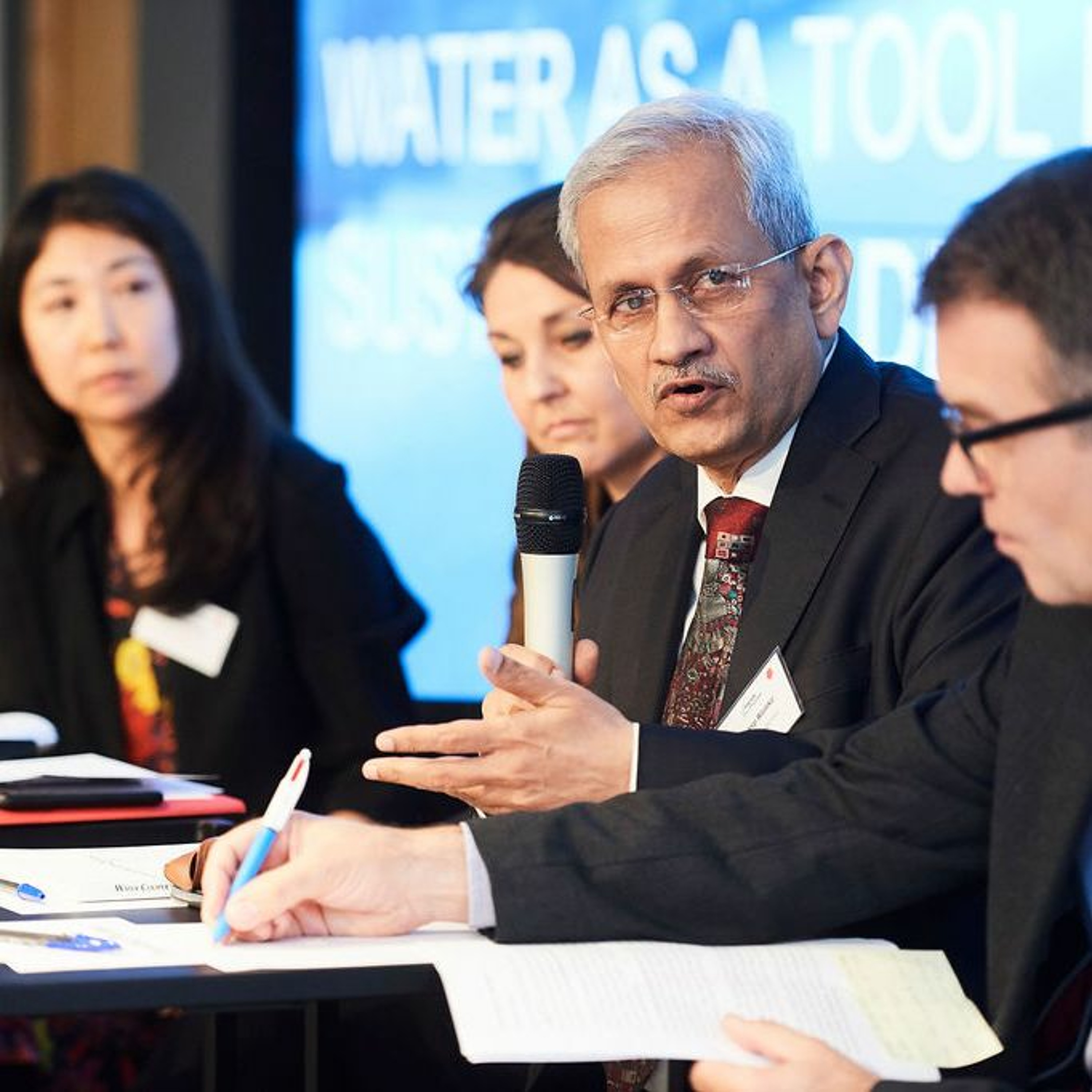
Access to the world’s shared water resources is inextricably linked to socio-political and economic ‘power dynamics’ that impact hugely on people’s lives and livelihoods. This was one of the key messages of Friends of Europe’s 25 March Policy Insight debate “The ripple effect: water as a tool for peace and sustainable development”. As we prepare for the “changing of the guard” in the EU “we have a topic that’s so essential for world peace that we should keep it high up on the agenda,” said Shada Islam, Friends of Europe’s Director for Europe & Geopolitics. With 40% of armed conflicts involving a resource-based stress factor, Head of Division for Economic and Global Issues at the European External Action Service (EEAS) Dominic Porter highlighted that there is growing acknowledgement that water is more than just a development issue. “There is a gradually increasing acceptance that these subjects need to be treated at the highest political level. They contribute to, if not cause, threats to international peace and security,” he said. Naho Mirumachi, Lead of King’s Water research hub and Senior Lecturer at King's College London, said it was vital to remember that conflict wasn’t necessarily driven by a lack of water resources. Warning practitioners to beware “the binary trap of thinking of water as a tool for peace or a tool for war”, she suggested that they consider the “socioeconomic power dynamics that make it easy for some people to access water and others to have to bear the burden.” But while competition over this vital resource can generate friction and conflict, water diplomacy can also be used to help broker peace and cooperation and, crucially, should aim to make a tangible difference to ordinary citizens. President of the India-based Strategic Foresight Group Sundeep Waslekar set out the three factors which define good practice in transboundary water cooperation: “There is a strong institutional mechanism. There is engagement of political leaders at the highest level. And this institutional structure and the engagement of top political leaders are used to make a real difference for the people.” Therese Noorlander, Sustainability Director for Europe at The Coca-Cola Company, noted that the private sector also has a role to play in taking a people-centred approach to water resource management, saying that while they “cannot fix the politics, by working on a local level and trying to add value for communities… we can help out and make the right investments that really help build those communities.”
What this episode covers
Access to the world’s shared water resources is inextricably linked to socio-political and economic ‘power dynamics’ that impact hugely on people’s lives and livelihoods. This was one of the key messages of Friends of Europe’s 25 March Policy Insight debate “The ripple effect: water as a tool for peace and sustainable development”. As we prepare for the “changing of the guard” in the EU “we have a topic that’s so essential for world peace that we should keep it high up on the agenda,” said Shada Islam, Friends of Europe’s Director for Europe & Geopolitics. With 40% of armed conflicts involving a resource-based stress factor, Head of Division for Economic and Global Issues at the European External Action Service (EEAS) Dominic Porter highlighted that there is growing acknowledgement that water is more than just a development issue. “There is a gradually increasing acceptance that these subjects need to be treated at the highest political level. They contribute to, if not cause, threats to international peace and security,” he said. Naho Mirumachi, Lead of King’s Water research hub and Senior Lecturer at King's College London, said it was vital to remember that conflict wasn’t necessarily driven by a lack of water resources. Warning practitioners to beware “the binary trap of thinking of water as a tool for peace or a tool for war”, she suggested that they consider the “socioeconomic power dynamics that make it easy for some people to access water and others to have to bear the burden.” But while competition over this vital resource can generate friction and conflict, water diplomacy can also be used to help broker peace and cooperation and, crucially, should aim to make a tangible difference to ordinary citizens. President of the India-based Strategic Foresight Group Sundeep Waslekar set out the three factors which define good practice in transboundary water cooperation: “There is a strong institutional mechanism. There is engagement of political leaders at the highest level. And this institutional structure and the engagement of top political leaders are used to make a real difference for the people.” Therese Noorlander, Sustainability Director for Europe at The Coca-Cola Company, noted that the private sector also has a role to play in taking a people-centred approach to water resource management, saying that while they “cannot fix the politics, by working on a local level and trying to add value for communities… we can help out and make the right investments that really help build those communities.”
NOW PLAYING
THE RIPPLE EFFECT: Water as a tool for peace and sustainable development
No transcript for this episode yet
Similar Episodes
Mar 26, 2026 ·1m
Mar 19, 2026 ·34m
Feb 18, 2026 ·11m
Feb 11, 2026 ·45m