
EPISODE · Dec 7, 2024 · 14 MIN
The Rise of Mexican-American Activism in the 1960s
from Mr. Hutchings History · host Produced, created, and written by Harold M. Hutchings
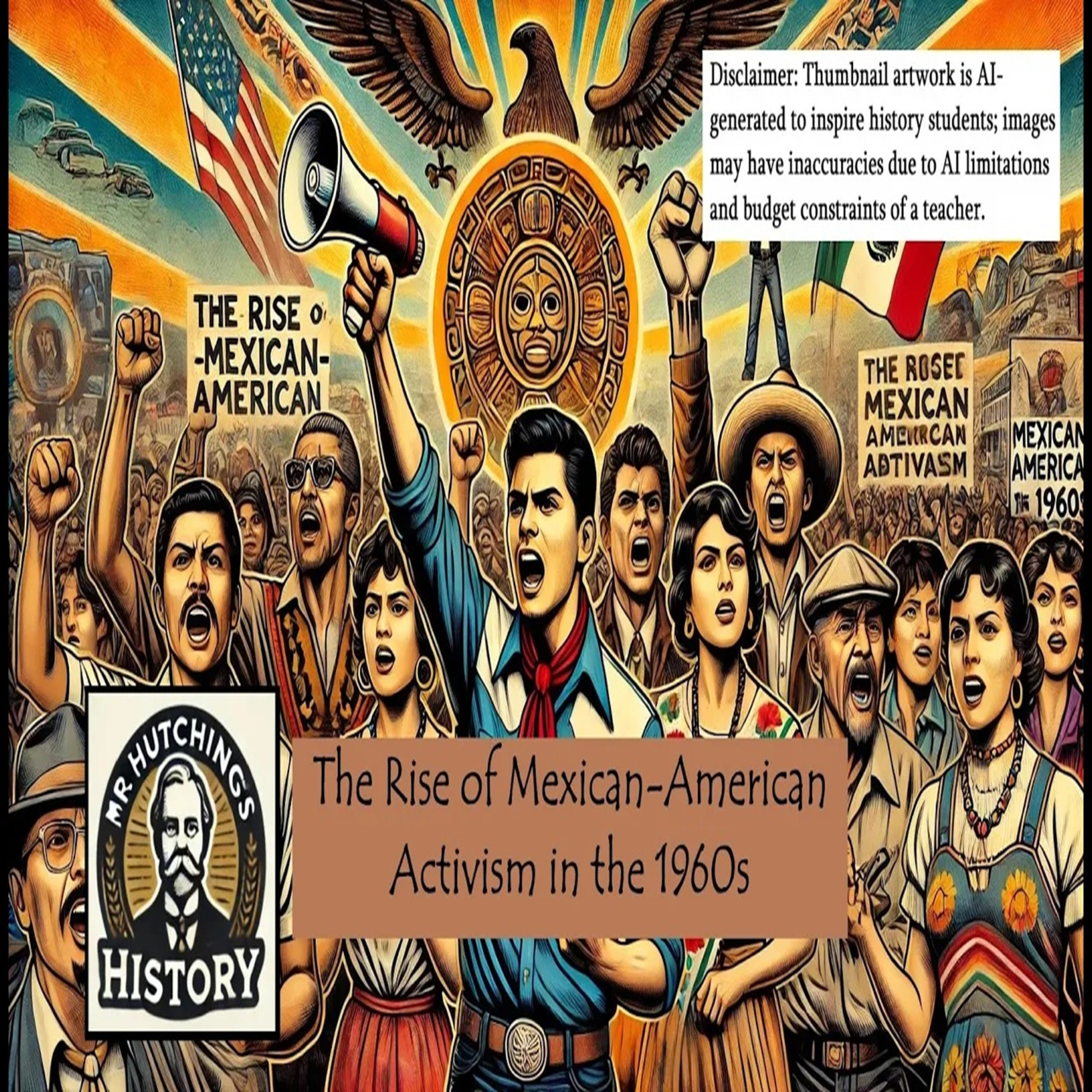
In this episode of Mr. Hutchings History, we explore the rise of Mexican-American activism in the 1960s, a pivotal period in the fight for civil rights and equality. Mexican-Americans, inspired by the successes of the Black Civil Rights Movement, embraced a more militant stance against systemic discrimination. Key figures like César Chávez and Dolores Huerta led the United Farm Workers (UFW) to victory in the Delano Grape Strike, securing better wages and working conditions for farmworkers. The Chicano Movement also emerged, emphasizing cultural pride and self-determination, with leaders like Rodolfo "Corky" Gonzales promoting the concept of "Chicanismo." This episode covers: The influence of the Civil Rights Movement on Mexican-American activism. The impact of the Voting Rights Act and immigration reform. Legal victories and the rise of grassroots organizations like LULAC and MAPA. The emergence of militant movements like the UFW and the Chicano Movement. The 1960s set the stage for significant political, economic, and educational gains for Mexican-Americans, reshaping their role in American society. This period left an enduring legacy in the continued struggle for justice and equality. #Paper3HLoption2 #HispanicAmericanMovement #CesarChavez #ChicanoMovement #MexicanAmericanRights #CivilRights #ImmigrationReform #UFW #DelanoGrapeStrike #CulturalPride #SocialJustice #MexicanAmericanActivism Works Cited Chávez, César. Autobiography of La Causa. Beacon, 1975. González, Juan. Harvest of Empire: A History of Latinos in America. Penguin, 2011. McWilliams, Carey. North from Mexico: The Spanish-Speaking People of the United States. Greenwood Press, 1948. Morin, Raúl. Among the Valiant. Borden, 1963. Ruiz, Vicki L. From Out of the Shadows: Mexican Women in Twentieth-Century America. Oxford UP, 1998.
Embed this episode
NOW PLAYING
The Rise of Mexican-American Activism in the 1960s
No transcript for this episode yet
Similar Episodes
No similar episodes found.
Similar Podcasts
No similar podcasts found.