
EPISODE · Nov 21, 2024 · 8 MIN
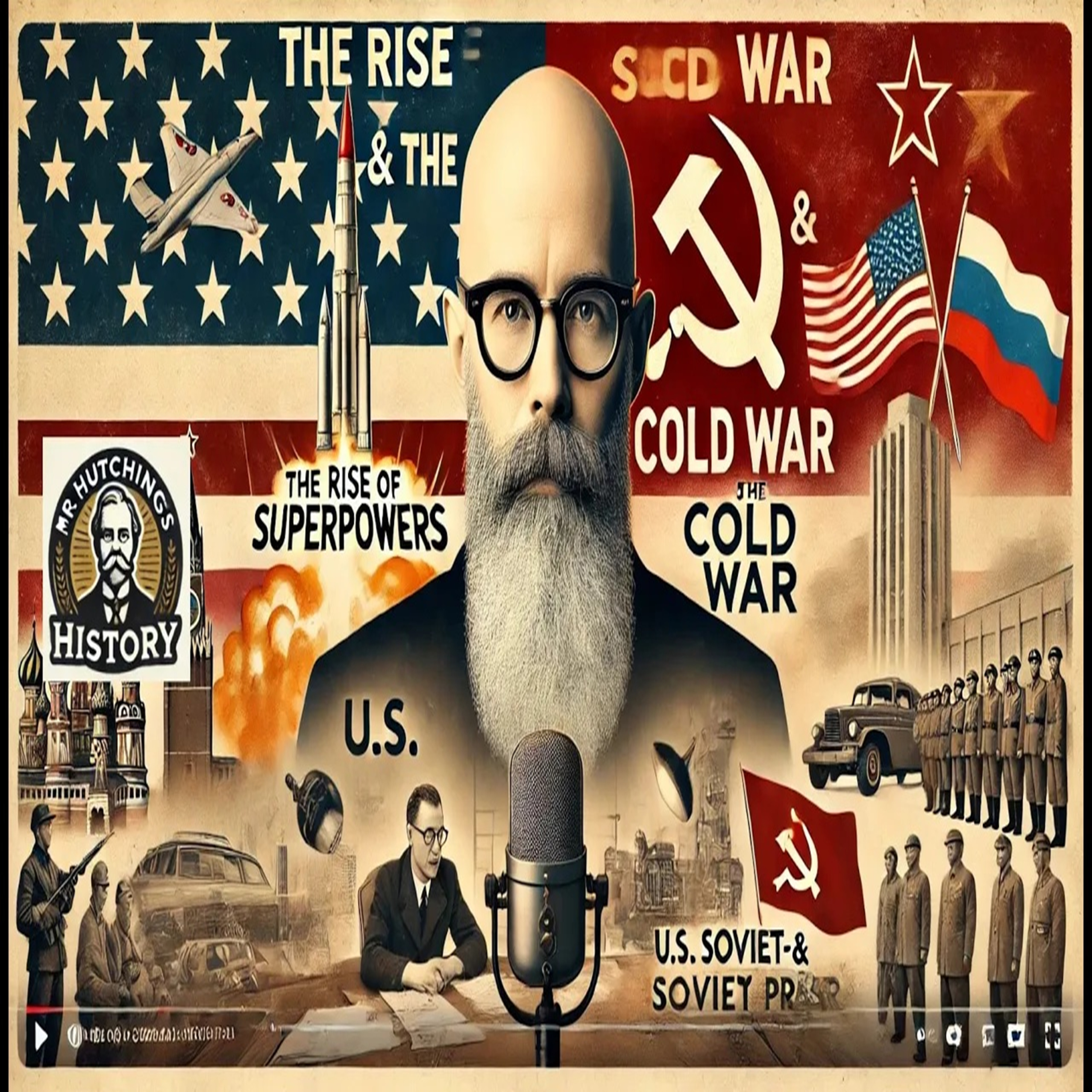
The Rise of Superpowers and the Origins of the Cold War: An Overview
from Mr. Hutchings History · host Produced, created, and written by Harold M. Hutchings
Welcome toMr. Hutchings History. In this episode, we explore the origins of the Cold War, one of the most defining conflicts of the 20th century. We’ll examine how the US and USSR emerged as superpowers by 1945, and how wartime conferences like Yalta and Potsdam set the stage for superpower rivalry. What were the key ideological differences that led to tensions? Why did Europe become politically and militarily divided by 1949? We’ll delve into the breakdown of the Grand Alliance and the division of Europe, analyzing key events like the Berlin Blockade and the Marshall Plan.Through a mix of ideological analysis and economic competition, we’ll uncover the driving forces behind the Cold War. We’ll also engage with varying historiographical perspectives from Orthodox to Post-revisionist schools, offering insight into the motivations behind US and Soviet actions. The episode covers not just Europe but the spread of Cold War tensions to Asia, with the rise of communism in China and the outbreak of the Korean War.#ColdWar #SuperpowerTensions #ColdWarOrigins #USvsUSSR #IBHistory #Paper2WorldHistory #ColdWarInAsia #MarshallPlan #BerlinBlockade #IdeologicalStruggle #USSRExpansion #Historiography #PostwarEurope #KoreanWar #SovietExpansion #TrumanDoctrine #ColdWarSuperpowersWorks CitedGaddis, John Lewis. The Cold War: A New History, Penguin, 2005.LaFeber, Walter. America, Russia, and the Cold War, 1945-1996, McGraw-Hill, 1997.Leffler, Melvyn. A Preponderance of Power: National Security, the Truman Administration, and the Cold War, Stanford UP, 1992.Schlesinger, Arthur. The Origins of the Cold War, Foreign Affairs, 1967.Williams, William Appleman. The Tragedy of American Diplomacy, W. W. Norton & Co., 1959.Chapters(0:00) Introduction: Setting the StageWelcome to Mr. Hutchings' History! A deep dive into the Cold War’s origins—was it inevitable, or were there missed opportunities for peace?(0:24) The Superpowers EmergeThe U.S. and USSR, allies in WWII, emerge as dominant powers. However, economic disparities and ideological differences sow the seeds of rivalry.(1:28) Wartime Conferences and Early TensionsThe Tehran, Yalta, and Potsdam Conferences expose growing cracks in the alliance, especially over the future of Eastern Europe and Poland.(2:26) The Ideological Divide: Democracy vs. CommunismThe U.S. and Britain promote democracy, while the USSR prioritizes security and influence—creating a deep ideological chasm.(3:00) 1946: The Long Telegram & Stalin’s ResponseGeorge Kennan’s Long Telegram warns of Soviet expansionism, shaping U.S. containment policy. Stalin counters by accusing the U.S. of imperialism.(3:40) 1949: A Pivotal Year in the Cold WarThe Berlin Blockade and Airlift, NATO’s formation, and Mao’s communist victory in China define 1949 as a turning point.(4:33) Competing Historical InterpretationsHistorians Schlesinger and Williams offer contrasting views: Was Soviet aggression or U.S. economic ambition the driving force of the Cold War?(5:26) The Inevitable Clash?Could the Cold War have been avoided, or were the two superpowers destined for conflict? Analyzing historical choices and unintended consequences.(6:03) 1950: The Cold War Turns HotThe Korean War erupts, transforming ideological tensions into real-world battles with devastating human costs.(6:47) Why Does the Cold War Still Matter?The Cold War’s impact lingers today in global politics, nuclear concerns, and U.S.-Russia relations—understanding history helps us navigate the present.(7:35) Lessons from the Cold WarBeyond conflict, moments of diplomacy and cooperation existed. Studying multiple perspectives ensures a nuanced understanding of history.(8:09) Conclusion: Keep Questioning HistoryHistory isn’t just facts—it’s interpretation. Keep exploring different viewpoints to understand the past, present, and future.
Embed this episode
NOW PLAYING
The Rise of Superpowers and the Origins of the Cold War: An Overview
No transcript for this episode yet
Similar Episodes
No similar episodes found.
Similar Podcasts
No similar podcasts found.