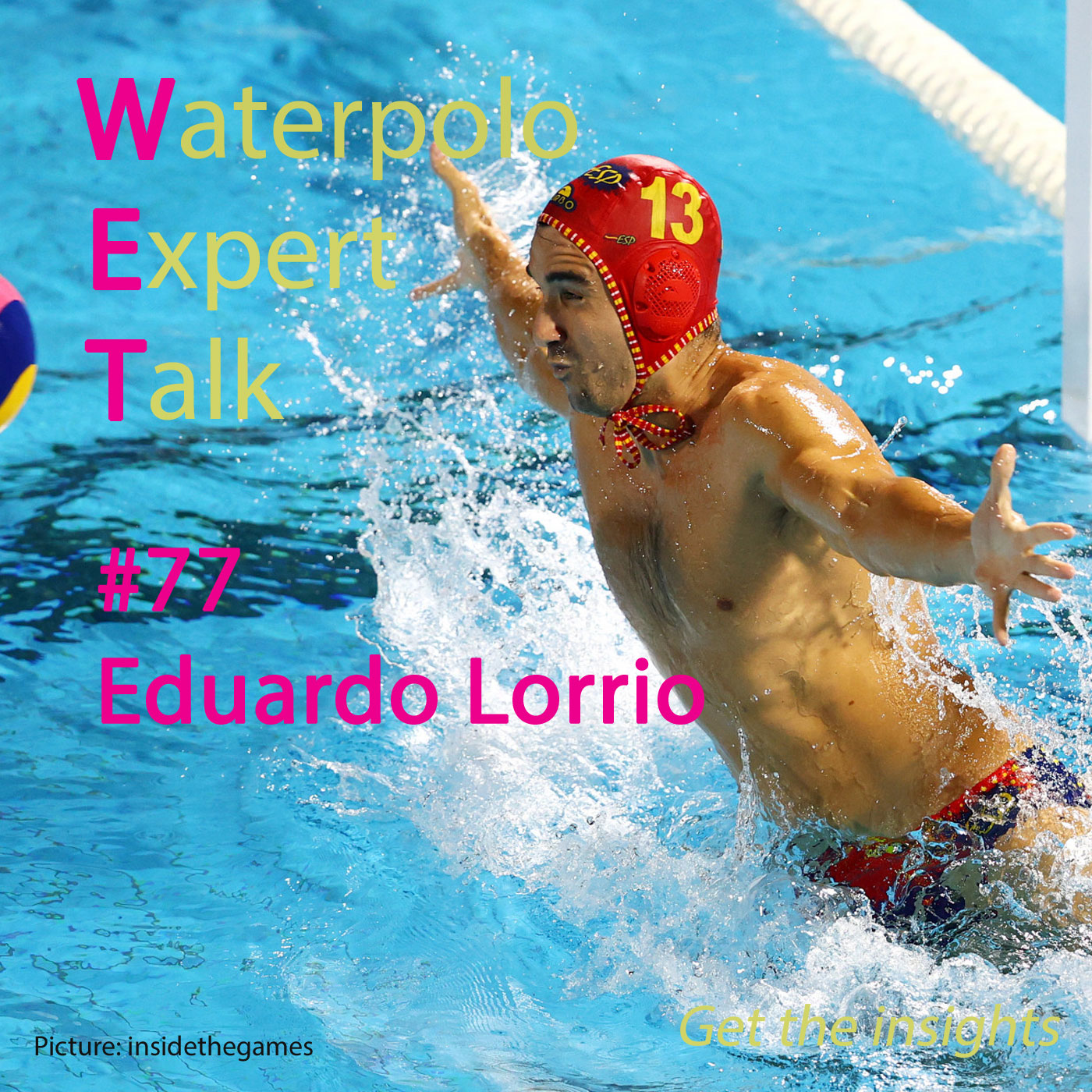
“The Role of the Goalkeeper Has Clearly Changed in Recent Years” – Eduardo Lorrio on Modern Goalkeeping Evolution episode artwork

EPISODE · Mar 4, 2023 · 21 MIN

“The Role of the Goalkeeper Has Clearly Changed in Recent Years” – Eduardo Lorrio on Modern Goalkeeping Evolution

from Waterpolo Expert Talk · host Waterpolo Expert Talk

In this episode of the Waterpolo Expert Talk, Spanish international goalkeeper Eduardo Lorrio shares deep insights into how the role of the goalkeeper has evolved in modern water polo. From being a pure shot stopper to becoming an active tactical element, Lorrio explains why today’s goalkeepers must influence far more than just the final save. Eduardo begins by introducing his personal background. Originally from Madrid, he moved to Barcelona seven years ago after already competing in three Olympic Games. Playing for CN Sabadell, he describes Barcelona as the current center of Spanish water polo, offering higher competition density, professional environments and daily exposure to elite-level play that is difficult to find elsewhere in Spain. Reflecting on his beginnings, Eduardo explains that water polo was not a family tradition. Neither his parents nor his siblings were involved in the sport. He initially started as a swimmer until a coach noticed his physique and suggested trying water polo as a goalkeeper. From the very first day, the position felt natural to him – and he has never questioned that decision. A major part of the conversation focuses on youth development. Lorrio strongly believes that children should try all positions when they are young. Water polo at early ages should be about fun, movement and understanding the game – not specialization. Only later, around the ages of ten or eleven, does it make sense to gradually guide players toward specific positions based on physical development, coordination and personal preference. Eduardo provides valuable insight into the Spanish development system, particularly the existence of specialized training centers where the most promising young goalkeepers and center players train together under top coaches. Being surrounded by peers of equal or higher level, he explains, accelerates learning, motivation and technical growth. These environments play a crucial role in producing elite goalkeepers in Spain. The core theme of the episode is the changing role of the goalkeeper. In the past, the goalkeeper’s primary task was simple: stop shots. Today, that is only the foundation. Modern goalkeepers must read the game, communicate with defenders, support the center defense, initiate counterattacks and even actively participate in offensive phases such as six-on-five situations. Eduardo describes how goalkeepers are now responsible for deciding the first pass of a counterattack, positioning themselves to support defensive schemes at two meters, and understanding tactical patterns to help teammates anticipate movements. In some matches, goalkeepers even directly contribute to goals by creating numerical advantages or assisting decisive plays. Despite these added responsibilities, Lorrio emphasizes that the core duty remains unchanged: saving shots. A goalkeeper who finishes a match with a high number of saves often decides the outcome of the game. Tactical involvement enhances the role, but shot stopping remains the foundation of goalkeeping excellence. The episode closes with reflections on why this evolution makes the position more enjoyable. Being actively involved in all phases of the game gives goalkeepers a stronger sense of responsibility, connection and influence. For Eduardo, this transformation has made modern water polo more dynamic, more tactical and far more exciting for goalkeepers than ever before. 🎧 More about the podcast: https://www.schulzekopp.de

In this episode of the Waterpolo Expert Talk, Spanish international goalkeeper Eduardo Lorrio shares deep insights into how the role of the goalkeeper has evolved in modern water polo. From being a pure shot stopper to becoming an active tactical element, Lorrio explains why today’s goalkeepers must influence far more than just the final save. Eduardo begins by introducing his personal background. Originally from Madrid, he moved to Barcelona seven years ago after already competing in three Olympic Games. Playing for CN Sabadell, he describes Barcelona as the current center of Spanish water polo, offering higher competition density, professional environments and daily exposure to elite-level play that is difficult to find elsewhere in Spain. Reflecting on his beginnings, Eduardo explains that water polo was not a family tradition. Neither his parents nor his siblings were involved in the sport. He initially started as a swimmer until a coach noticed his physique and suggested trying water polo as a goalkeeper. From the very first day, the position felt natural to him – and he has never questioned that decision. A major part of the conversation focuses on youth development. Lorrio strongly believes that children should try all positions when they are young. Water polo at early ages should be about fun, movement and understanding the game – not specialization. Only later, around the ages of ten or eleven, does it make sense to gradually guide players toward specific positions based on physical development, coordination and personal preference. Eduardo provides valuable insight into the Spanish development system, particularly the existence of specialized training centers where the most promising young goalkeepers and center players train together under top coaches. Being surrounded by peers of equal or higher level, he explains, accelerates learning, motivation and technical growth. These environments play a crucial role in producing elite goalkeepers in Spain. The core theme of the episode is the changing role of the goalkeeper. In the past, the goalkeeper’s primary task was simple: stop shots. Today, that is only the foundation. Modern goalkeepers must read the game, communicate with defenders, support the center defense, initiate counterattacks and even actively participate in offensive phases such as six-on-five situations. Eduardo describes how goalkeepers are now responsible for deciding the first pass of a counterattack, positioning themselves to support defensive schemes at two meters, and understanding tactical patterns to help teammates anticipate movements. In some matches, goalkeepers even directly contribute to goals by creating numerical advantages or assisting decisive plays. Despite these added responsibilities, Lorrio emphasizes that the core duty remains unchanged: saving shots. A goalkeeper who finishes a match with a high number of saves often decides the outcome of the game. Tactical involvement enhances the role, but shot stopping remains the foundation of goalkeeping excellence. The episode closes with reflections on why this evolution makes the position more enjoyable. Being actively involved in all phases of the game gives goalkeepers a stronger sense of responsibility, connection and influence. For Eduardo, this transformation has made modern water polo more dynamic, more tactical and far more exciting for goalkeepers than ever before. 🎧 More about the podcast: https://www.schulzekopp.de

NOW PLAYING

“The Role of the Goalkeeper Has Clearly Changed in Recent Years” – Eduardo Lorrio on Modern Goalkeeping Evolution

0:00 21:50

No transcript for this episode yet

We transcribe on demand. Request one and we'll notify you when it's ready — usually under 10 minutes.

Flottengeflüster ALD Automotive Österreich | LeasePlan Beim Flottengeflüster powered by ALD Automotive | LeasePlan präsentieren Jörg Janik und Peter Gutenbrunner alle zwei Wochen spannende Informationen rund um das Thema nachhaltige Mobilität. Beide beschäftigen sich schon lange mit der Thematik und bringen umfangreiches Fachwissen mit. Sollten sie aber doch einmal nicht weiter wissen, werden unsere Expert*innen hinzugezogen, die ihnen gerne mit Rat und Tat zur Seite stehen. Humanizing Change Tremendousness Join us each episode as we talk with innovators in their respective fields about their unique journeys and how they humanize change in their own work, right here, on Humanizing Change. AI Erik's Podcast Audio Erik Conn The AI News Podcast where we talk AI. NEWMORROW SESSIONS - A PodCast Series on the Future of Hospitality Mario C. Bauer, Florian Schneider, Axel Weber & Dr. Tillman Bardt The Newmorrow PodCast is more than a podcast — it's a platform for open dialog on the future of our business, a platform for those building what doesn’t exist yet. Here, we share and embrace our passion for the hospitality industry, but we won’t romanticize the journey. We ask the tough questions, confront uncomfortable truths, and prepare for a future that resists easy answers. We believe that the tougher and wilder times become, the more openly, honestly and humanely people need to talk to each other and act together. We believe, openness, togetherness, and truthfulness should also be cornerstones of a professional community to develop our utopian idea of „open source“. This is a space where visionaries don’t just imagine the future — they wrestle with the paradoxes that shape it: success vs. happiness, data vs. instinct, stability vs. reinvention. Join leaders, entrepreneurs, and thinkers as they share not what made them — but what’s actively shaping them, now and next. So tune in

Frequently Asked Questions

How long is this episode of Waterpolo Expert Talk?

This episode is 21 minutes long.

When was this Waterpolo Expert Talk episode published?

This episode was published on March 4, 2023.

What is this episode about?

In this episode of the Waterpolo Expert Talk, Spanish international goalkeeper Eduardo Lorrio shares deep insights into how the role of the goalkeeper has evolved in modern water polo. From being a pure shot stopper to becoming an active tactical...

Can I download this Waterpolo Expert Talk episode?

Yes, you can download this episode by clicking the download button on the episode player, or subscribe to the podcast in your preferred podcast app for automatic downloads.
URL copied to clipboard!