
EPISODE · Feb 20, 2026 · 4 MIN
The Science of Earworms: Parasitic Pop Music
from Untied State of Anxiety · host The Untied States of Anxiety
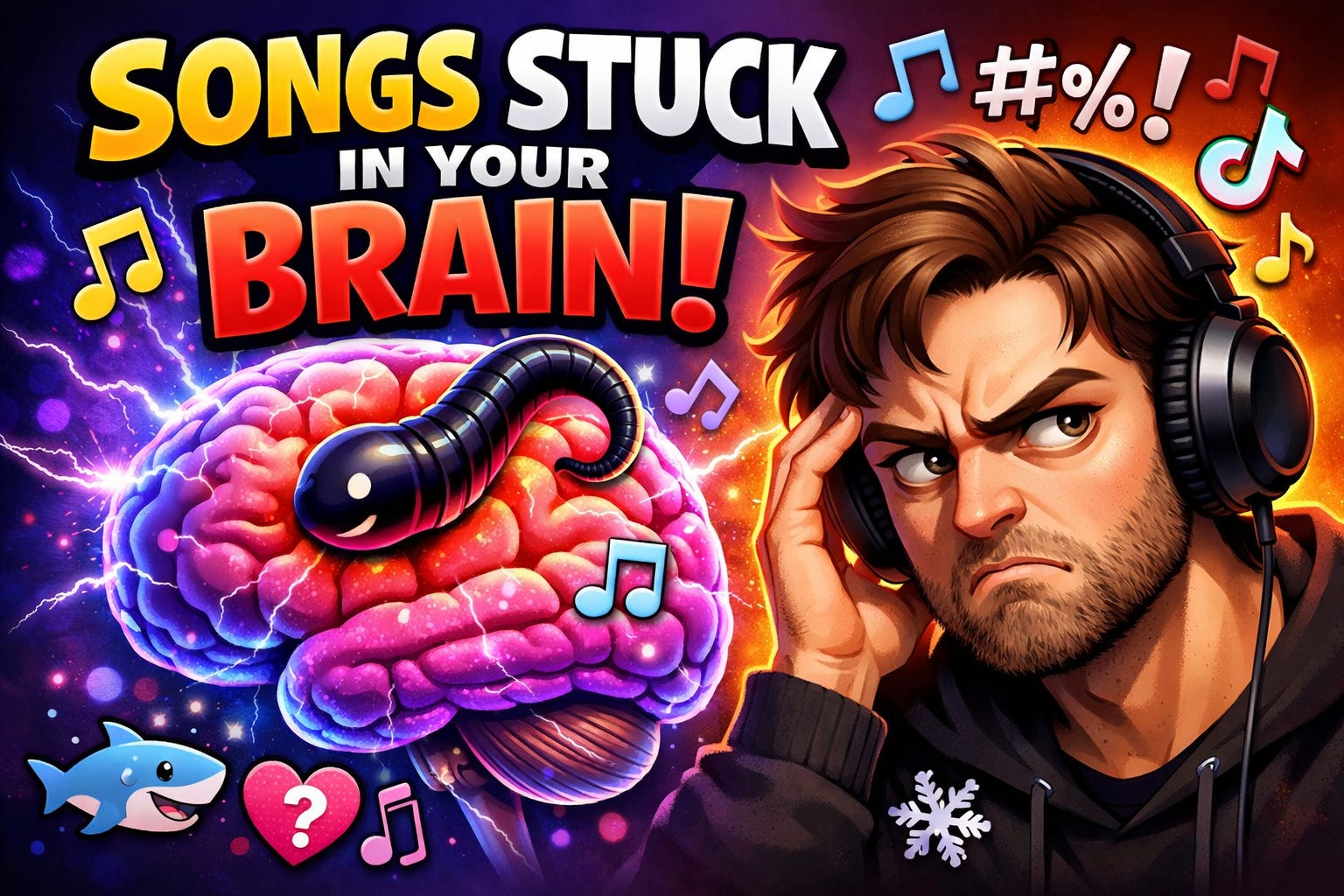
Science suggests the reason certain songs get stuck in your head isn’t magic — it’s math. Catchy tracks rely on symmetry, repetition, and small predictable variations that your brain quickly recognizes and rewards with a dopamine hit, which makes them feel satisfying and memorable at first. The same formula behind hits like “Baby Shark,” “Call Me Maybe,” “Happy,” and “Let It Go,” plus ultra-short TikTok hooks, is intentionally used because simple, repeatable structures spread fast and are easy to sing, loop, and market. But once you’ve heard them too many times, the novelty disappears, and what once felt catchy turns irritating because your brain has already “solved” the pattern. In other words, earworms aren’t accidents — they’re engineered using the exact brain-friendly patterns that make music addictive and, eventually, unbearable. This is a public episode. If you would like to discuss this with other subscribers or get access to bonus episodes, visit misongrey.substack.com
Embed this episode
NOW PLAYING
The Science of Earworms: Parasitic Pop Music
No transcript for this episode yet
Similar Episodes
No similar episodes found.
Similar Podcasts
No similar podcasts found.