
EPISODE · Nov 4, 2025 · 10 MIN
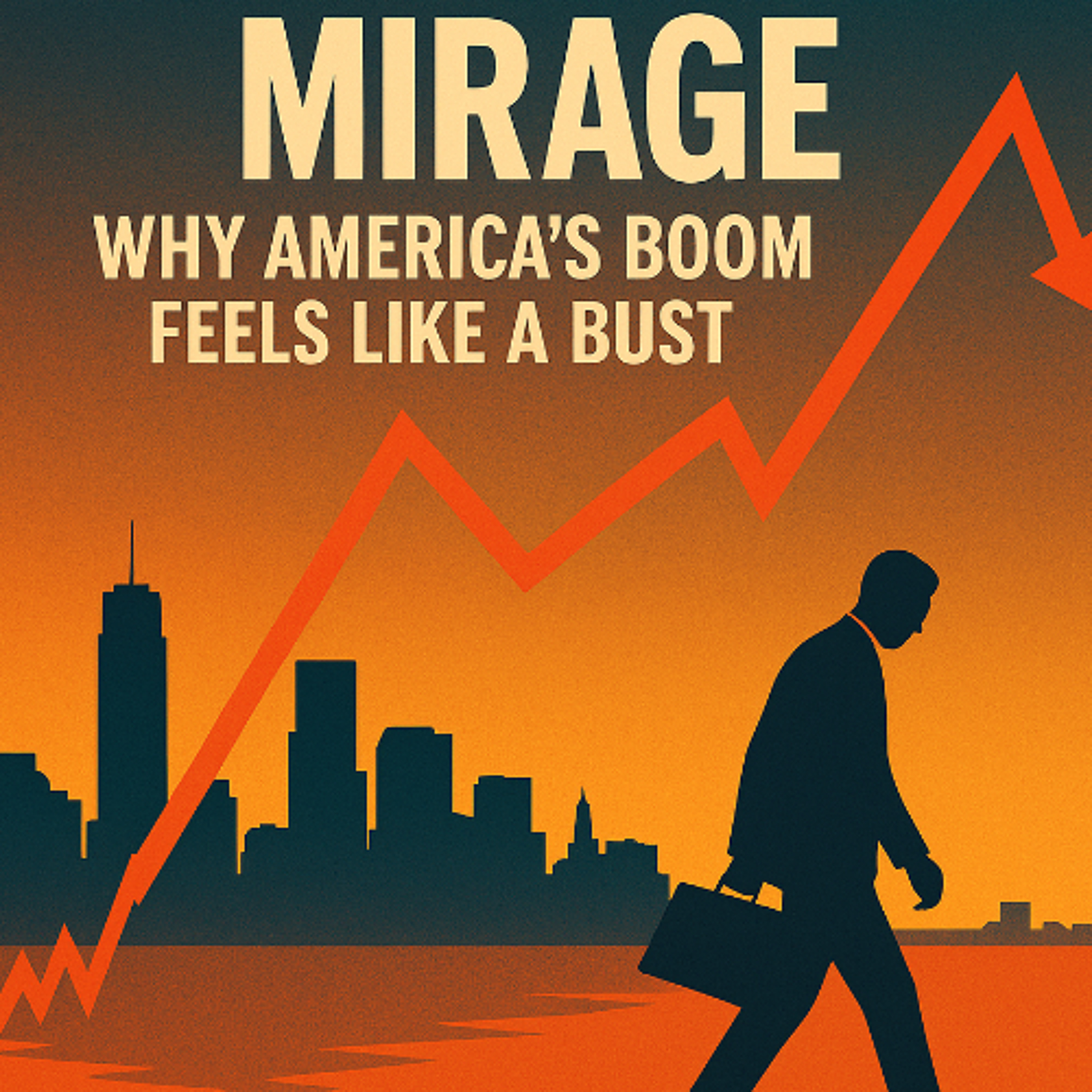
The Stock Market Mirage: Why America’s Boom Feels Like a Bust
from The Rock of Talk · host Eddy Aragon
Overall Economic Outlook The current outlook is bleak, highlighting a sharp disconnect between a booming stock market (Dow Jones, portfolios) and the financial reality facing most Americans. Market gains are concentrated among the top 1%, while middle- and lower-income households are being "crushed." Concerns are mounting about the U.S. economy and the risk of a recession in the coming months. Consumer Sentiment and Behavior Consumer confidence has deteriorated markedly amid threats of a government shutdown, elevated prices, and persistent inflation concerns. - University of Michigan Data (October '24 vs. October '25): - Consumer Sentiment: Fell from 70.5 to 53.6, a -24% change. - Current Economic Conditions: Declined from 64.9 to 58.6, a -9.7% change. - Index of Consumer Expectations: Dropped from 74.1 to 50.3, a -32.1% decline over one year. - Demographic Pressure: - Lower-income and younger Americans (especially ages 25–35) are under the most strain. - Fed Chair Jerome Powell noted that while the overall economy is resilient, its strength is "uneven." - Spending is increasingly concentrated among higher-income households. - Corporate Examples: - Chipotle: COO Scott Boatwright reported a "meaningful pullback" from younger and lower-income customers, contributing to a nearly 20% stock drop. - Mondelez (Snack Giant): CEO Dirk Van de Put said the government shutdown will negatively affect consumer confidence. Market Performance and Corporate Warnings A growing number of companies report softer consumer spending, weaker sales, fewer transactions, and downward revisions to guidance. - Goldman Sachs "DEFCON 1" Alert: - Issued a "red alert" on an "imploding U.S. consumer," citing the worst sentiment in decades. - Follows disappointing data, including a weak jobs report and manufacturing decline. - Goldman specialist Scott Feer noted more companies are openly discussing a slowdown. - Sector Underperformance: - Consumer Discretionary: Underperformed the market by 400 bps this week and 500 bps over the last two weeks. - Consumer Staples: Underperformed by 500 bps this week and 750 bps over the last two weeks. - General Corporate Trends: - Layoffs are rising across sectors. - Kraft Heinz: Expects weaker U.S. sales ahead of a planned stock split. Macroeconomic Indicators Multiple indicators point to instability. - Gold Price: Surpassed $4,000, signaling economic stress. - Inflation: Back above 3% and not considered under control. - Manufacturing: In decline despite tariffs aimed at boosting domestic production. - AI Investment: Tech giants are pouring money—often with government support—into data centers and chips; returns are uncertain and spending levels appear unsustainable. - International Comparison: Europe shows steadier progress, with improving earnings, GDP, and sentiment. Political and Government Impact Policy actions in Washington, D.C., are viewed as "tone deaf," worsening economic challenges. - Government Shutdown: - On track to become the longest in U.S. history at 35 days. - A key driver of falling consumer confidence. - Using SNAP (food stamps) as a bargaining chip is criticized as wrong, especially amid rising layoffs and low labor force participation. - Leadership Critique: - Both parties and the President are seen as out of touch with everyday struggles. - Republicans are viewed as having missed a chance to champion the public during this crisis. - Ultimately, extreme wealth concentration will harm the "haves" too, as weak money circulation erodes corporate profits.
Embed this episode
NOW PLAYING
The Stock Market Mirage: Why America’s Boom Feels Like a Bust
No transcript for this episode yet
Similar Episodes
No similar episodes found.
Similar Podcasts
No similar podcasts found.