
EPISODE · Feb 26, 2026 · 8 MIN
The Taliban Chapter Four Podcast Fourteen
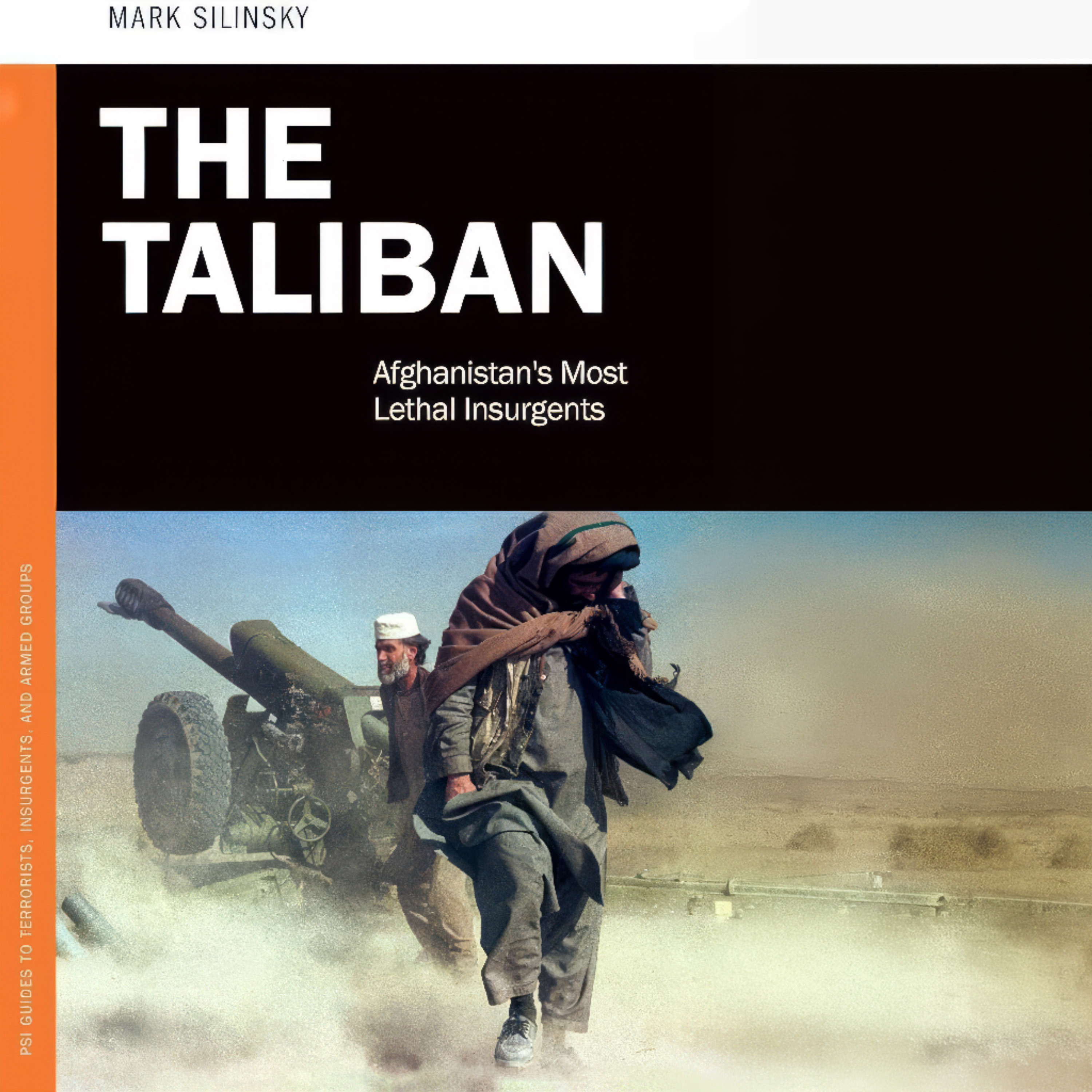
from The Taliban - Afghanistan’s Most Lethal Insurgent Group - Podcast · host Mark Silinsky
Hello and welcome to a reading from The Taliban – Afghanistan’s Most Lethal Insurgent Group, written by Mark Silinsky and published by Praeger, an imprint of Bloomsbury Publishing in New York, New York. This reading is brought to you by Kensington Security Consulting, where we bring education to national security. To Educate a People Before the Taliban, education was expanding, modernizing, and becoming more secular and accessible, particularly for girls. Elements of Afghanistan’s higher education system were a source of pride among Afghan Western-oriented intellectuals. In the 1960s and early 1970s, half of Afghanistan’s children had access to primary education, and Kabul University attracted the country’s top intellectual talent. By 2002, fewer than 40% of primary-school-aged children attended school, and only 3% of girls did. Secondary school attendance was 10%, and only 2% of girls attended. Almost 80 percent of school buildings had been destroyed. Many teachers and administrators had either fled the country or been killed. Those who remained had not been paid for 6 months. Beyond religious indoctrination, the Taliban cared nothing about education. The Bonn donors determined that literacy was a vital component of human capital. States with low literacy levels face a striking competitive disadvantage. Education would build the human capital needed to expand sectors of Afghanistan’s economy, empower women, create physical infrastructure, build a competent administration, promote job creation, and foster a sense of national purpose. Vocational education was particularly important because skilled workers are vital to the construction, maintenance, and repair of communication, health, education, and security-related facilities. Literacy has strong security benefits because education boosts military capabilities to fight the Taliban. Illiterate Afghan recruits could not be easily taught to function as soldiers. One soldier explained, “I face difficulties. If someone calls me and tells me to go somewhere, I can't read the street signs." But literate soldiers could serve as mechanics, medics, logisticians, and artillery specialists. There are also intangibles that boost morale in the Army. Literacy brings prestige, commands respect, and confers status and credibility. It brings dignity. There are secular, after-school activities. The new regime in Kabul brought Boy and Girl Scouting back to Afghanistan to supplement after-school education and instill values of consensual rule. First introduced in Afghanistan in 1931, scouting flourished in the 1960s and 1970s. Afghan Boy and Girl Scouts share the moral code of scouts worldwide, but there are unique elements. In Afghanistan, a boy can earn a merit badge for “identifying land mines and roadside bombs.” To Treat and Heal a People In 2001, donors in Bonn understood that Afghanistan was a profoundly unhealthy country. Throughout the 20th century, Afghanistan’s dismal health conditions proved to be an ally to Afghans in their wars against foreign invaders, from the British to the Soviets. In the 1980s, disease took a heavy toll on Soviet forces in Afghanistan. Among the diseases Soviet forces suffered from were Hepatitis A, typhoid fever, malaria, dysentery, and even plague. For this reason, the victors in late 2001 made health care a top priority, and U.S. military personnel and other counterinsurgency operators were well equipped to contribute. A key counterinsurgency-related health care goal was to develop and implement a basic health care plan with broad application that could deliver quick results. Taliban tactics proved effective in forcing out and keeping out foreign health practitioners. In August 2004, Doctors without Borders closed its medical programs after 24 years in Afghanistan. Profile 10: Khorshid – Sunshine and Happiness “If you are scared you end up doing nothing and without doing you cannot achieve anything. But if you do things, all that can happen is you succeed or fail.” Khorshid Those who try to boost the mental health of Afghans face an ever-present sense of impending death. But this did not stop Australian skateboarder Oliver Percovich, who became a Kabul sensation in 2007 when he showed children how to ride his skateboard. The children loved it, so Percovich built a skateboard school called Skateistan to give them happiness and allow them to escape, if only for a few moments, the drudgery of their daily lives. When Percovich arrived with skateboards, children would yell, “Ollie! Ollie!” The pitted, dirty streets of Kabul teemed with rocketing, beaming kids. They cruised, swooshed, collided, and jumped in Afghanistan’s first skate park and school, built by Skateistan. Ollie explained, “The boards are just our carrots. They’re a way to connect with the kids and build trust.” Khorshid was a 14-year-old girl, born during the late Taliban era and into desperate poverty. She had her own skateboard, earned by volunteering as a skateboarding teacher for girls at Skateistan. She shared it with her 8-year-old sister. Khorshid had to persuade her mother to let her spend time away from hawking goods. But her mother agreed, and Khorshid lit up as she zipped on her board. Other girls looked up to her. If boys could skate, so could girls. The name Khorshid means “radiant sun” as well as “happy.” People remarked on how radiant she was, particularly for a girl who lived in a home without electricity and sometimes went hungry. She was also a tough girl who supervised other girls and taught them to skate and stand up to boys. One of her students said, “She was very brave and gave courage to all of us girls. She was always telling us to be brave like the boys and then no one would dare to touch us.” Khorshid was a natural leader. But this leader’s courage did not save her, her 8-year-old sister, or two other young up-and-coming skaters. They were selling trinkets in a park in mid-September 2012 when they were all killed by a boy about 14 years old, the same age as Khorshid, who set off a suicide bomb. The street was directly outside the NATO facilities that were the target. Had they left 5 minutes earlier, had the child suicide bomber changed his mind, or had the bomb failed to detonate, Khorshid might be skating today. She might still be teaching other girls to skate, be strong, and stand up to boys. Perhaps this natural leader would have become a national leader. But, as a Skateistan official wrote, “She was in the wrong place at the wrong time.”
What this episode covers
Hello and welcome to a reading from The Taliban – Afghanistan’s Most Lethal Insurgent Group, written by Mark Silinsky and published by Praeger, an imprint of Bloomsbury Publishing in New York, New York. This reading is brought to you by Kensington Security Consulting, where we bring education to national security. To Educate a People Before the Taliban, education was expanding, modernizing, and becoming more secular and accessible, particularly for girls. Elements of Afghanistan’s higher education system were a source of pride among Afghan Western-oriented intellectuals. In the 1960s and early 1970s, half of Afghanistan’s children had access to primary education, and Kabul University attracted the country’s top intellectual talent. By 2002, fewer than 40% of primary-school-aged children attended school, and only 3% of girls did. Secondary school attendance was 10%, and only 2% of girls attended. Almost 80 percent of school buildings had been destroyed. Many teachers and administrators had either fled the country or been killed. Those who remained had not been paid for 6 months. Beyond religious indoctrination, the Taliban cared nothing about education. The Bonn donors determined that literacy was a vital component of human capital. States with low literacy levels face a striking competitive disadvantage. Education would build the human capital needed to expand sectors of Afghanistan’s economy, empower women, create physical infrastructure, build a competent administration, promote job creation, and foster a sense of national purpose. Vocational education was particularly important because skilled workers are vital to the construction, maintenance, and repair of communication, health, education, and security-related facilities. Literacy has strong security benefits because education boosts military capabilities to fight the Taliban. Illiterate Afghan recruits could not be easily taught to function as soldiers. One soldier explained, “I face difficulties. If someone calls me and tells me to go somewhere, I can't read the street signs." But literate soldiers could serve as mechanics, medics, logisticians, and artillery specialists. There are also intangibles that boost morale in the Army. Literacy brings prestige, commands respect, and confers status and credibility. It brings dignity. There are secular, after-school activities. The new regime in Kabul brought Boy and Girl Scouting back to Afghanistan to supplement after-school education and instill values of consensual rule. First introduced in Afghanistan in 1931, scouting flourished in the 1960s and 1970s. Afghan Boy and Girl Scouts share the moral code of scouts worldwide, but there are unique elements. In Afghanistan, a boy can earn a merit badge for “identifying land mines and roadside bombs.” To Treat and Heal a People In 2001, donors in Bonn understood that Afghanistan was a profoundly unhealthy country. Throughout the 20th century, Afghanistan’s dismal health conditions proved to be an ally to Afghans in their wars against foreign invaders, from the British to the Soviets. In the 1980s, disease took a heavy toll on Soviet forces in Afghanistan. Among the diseases Soviet forces suffered from were Hepatitis A, typhoid fever, malaria, dysentery, and even plague. For this reason, the victors in late 2001 made health care a top priority, and U.S. military personnel and other counterinsurgency operators were well equipped to contribute. A key counterinsurgency-related health care goal was to develop and implement a basic health care plan with broad application that could deliver quick results. Taliban tactics proved effective in forcing out and keeping out foreign health practitioners. In August 2004, Doctors without Borders closed its medical programs after 24 years in Afghanistan. Profile 10: Khorshid – Sunshine and Happiness “If you are scared you
NOW PLAYING
The Taliban Chapter Four Podcast Fourteen
No transcript for this episode yet
Similar Episodes
Mar 26, 2026 ·1m
Mar 19, 2026 ·34m
Feb 18, 2026 ·11m
Feb 11, 2026 ·45m