
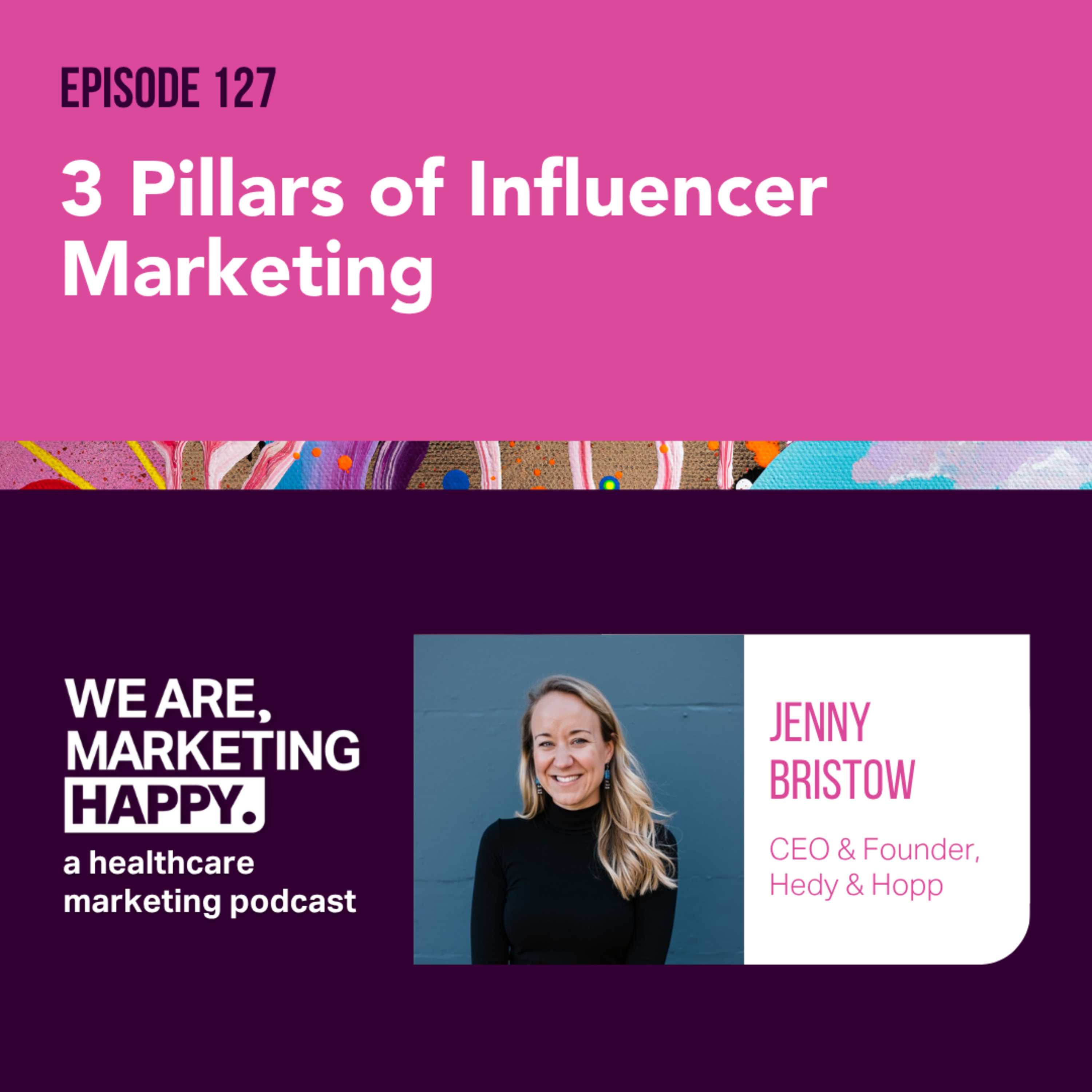
EPISODE · Jun 19, 2026 · 11 MIN
The Three Pillars of Healthcare Influencer Marketing
from We Are, Marketing Happy - A Healthcare Marketing Podcast · host Hedy and Hopp
Healthcare marketing is leaving the glossy, corporate-ad era behind. What patients actually respond to now is real faces, real stories, and real expertise — and that's reshaping who gets a microphone in your marketing strategy.This week, we're breaking down a framework for healthcare influencer marketing built around three distinct buckets, each serving a different purpose: reach, trust, and content fuel.1. External Social Media Influencers (Buying the Audience): This is about borrowing an existing audience. You partner with established creators (lifestyle, parenting, wellness, or condition-specific) to break into demographics you haven't reached yet. The healthcare wrinkle: the FTC and FDA don't play around with disclosure, so #Ad labeling is mandatory, and you'll want to vet a creator's history to make sure nothing in their past content conflicts with your brand. CreatorIQ or Sprout Social both help with exactly this kind of audience and brand-safety vetting before you sign anything.2. Internal Brand Experts (The "OG Medfluencers"): Your own doctors, nurses, researchers, and therapists who are already building an audience bring something no outside partnership can buy: built-in clinical credibility and hyper-local trust. Because they're still employees, they need clear boundaries between personal opinion and your organization's official position, along with genuine support like studio time and compliance help. Tools like EveryoneSocial or DSMN8 make it easy to push pre-approved, legally cleared content straight to your internal team so they can share with confidence.3. User-Generated Content (UGC): Rather than paying for someone's following, UGC means sourcing the raw, unscripted content patients are already creating (recovery journeys, clinic walkthroughs, unboxings) and putting it to work across your owned and paid channels. The one rule you can't skip: a HIPAA-compliant release form before any patient face or story touches paid media. Archive.com automatically captures organic content your brand gets tagged in, while Bounty and Skeepers help you run micro-campaigns for content that's pre-licensed and ready for ads from the start.The takeaway: external influencers expand your reach, internal experts close the trust gap, and UGC delivers the content that actually performs!For more on this topic, check out episode 107: Influencer Marketing in Healthcare.Connect with Jenny:Email: [email protected]: https://www.linkedin.com/in/jennybristow/If you enjoyed this episode, we'd love to hear your feedback! Please consider leaving us a review on your preferred listening platform and sharing it with others.
Embed this episode
NOW PLAYING
The Three Pillars of Healthcare Influencer Marketing
No transcript for this episode yet
Similar Episodes
No similar episodes found.
Similar Podcasts
No similar podcasts found.