
EPISODE · Nov 21, 2024 · 15 MIN
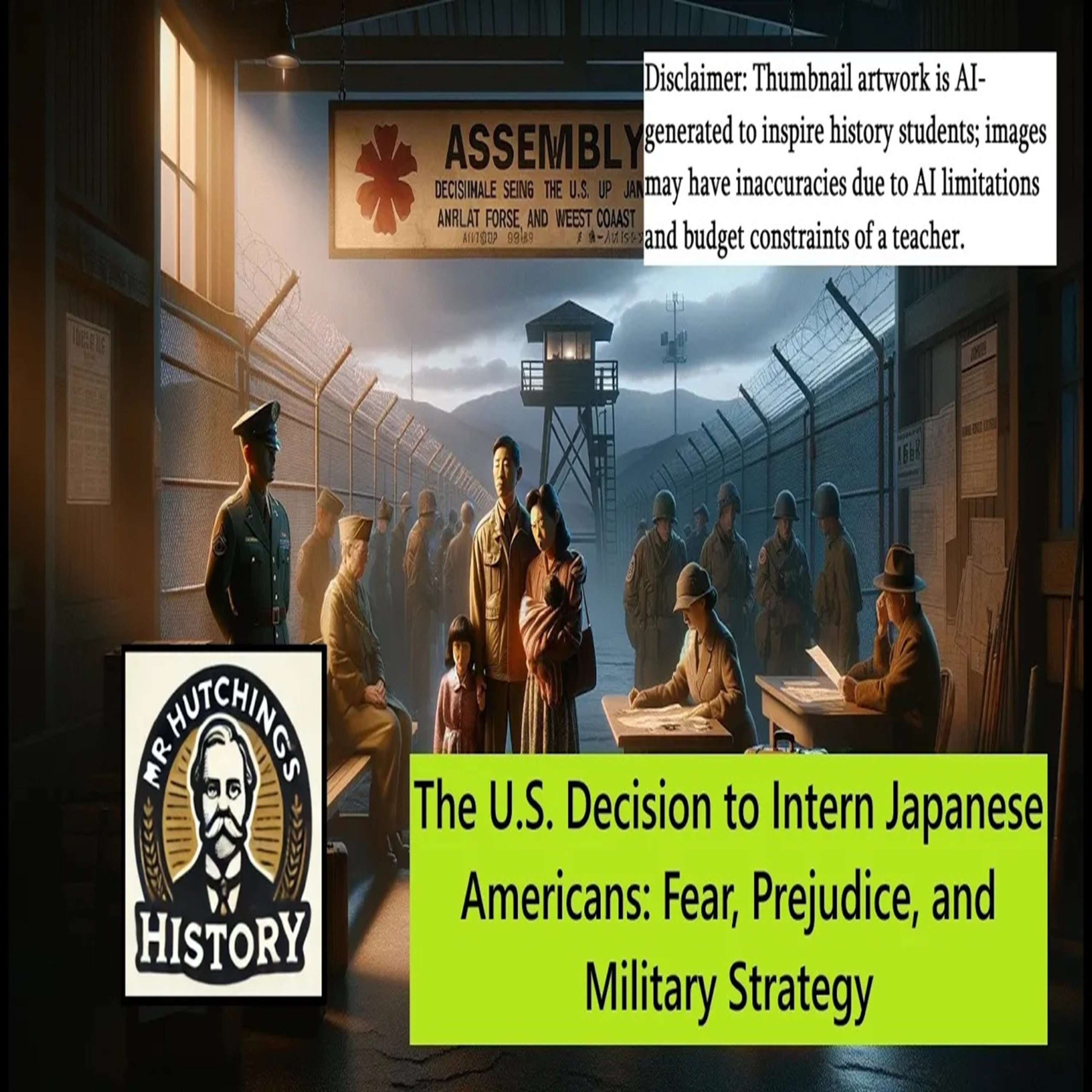
The U.S. Decision to Intern Japanese Americans: Fear, Prejudice, and Military Strategy
from Mr. Hutchings History · host Produced, created, and written by Harold M. Hutchings
In this episode of Mr. Hutchings History, we examine the lives of Japanese Americans before the attack on Pearl Harbor and the subsequent internment during World War II. We’ll explore the reasons for Japanese immigration to the United States, the legal and social challenges faced by these communities, and the discrimination they endured. From the Gentlemen’s Agreement and the Immigration Act of 1924 to the generational divisions between Issei, Nisei, and Kibei, this episode provides a comprehensive view of Japanese American life in the early 20th century. We’ll also look at how Japanese Americans built thriving communities, particularly in agriculture, despite systemic racism and legal barriers. This episode highlights the complexities of Japanese American identity and their contributions to American society, all while setting the stage for the racial tensions that would lead to their wartime internment. #JapaneseAmericans #PreWWIIHistory #ImmigrationHistory #JapaneseImmigration #Nisei #Issei #Kibei #RacialDiscrimination #WWIIHistory #PearlHarbor #UShistory #CivilRights #HistoricalPodcast #JapaneseAmericanLife #CulturalHistory #AmericanHistory #HistoryOfRacism #ImmigrantCommunities #CriticalHistory #AgriculturalHistory #WW2 Works Cited Daniels, Roger. Prisoners Without Trial: Japanese Americans in World War II. Hill and Wang, 2004. Irons, Peter. Justice at War: The Story of the Japanese American Internment Cases. University of California Press, 1983. Muller, Eric L. Free to Die for Their Country: The Story of the Japanese American Draft Resisters in World War II. University of Chicago Press, 2001. Ngai, Mae M. Impossible Subjects: Illegal Aliens and the Making of Modern America. Princeton UP, 2004. Robinson, Greg. By Order of the President: FDR and the Internment of Japanese Americans. Harvard UP, 2001.
Embed this episode
NOW PLAYING
The U.S. Decision to Intern Japanese Americans: Fear, Prejudice, and Military Strategy
No transcript for this episode yet
Similar Episodes
No similar episodes found.
Similar Podcasts
No similar podcasts found.