
EPISODE · Nov 19, 2024 · 14 MIN
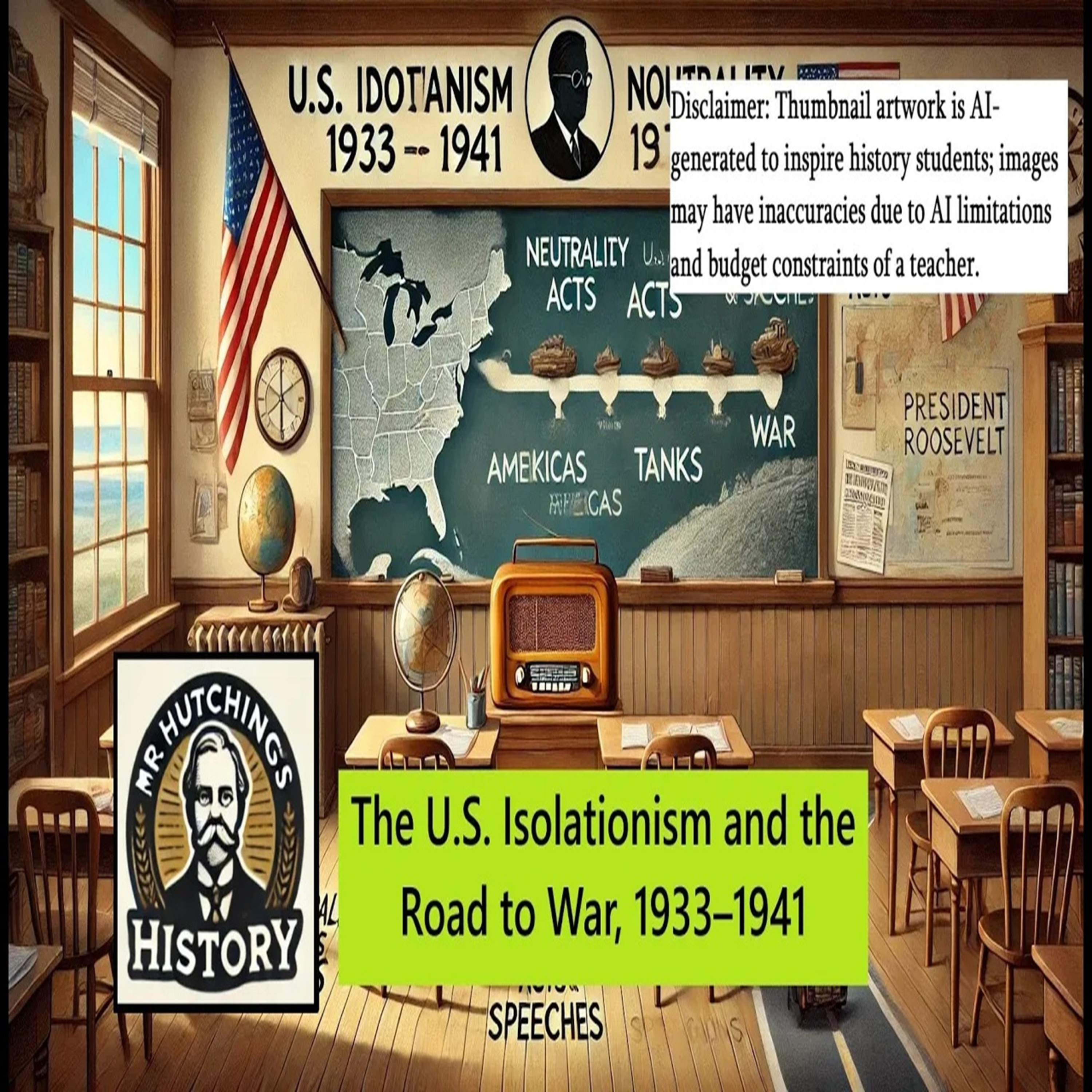
The U.S. Isolationism and the Road to War, 1933–1941
from Mr. Hutchings History · host Produced, created, and written by Harold M. Hutchings
In this episode of Mr. Hutchings History, we explore the evolution of U.S. foreign policy from staunch isolationism after World War I to gradual intervention as global tensions rose in the 1930s and 1940s. Starting with the roots of isolationism, including the Senate's rejection of the Treaty of Versailles and the Neutrality Acts, we analyze how President Franklin D. Roosevelt balanced public sentiment with the growing threats posed by Nazi Germany, Imperial Japan, and Fascist Italy. Key topics include the Quarantine Speech, the Cash-and-Carry provision, and the Lend-Lease Act, signaling America’s shift toward supporting the Allies. We’ll also examine Japan’s aggression in Asia, the impact of U.S. sanctions, and how these led to the attack on Pearl Harbor, ending isolationism entirely. Additionally, we’ll discuss Roosevelt’s Good Neighbor Policy towards Latin America and Canada’s role as a British ally. Perfect for IB History students, this episode connects primary sources, historiography, and key events to provide a nuanced understanding of the Americas’ path to World War II. #USIsolationism #WWIIHistory #FranklinDRoosevelt #PearlHarbor #NeutralityActs #GoodNeighborPolicy #CanadaWWII #IBHistory #HistoryOfTheAmericas #USForeignPolicy Works Cited Beard, Charles A. President Roosevelt and the Coming of the War, 1941. Yale UP, 1948. Leuchtenburg, William E. Franklin D. Roosevelt and the New Deal. Harper & Row, 1963. Morton, Desmond. A Military History of Canada: From Champlain to Kosovo. McClelland & Stewart, 1999. Stimson, Henry L. The Far Eastern Crisis. Harper & Bros., 1936.
Embed this episode
NOW PLAYING
The U.S. Isolationism and the Road to War, 1933–1941
No transcript for this episode yet
Similar Episodes
No similar episodes found.
Similar Podcasts
No similar podcasts found.