
EPISODE · Apr 30, 2025 · 37 MIN
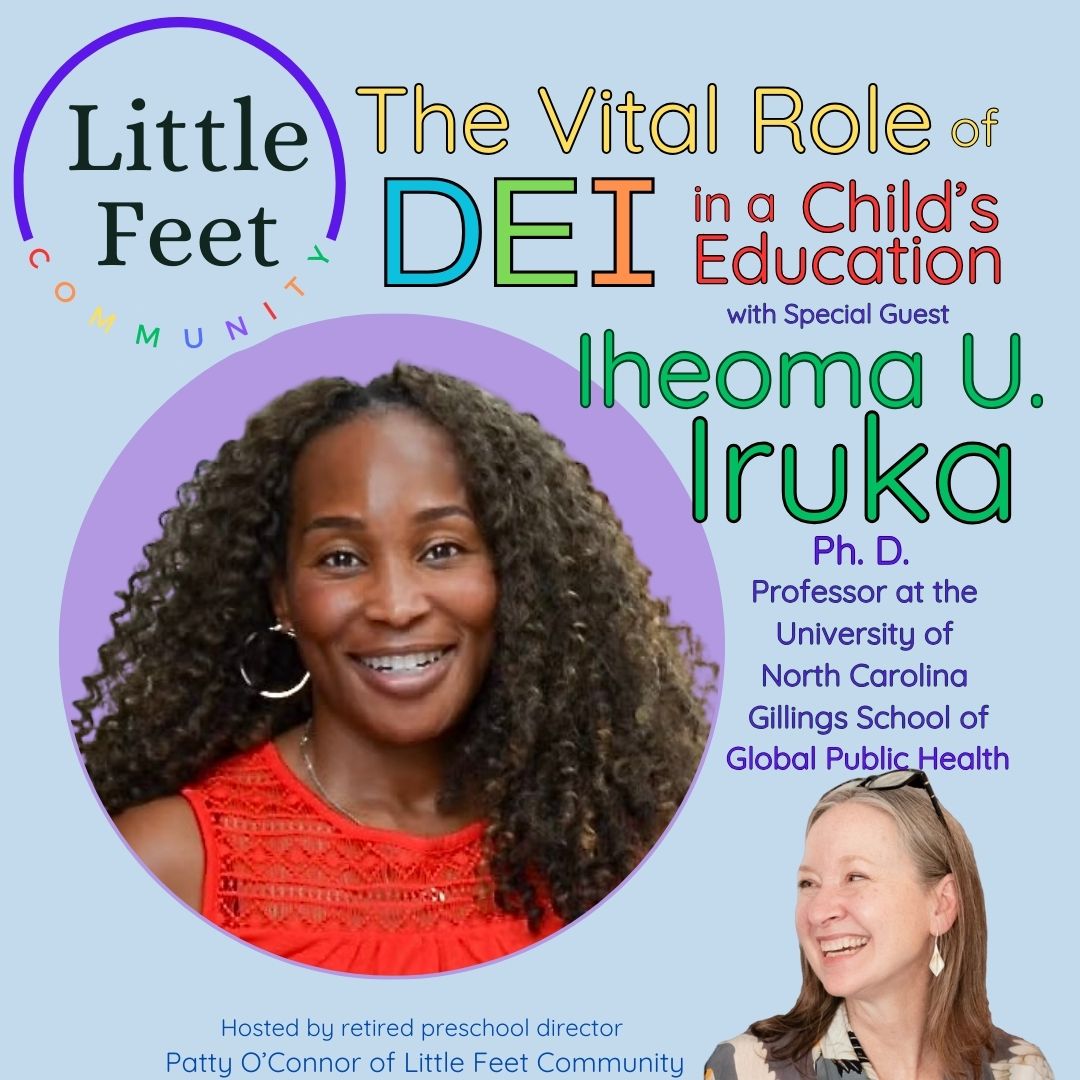
The Vital Role of DEI in a Child's Education
from Little Feet Community · host Patty O'Connor
Diversity Equity & Inclusion is under attack, so we spoke to Dr. Iheoma Iruka about why it is important, in early childhood education, especially in predominantly white communities. If your classroom is mostly white, we talked about how to raise children who will be allies. Iruka also addresses the challenges faced by white teachers in diverse classrooms and suggests strategies for building relationships and fostering empathy. She highlights the significance of Head Start, which supports children and families holistically, and advocates for inclusive curricula and materials. Dr. Iruka is a tenured professor in the Department of Maternal Child Health at the University of North Carolina Gillings School of Global Public Health. Dr. Iruka is adjunct professor in the Department of Public Policy and the founding director of the Equity Research Action Coalition at the Frank Porter Graham Child Development Institute at UNC. Dr. Iruka is an applied developmental psychologist who is focused on ensuring that racially minoritized children and children from low-income households thrive through anti-bias, anti-racist, and culturally grounded mixed methods approaches. Dr. Iruka is co-author of We Are the Change We Seek and Don't Look Away: Embracing the Anti-Bias Classroom. Running a classroom in a predominantly white community, educators have the ethical and moral responsibility to educate their white students to be global citizens who embrace diversity, equitable practices and inclusive behaviors. Educators can achieve this through diverse and equitable curriculum and classroom environment choices, such as: Variety of color in human representation such as baby dolls, toy figures, classroom decorations and books. Go further and ensure that the people of color are not in subservient roles. For example, not the servants for the kings and queens. Instead in roles of import such as the pilot and the train driver rather than the porter and the mechanic. With gender equity in mind, have female figures as police officers, mechanics, doctors. Linguistically, dont gender these roles with terms such as fireman; use firefighter instead. Consider transportation and vehicle exposure Are tractors common in the child's environment? Perhaps taxis and buses are more common. Ensure that the child's community is represented but that other, more diverse, communities are also represented. Consider home dwelling types Is there a dollhouse in the classroom? Is the family presented there a more traditional composition or more in line with our modern society? When communities are built in the block area, are apartment buildings created or only suburban dwellings? Do not read books that stereotype People of Color and women. Alter the words if a book is beneficial in other ways but has an element or two that is no longer appropriate. For example, many books featuring vehicles use the male pronoun for most, if not all, the vehicles. This can be changed while reading aloud. During play, use names and words that do not fall into the traditional English category. For example, if seeking to use an N name in an example to the children, choose Nakima or Norleys over Nicole. Music…where possible, play the original version of a popular song for children rather than the Kid-version. Oftentimes the kid version strips the song of its important ethnic qualities and culturally representative instrumentation.
NOW PLAYING
The Vital Role of DEI in a Child's Education
No transcript for this episode yet
Similar Episodes
Apr 21, 2026 ·13m
Apr 19, 2026 ·16m
Apr 17, 2026 ·13m
Apr 13, 2026 ·11m
Apr 11, 2026 ·16m