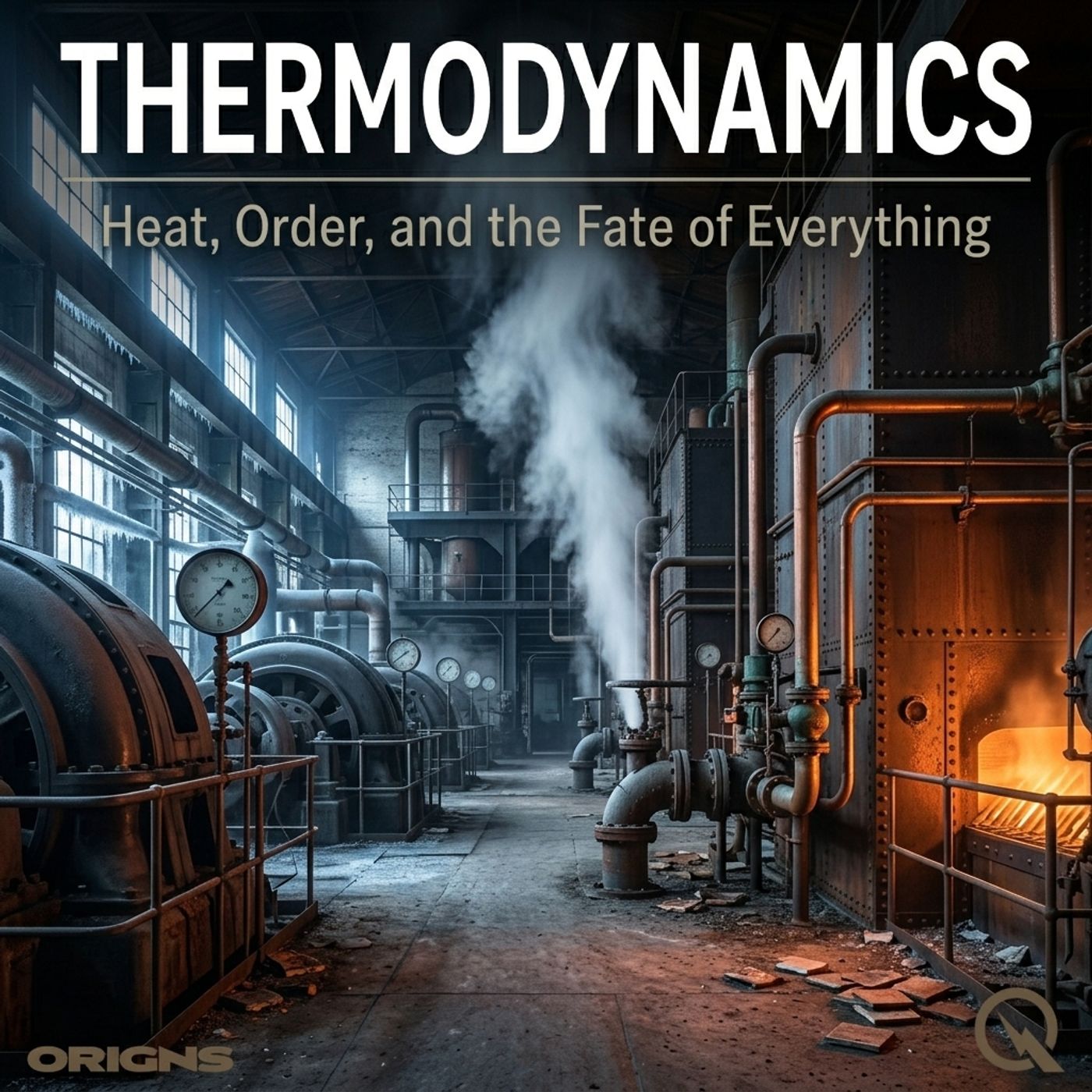
Thermodynamics - The Universe Says No: Why Perfect Efficiency Is Forbidden episode artwork

EPISODE · Apr 16, 2026 · 30 MIN

Thermodynamics - The Universe Says No: Why Perfect Efficiency Is Forbidden

from Thermodynamics · host Inception Point AI

Felix Mercer explores the Carnot limit—the universe's hard ceiling on heat engine efficiency—and why no machine can achieve perfect energy conversion. From Sadi Carnot's 1824 breakthrough to quantum heat engines, discover how thermodynamic laws shape civilization's energy future. Loved this episode? Discover more original shows from the Quiet Please Network at QuietPlease.ai, explore our curated favorites here amzn.to/42YoQGI, and catch just a slice of our AI hosts in action on Instagram at instagram.com/claredelish and YouTube at youtube.com/@DIYHOMEGARDENTV This content was created in partnership and with the help of Artificial Intelligence AI.

Felix Mercer explores the Carnot limit—the universe's hard ceiling on heat engine efficiency—and why no machine can achieve perfect energy conversion. From Sadi Carnot's 1824 breakthrough to quantum heat engines, discover how thermodynamic laws shape civilization's energy future. Loved this episode? Discover more original shows from the Quiet Please Network at QuietPlease.ai, explore our curated favorites here amzn.to/42YoQGI, and catch just a slice of our AI hosts in action on Instagram at instagram.com/claredelish and YouTube at youtube.com/@DIYHOMEGARDENTV This content was created in partnership and with the help of Artificial Intelligence AI.

NOW PLAYING

Thermodynamics - The Universe Says No: Why Perfect Efficiency Is Forbidden

0:00 30:19

No transcript for this episode yet

We transcribe on demand. Request one and we'll notify you when it's ready — usually under 10 minutes.

Quantum Mechanics for the Working Professional Sean Downes Learn Quantum Mechanics in an informal setting, one idea at a time. We share short lessons with exercises a couple times a week. We'll cover the basics of Quantum Mechanics and Quantum Information, with applications to computing, chemistry, astronomy and thermodynamics! An Introduction to Thermodynamics Dr. Sreeja V G Assignment-fdp snm. Advanced Materials Science JJJason Materials Thermodynamics and Kinetics Melt in the Mantle Cambridge University The Earth's mantle is almost entirely solid, but on geological timescales it convects vigorously, the well-known surface expression of this being plate tectonics. At depths up to ~100 km beneath plate-tectonic boundaries (mid-ocean ridges and subduction zones), and beneath ocean islands such as Hawaii, the mantle melts, and that melt rises to the surface to feed volcanism and form new crust. Such magmatism plays a key role in the chemical evolution and dynamics of our planet. Although the basic thermodynamics of melt generation in these settings is well understood, how the melt is transported to the surface is not, despite several decades of work on the problem. Furthermore, recent observational evidence suggests that mantle melting is not restricted to the near surface (top 100 km): it may occur within the mantle transition zone (410-660 km depth) and above the core-mantle boundary (2900 km). For these deeper instances of melting, an understanding of the dynamical and thermochemical c

Frequently Asked Questions

How long is this episode of Thermodynamics?

This episode is 30 minutes long.

When was this Thermodynamics episode published?

This episode was published on April 16, 2026.

What is this episode about?

Felix Mercer explores the Carnot limit—the universe's hard ceiling on heat engine efficiency—and why no machine can achieve perfect energy conversion. From Sadi Carnot's 1824 breakthrough to quantum heat engines, discover how thermodynamic laws...

Is there a transcript available for this episode?

Yes, a full transcript is available for this episode. You can read the complete transcript on the episode page.

Can I download this Thermodynamics episode?

Yes, you can download this episode by clicking the download button on the episode player, or subscribe to the podcast in your preferred podcast app for automatic downloads.
URL copied to clipboard!