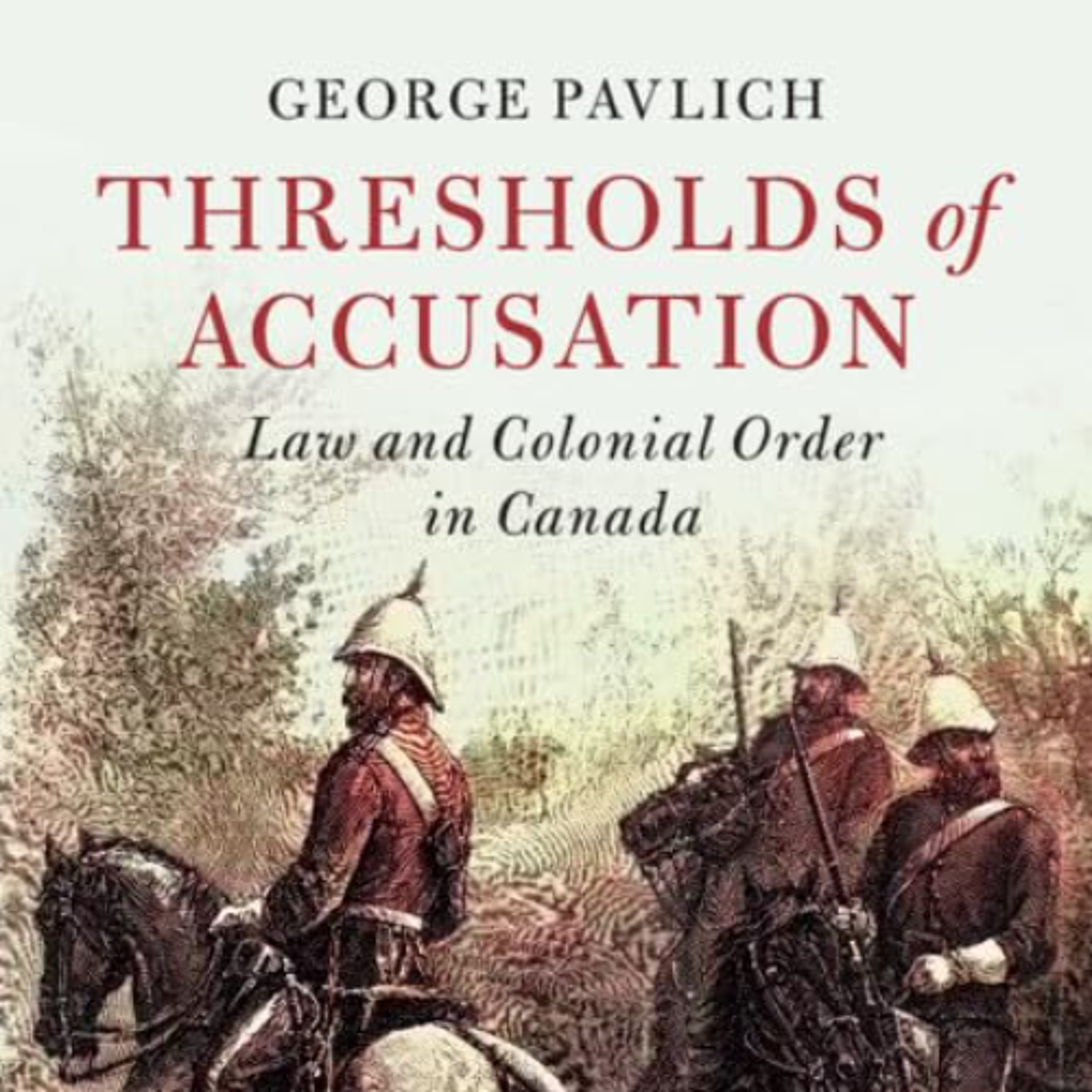
Thresholds of Accusation: Law and Colonial Order in Canada episode artwork

EPISODE · Feb 13, 2025 · 32 MIN

Thresholds of Accusation: Law and Colonial Order in Canada

from Witness to Yesterday (The Champlain Society Podcast on Canadian History) · host The Champlain Society

Nicole O’Byrne speaks with George Pavlich about his book, Thresholds of Accusation: Law and Colonial Order in Canada. This socio-legal history examines pretrial accusations in colonial criminal law in western Canada, focusing on Alberta, 1874–1884. The establishment of the Northwest Mounted Police aimed to enforce Dominion law, using accusatory procedures to investigate crimes, arrest suspects, and determine trial eligibility. George Pavlich highlights how police and justices of the peace translated local social knowledge into criminal law, reflecting power dynamics of sovereignty and control. These processes held individuals legally responsible while obscuring the social impacts of settler actions. The book suggests we learn from Indigenous laws to address societal issues with new forms of accusation and responsibility. George Pavlich is H.M. Tory Chair and Professor at the University of Alberta. His research examines the social and historical processes through which individuals are labeled as "criminals" and subjected to crime control. By exploring the history of criminal accusation, his work highlights how these processes have shaped reliance on punitive justice. He has authored several books and articles and co-edited multiple collections. Image Credit: Cambridge University Press If you like our work, please consider supporting it: bit.ly/support_WTY. Your support contributes to the Champlain Society’s mission of opening new windows to directly explore and experience Canada’s past.

Nicole O’Byrne speaks with George Pavlich about his book, Thresholds of Accusation: Law and Colonial Order in Canada. This socio-legal history examines pretrial accusations in colonial criminal law in western Canada, focusing on Alberta, 1874–1884. The establishment of the Northwest Mounted Police aimed to enforce Dominion law, using accusatory procedures to investigate crimes, arrest suspects, and determine trial eligibility. George Pavlich highlights how police and justices of the peace translated local social knowledge into criminal law, reflecting power dynamics of sovereignty and control. These processes held individuals legally responsible while obscuring the social impacts of settler actions. The book suggests we learn from Indigenous laws to address societal issues with new forms of accusation and responsibility. George Pavlich is H.M. Tory Chair and Professor at the University of Alberta. His research examines the social and historical processes through which individuals are labeled as "criminals" and subjected to crime control. By exploring the history of criminal accusation, his work highlights how these processes have shaped reliance on punitive justice. He has authored several books and articles and co-edited multiple collections. Image Credit: Cambridge University Press If you like our work, please consider supporting it: bit.ly/support_WTY. Your support contributes to the Champlain Society’s mission of opening new windows to directly explore and experience Canada’s past.

NOW PLAYING

Thresholds of Accusation: Law and Colonial Order in Canada

0:00 32:52

No transcript for this episode yet

We transcribe on demand. Request one and we'll notify you when it's ready — usually under 10 minutes.

Frequently Asked Questions

How long is this episode of Witness to Yesterday (The Champlain Society Podcast on Canadian History)?

This episode is 32 minutes long.

When was this Witness to Yesterday (The Champlain Society Podcast on Canadian History) episode published?

This episode was published on February 13, 2025.

What is this episode about?

Nicole O’Byrne speaks with George Pavlich about his book, Thresholds of Accusation: Law and Colonial Order in Canada. This socio-legal history examines pretrial accusations in colonial criminal law in western Canada, focusing on Alberta, 1874–1884....

Can I download this Witness to Yesterday (The Champlain Society Podcast on Canadian History) episode?

Yes, you can download this episode by clicking the download button on the episode player, or subscribe to the podcast in your preferred podcast app for automatic downloads.
URL copied to clipboard!