
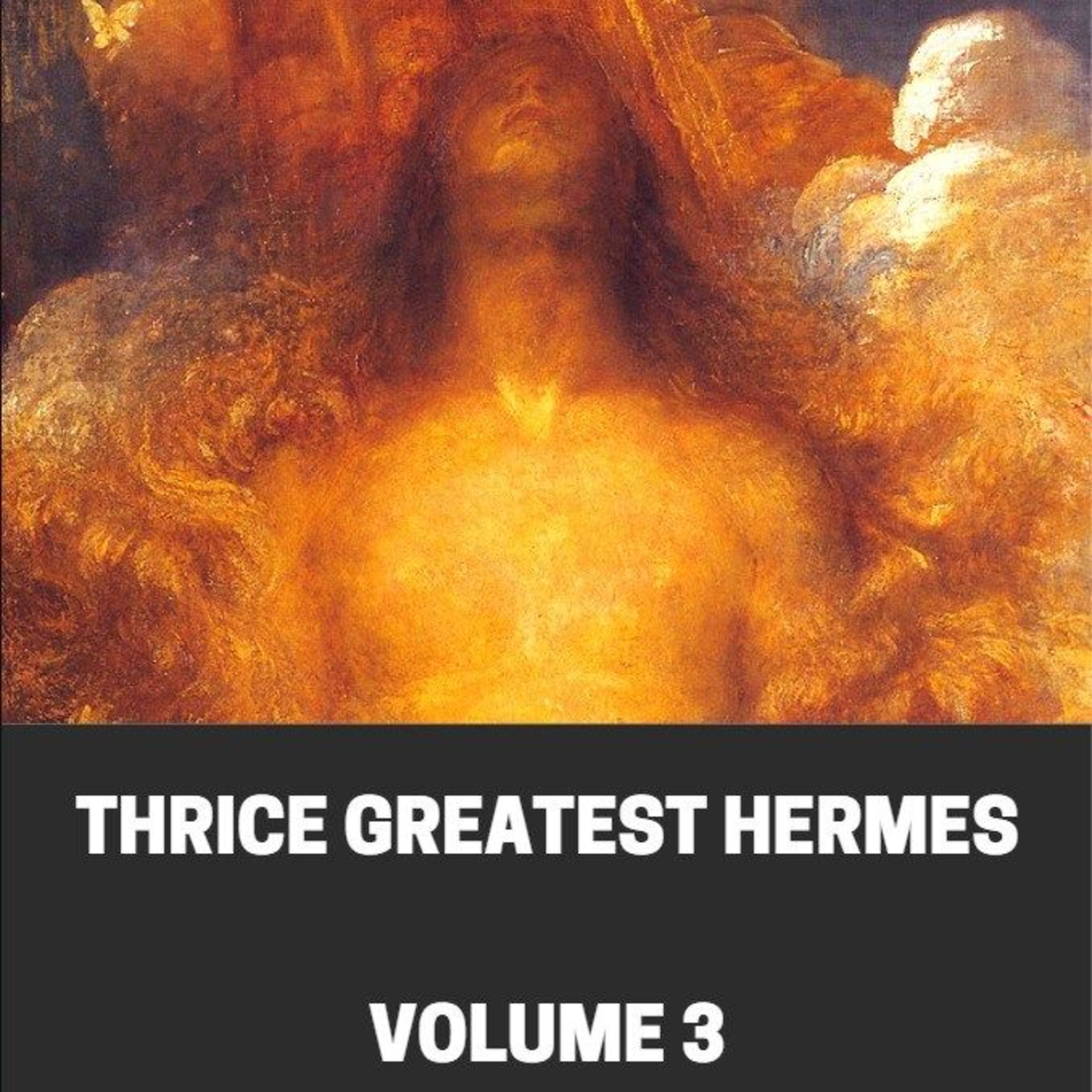
EPISODE · Mar 25, 2025 · 17 MIN
Thrice Greatest Hermes, Volume 3: Excerpts and Fragments from the Trismegistic Tradition of Hellenistic Gnosis
from Occult Archives · host Falcon Millenium
Thrice Greatest Hermes, Volume 3 by G. R. S. Mead is a remarkable collection of excerpts and fragments drawn from the mystical and philosophical writings attributed to Hermes Trismegistus—a legendary figure revered by ancient mystics as the source of esoteric wisdom, divine philosophy, and sacred science. This third volume in Mead’s monumental work delves into the heart of Hermetic thought, focusing on excerpts preserved by early Christian and pagan writers, especially Stobaeus, the Church Fathers, and Neoplatonic philosophers. The result is a breathtaking tapestry of metaphysical insights, cosmological speculation, and ethical guidance from the ancient spiritual world.Presented with scholarly rigor and theosophical reverence, the book opens with a series of fragments grouped under “Excerpts by Stobaeus,” which feature dialogues between Hermes and his son Tat. These teachings explore foundational Hermetic themes: the ineffability of God, the illusory nature of the material world, the structure of the soul, time and eternity, the divine hierarchy, and the means of spiritual ascent. Hermes urges Tat to seek true piety through the knowledge of the Divine, to rise above bodily illusions, and to embrace the immortal nature of the rational soul. These teachings mirror the Platonic and Stoic philosophies of the time but are imbued with a mystical depth that belongs uniquely to the Hermetic current.Further sections present Hermetic fragments quoted or referenced by early Church Fathers—Justin Martyr, Clement of Alexandria, Tertullian, Lactantius, and Augustine—who simultaneously respected the Hermetic wisdom and sought to reconcile or contrast it with Christian doctrines. Their citations reveal that Hermetic thought was widely known and debated in early theological circles and was sometimes even integrated into Christian mystical frameworks. Mead meticulously documents and translates these references, showing how Hermetic philosophy permeated early religious and intellectual thought.The third group of fragments comes from prominent philosophers such as Zosimus, Jamblichus, and Emperor Julian, highlighting how Hermetic ideas influenced Neoplatonism, alchemical theory, and imperial religious reform. These references demonstrate Hermes’ role not just as a mythical teacher but as a symbol of universal wisdom, encompassing Egyptian theology, Greek philosophy, and mystical experience.In each excerpt, Mead provides prolegomena and commentary that clarify complex ideas and trace the historical transmission of the texts. His work not only preserves these fragile remnants but contextualizes them in a coherent spiritual system that speaks to the perennial questions of human existence: What is the nature of the soul? What is truth? How does one achieve union with the Divine?The beauty of this volume lies in its timeless relevance. The fragments echo a deep spiritual longing—the desire to return to our divine origin, to pierce the veils of illusion, and to live in harmony with the cosmos. Hermes’ teachings offer a pathway out of ignorance, urging seekers to awaken their inner vision and to contemplate the eternal laws that underlie all being.Whether you are a student of esotericism, a scholar of religious history, or a spiritual seeker yearning for authentic wisdom, Thrice Greatest Hermes, Volume 3 stands as an essential work. It bridges the ancient with the modern, the mystical with the philosophical, and the personal with the universal. G. R. S. Mead’s careful translation and interpretation of these sacred texts continue to illuminate the spiritual path for all who seek the light behind the world of appearances.
Embed this episode
NOW PLAYING
Thrice Greatest Hermes, Volume 3: Excerpts and Fragments from the Trismegistic Tradition of Hellenistic Gnosis
No transcript for this episode yet
Similar Episodes
No similar episodes found.