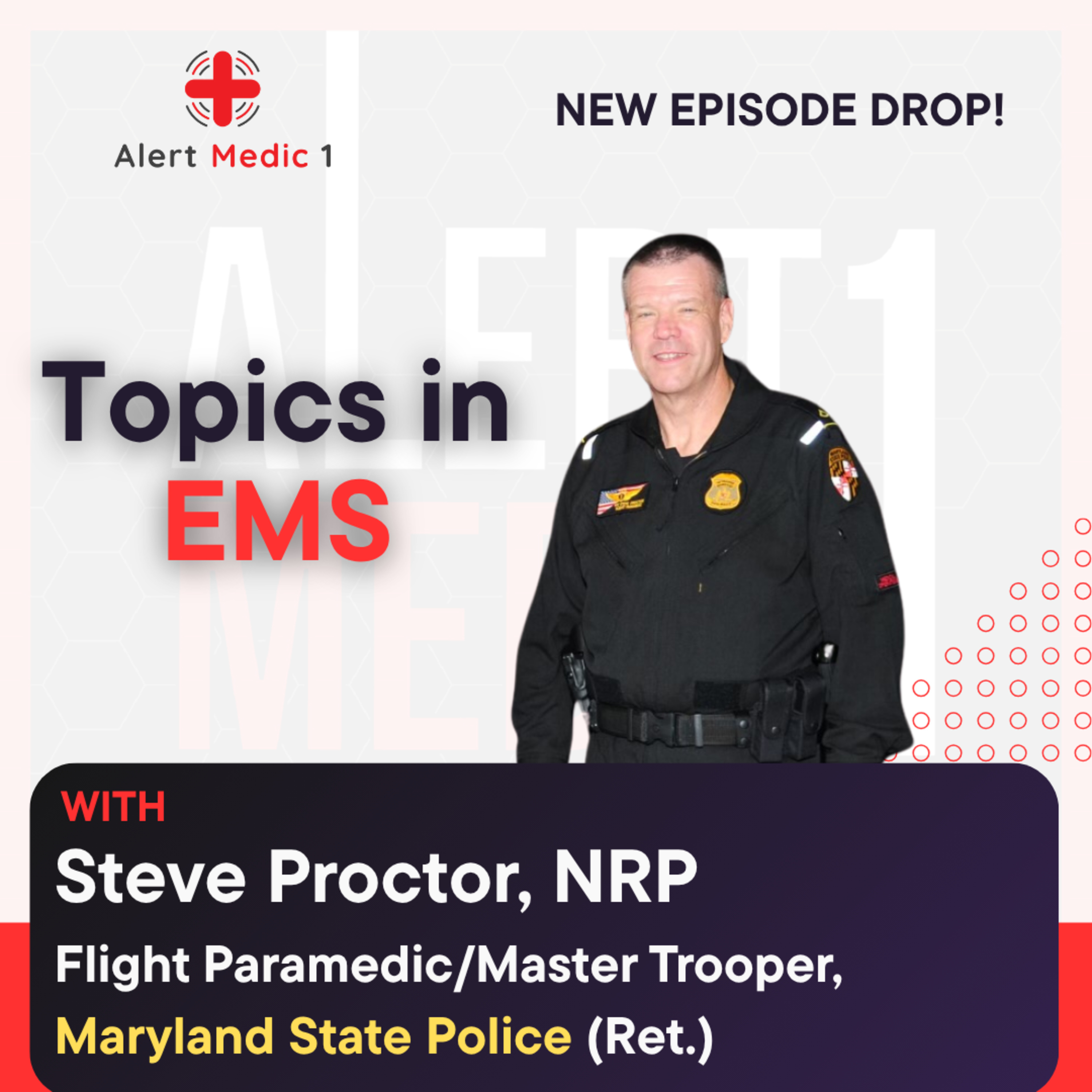
Topics in EMS w/ Steve Proctor, Flight Paramedic/Master Trooper, Maryland State Police (Ret.) episode artwork

EPISODE · Aug 4, 2025 · 1H 49M

Topics in EMS w/ Steve Proctor, Flight Paramedic/Master Trooper, Maryland State Police (Ret.)

from Alert Medic 1 · host Alert Medic 1

Summary generated by Riverside FM AISummaryThis conversation explores the evolution of emergency medical services (EMS) through the personal journey of Steve Proctor, a retired flight paramedic with the Maryland State Police. It delves into the historical context of EMS, the impact of media on career choices, the role of medical directors, and the advancements in training and protocols. The discussion highlights the challenges faced by EMS providers, particularly in urban environments, and the integration of new technologies in the field. Proctor reflects on the importance of understanding the roots of EMS and the ongoing evolution of the profession. In this conversation, Steve Proctor and Mustafa Sidik discuss the evolution of paramedic education, the importance of critical thinking, and the challenges faced by paramedics in the field. They explore the need for higher education standards, the blurring lines between EMT and paramedic roles, and the significance of mentorship in shaping future educators. Additionally, they delve into the unique aspects of tactical medicine and the impact of continuing education on patient care.TakeawaysThe TV show 'Emergency!' inspired many to pursue EMS careers.Early EMS was often run by funeral homes and lacked coordination.The introduction of ALS transformed emergency medical care.Medical directors play a crucial role in shaping EMS protocols.The evolution of training has led to more advanced techniques in EMS.Historical context is essential for understanding current EMS practices.The Red Cross has been pivotal in early first aid training.Urban environments present unique challenges for EMS providers.Aviation medicine has advanced significantly in recent years.The future of EMS will continue to evolve with new technologies. Continuing education is essential for EMS providers.The journey into education can be unexpected but rewarding.Critical thinking is crucial for paramedics.Repetition is key to instilling knowledge in students.Higher education standards are needed in paramedicine.The roles of EMTs and paramedics are becoming blurred.Mentorship plays a significant role in professional development.Tactical medicine involves more than just treating injuries.Education is vital for improving patient care.Paramedics must stay updated on both medical and law enforcement skills.Chapters00:00 The Journey into EMS: Early Influences05:39 The Role of Media in Shaping EMS Perception10:54 The Impact of the Hart Mobile and ALS Development15:51 The Importance of Historical Context in EMS Training21:05 The Role of Red Cross in EMS Education25:55 Early Experiences in Emergency Medical Services31:28 Transitioning to Paramedic Roles37:59 The Evolution of MSP and Trauma Care48:12 Influential Figures in Emergency Medicine54:12 Transitioning into Education: A Personal Journey01:01:02 Defining Clinicians vs. Technicians in EMS01:06:45 The Need for Standardized Education in EMS01:13:53 Effective Teaching Strategies and Approaches01:18:55 Exploring Controlled Substances in Emergency Medicine01:24:00 Education and Training in Paramedicine01:35:17 Insights into Tactical Medicine01:45:04 The Impact of Mentorship in EMS

Summary generated by Riverside FM AISummaryThis conversation explores the evolution of emergency medical services (EMS) through the personal journey of Steve Proctor, a retired flight paramedic with the Maryland State Police. It delves into the historical context of EMS, the impact of media on career choices, the role of medical directors, and the advancements in training and protocols. The discussion highlights the challenges faced by EMS providers, particularly in urban environments, and the integration of new technologies in the field. Proctor reflects on the importance of understanding the roots of EMS and the ongoing evolution of the profession. In this conversation, Steve Proctor and Mustafa Sidik discuss the evolution of paramedic education, the importance of critical thinking, and the challenges faced by paramedics in the field. They explore the need for higher education standards, the blurring lines between EMT and paramedic roles, and the significance of mentorship in shaping future educators. Additionally, they delve into the unique aspects of tactical medicine and the impact of continuing education on patient care.TakeawaysThe TV show 'Emergency!' inspired many to pursue EMS careers.Early EMS was often run by funeral homes and lacked coordination.The introduction of ALS transformed emergency medical care.Medical directors play a crucial role in shaping EMS protocols.The evolution of training has led to more advanced techniques in EMS.Historical context is essential for understanding current EMS practices.The Red Cross has been pivotal in early first aid training.Urban environments present unique challenges for EMS providers.Aviation medicine has advanced significantly in recent years.The future of EMS will continue to evolve with new technologies. Continuing education is essential for EMS providers.The journey into education can be unexpected but rewarding.Critical thinking is crucial for paramedics.Repetition is key to instilling knowledge in students.Higher education standards are needed in paramedicine.The roles of EMTs and paramedics are becoming blurred.Mentorship plays a significant role in professional development.Tactical medicine involves more than just treating injuries.Education is vital for improving patient care.Paramedics must stay updated on both medical and law enforcement skills.Chapters00:00 The Journey into EMS: Early Influences05:39 The Role of Media in Shaping EMS Perception10:54 The Impact of the Hart Mobile and ALS Development15:51 The Importance of Historical Context in EMS Training21:05 The Role of Red Cross in EMS Education25:55 Early Experiences in Emergency Medical Services31:28 Transitioning to Paramedic Roles37:59 The Evolution of MSP and Trauma Care48:12 Influential Figures in Emergency Medicine54:12 Transitioning into Education: A Personal Journey01:01:02 Defining Clinicians vs. Technicians in EMS01:06:45 The Need for Standardized Education in EMS01:13:53 Effective Teaching Strategies and Approaches01:18:55 Exploring Controlled Substances in Emergency Medicine01:24:00 Education and Training in Paramedicine01:35:17 Insights into Tactical Medicine01:45:04 The Impact of Mentorship in EMS

NOW PLAYING

Topics in EMS w/ Steve Proctor, Flight Paramedic/Master Trooper, Maryland State Police (Ret.)

0:00 1:49:17

No transcript for this episode yet

We transcribe on demand. Request one and we'll notify you when it's ready — usually under 10 minutes.

The 48 Laws of Power by Robert Greene (Full Audiobook) Robert Greene Amoral, cunning, ruthless, and instructive, this multi-million-copy New York Times bestseller is the definitive manual for anyone interested in gaining, observing, or defending against ultimate control – from the author of The Laws of Human Nature.In the book that People magazine proclaimed “beguiling” and “fascinating,” Robert Greene and Joost Elffers have distilled three thousand years of the history of power into 48 essential laws by drawing from the philosophies of Machiavelli, Sun Tzu, and Carl Von Clausewitz and also from the lives of figures ranging from Henry Kissinger to P.T. Barnum.Some laws teach the need for prudence (“Law 1: Never Outshine the Master”), others teach the value of confidence (“Law 28: Enter Action with Boldness”), and many recommend absolute self-preservation (“Law 15: Crush Your Enemy Totally”). Every law, though, has one thing in common: an interest in t Welcome to the BeauMovation Podcast. Noluthando Tshabalala Season 1: The Power Of Identity with 11 dynamic guests. Temps de Dol Temps de Dol Soy 1 de 4. Lo he sido dos veces. Aquí te traigo mi tiempo de duelo para que, si también estás transitando un proceso de duelo gestacional sepas que no estás sola. Hablemos. Escuchemos. Visibilicemos. Y, sobretodo, acompañemos. KoperCrabb Podcast Navene Koperweis & Chaney Crabb The #1 place for underground musicians to hang out, KoperCrabb Podcast is a weekly podcast hosted by drummer Navene Koperweis and vocalist Chaney Crabb of the band Entheos.

Frequently Asked Questions

How long is this episode of Alert Medic 1?

This episode is 1 hour and 49 minutes long.

When was this Alert Medic 1 episode published?

This episode was published on August 4, 2025.

What is this episode about?

Summary generated by Riverside FM AISummaryThis conversation explores the evolution of emergency medical services (EMS) through the personal journey of Steve Proctor, a retired flight paramedic with the Maryland State Police. It delves into the...

Can I download this Alert Medic 1 episode?

Yes, you can download this episode by clicking the download button on the episode player, or subscribe to the podcast in your preferred podcast app for automatic downloads.
URL copied to clipboard!