
EPISODE · Jan 22, 2025 · 37 MIN
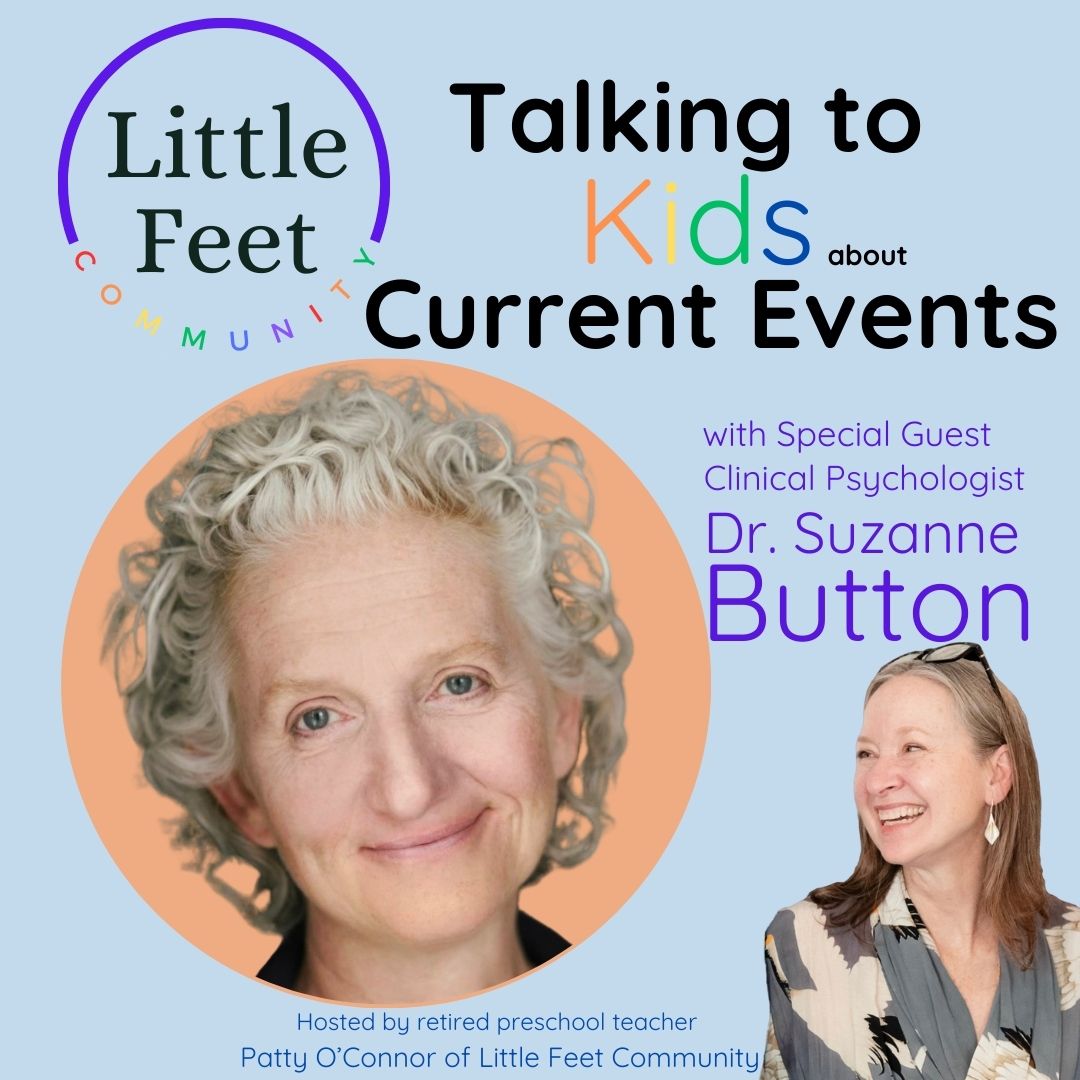
Tough Topics: Talking to Kids about Current Events
How do you talk to kids about difficult current events, like the LA Wildfires? How do you field questions about news children may hear discussed around them? How can a parent or caregiver offer appropriate levels of reassurance using words a child can understand? In this week's episode of Little Feet Community, Dr. Suzanne Button, Clinical Psychologist at The Children's Home in Poughkeepsie, discusses strategies to address complex current events with their children aged three through adolescence. Dr. Button advises simple, factual explanations and reassurance for young children (3-5 years). She suggests soothing routines and open conversations about fears for slightly older children (6-10 years). Notably, tweens and younger adolescents (10-14 years) benefit from "North Star" questions to develop coping mechanisms. Teenagers (15 years plus) need honesty and validation with collaborative discussions. Dr. Button also recommends delaying smartphone access and using community support to navigate these challenges, emphasizing the importance of managing one's emotions and seeking help. Takeaways When considering what to say to your child about current events, consider three things: I. Your child's developmental level (which may vary from their chronological age), II. Your knowledge of your child's personality and temperament, and III. How close is the event, and how does it impact your child, their family, and their community? 3 to 5 years old. Remember that children aged 3-5 still dwell within the age of magical thinking. This means they will believe they have more control over events and outcomes than they do. Therefore, it's imperative to keep your explanation simple and factual and not overshare. 6-10 years old. At this age, worry and fear become more normal. Therefore, continue to keep things simple and factual. Don't overshare. However, do leave the door open and listen if the conservation veers towards concerns, questions, or worries. At this age, children tend to worry about their safety. Remember, this is an age where information can easily be misunderstood - so do listen carefully to clarify salient points. Enable them to understand facts and empower them to take appropriate action. At the same time, finding ways to reassure them that they are protected is ideal, as best you can. 10-14 years old. It's essential to be honest when speaking to tweens and early teens. This is crucial in maintaining their sense of trust. Give them many choices: how they want to talk and when they want to talk to an adult. Author Mary Pipher sees real value in North Star questions - questions that help the children seek inside themselves for coping mechanisms, challenging them to ponder what they would do if they had to manage a big flood. Teens 15+. At this point, young adults have passionate opinions and can smell a lie a mile away. Avoid intense one-off one-on-one conversations that are just about the current topic. Alternatively, broach the topic over routines like doing the dishes or riding in the car. Listen to your teen. They tend to have lots of intense opinions, and they get some of those opinions from social media. Don't dismiss their views. Instead, ask, listen, and validate - then further the conversation. (Dismissing their views will immediately shut down the conversation.) Finally: Consider Fred Rogers, who said, "If it's mentionable, it's manageable." Assume your child knows about the event or news and seek to guide and support their navigation. Exposure to complex topics with guidance and support builds resilience. (Gentle reminder we can all use - repeated, unguided, unprocessed exposure builds numbing trauma and burnout. Also, remember that your stress levels will impact how your child processes their stress. Be mindful of this and model healthy self-care.) Empower your child to take action to stem anxiety (among other benefits). Gretchen Rubin said that action is the antidote to anxiety. Encourage your child to make actionable choices about supporting or participating in the event's aftermath—for example, collecting aid for those directly impacted or becoming involved in an organization that seeks to prevent such events. In Closing: Smartphones: It is highly recommended to delay giving a child a smartphone for as long as possible and to attempt to structure a social community where all agree to Wait Until 8th. Once a child has a Smartphone, make sure you know your child's passwords, make sure you put on screen time controls, make sure that that phone does not charge in your child's bedroom at night, and always set a rule for yourselves and your children that there are no smartphones in dedicated family times such as celebrations. Model limited phone use for your child. Ensure they see you relaxing, reading, and playing in other ways, not just on your phone.
NOW PLAYING
Tough Topics: Talking to Kids about Current Events
No transcript for this episode yet
Similar Episodes
Apr 21, 2026 ·13m
Apr 19, 2026 ·16m
Apr 17, 2026 ·13m
Apr 13, 2026 ·11m
Apr 11, 2026 ·16m