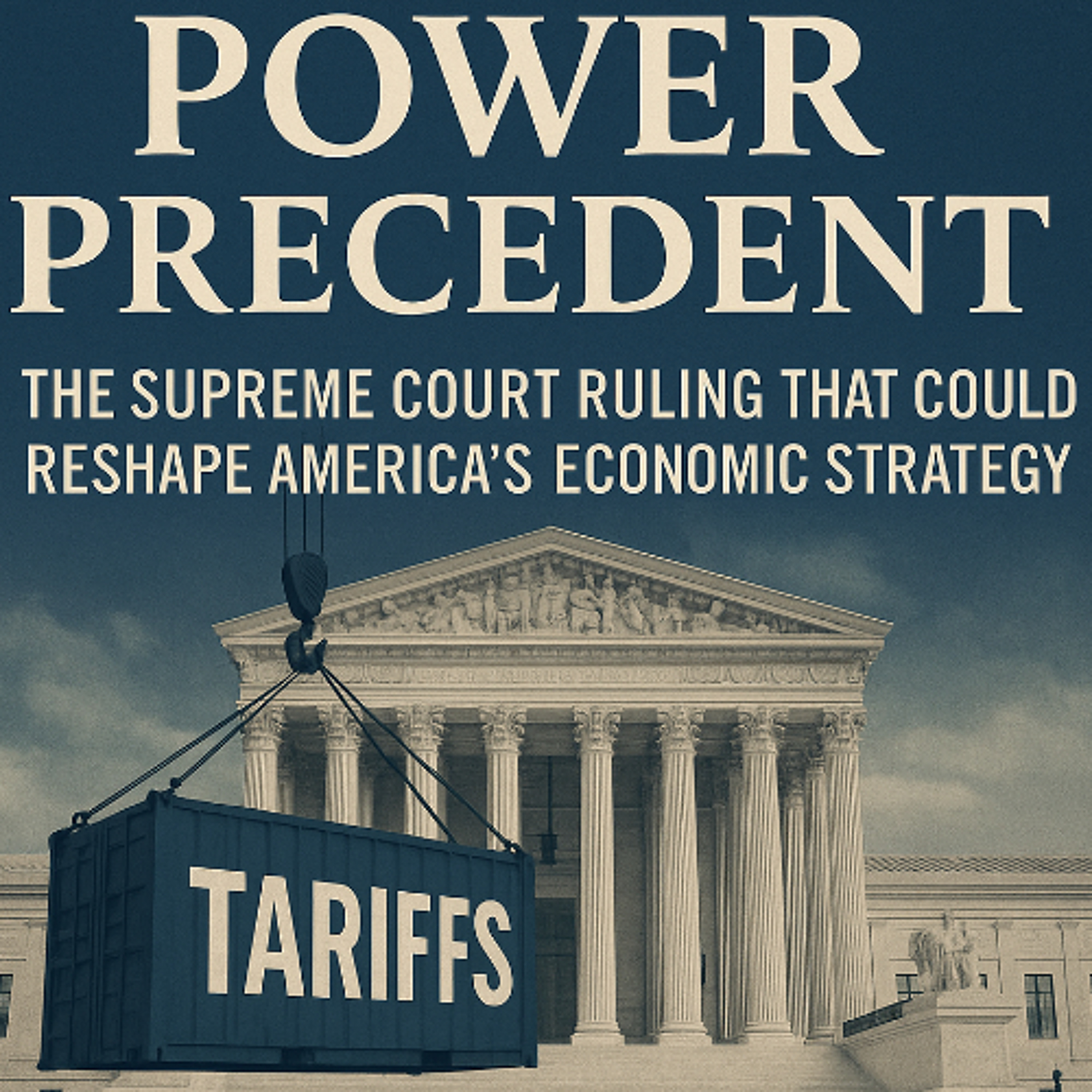
Trade, Power, and Precedent: The Supreme Court Ruling That Could Reshape America’s Economic Strategy episode artwork

EPISODE · Nov 4, 2025 · 10 MIN

Trade, Power, and Precedent: The Supreme Court Ruling That Could Reshape America’s Economic Strategy

from The Rock of Talk · host Eddy Aragon

The U.S. Supreme Court is set to rule Wednesday on the legality of President Trump’s unilateral global tariffs, a decision that could reshape American trade policy and the balance of power between the executive and legislative branches. If the Court deems the tariffs illegal, businesses could theoretically seek refunds on roughly $90 billion collected so far—though analysts view such a mass refund as impractical. More consequentially, an adverse ruling could restrict Trump’s ability to use tariffs as a negotiation tool in future trade disputes, potentially curbing executive trade authority long utilized in foreign policy. Despite controversy, the tariffs have yielded significant revenue projections—up to $1 trillion by next June—and a manageable inflationary impact. Early forecasts of runaway inflation and recession proved inaccurate; tariff-linked inflation has been limited to around 2.7% on affected goods. The effective average tariff rate paid by companies stands near 12.5%, with consumers absorbing roughly 50–70% of costs. Prices for imports like toys and shoes may rise this holiday season, but many firms have delayed further increases or absorbed costs amid post-pandemic profit margins. Strategically, tariffs have aimed to re-shore manufacturing, rebalance trade with China, and reduce import dependency. Recent adjustments capped Chinese tariffs at 12.5%, signaling continued negotiation. While critics warn tariffs could strain the labor market, current data shows continued economic growth relative to global peers. Eddy Aragon and other commentators credit tariffs with reviving U.S. manufacturing, generating federal revenue, and strengthening economic sovereignty. They argue economists overstated risks while underestimating structural gains. The ruling, therefore, carries enormous policy weight—its outcome could define whether tariffs remain a cornerstone of Trump’s “America First” trade strategy or become a historical experiment in executive overreach. Either way, the Court’s decision will mark a defining moment in modern economic governance.

The U.S. Supreme Court is set to rule Wednesday on the legality of President Trump’s unilateral global tariffs, a decision that could reshape American trade policy and the balance of power between the executive and legislative branches. If the Court deems the tariffs illegal, businesses could theoretically seek refunds on roughly $90 billion collected so far—though analysts view such a mass refund as impractical. More consequentially, an adverse ruling could restrict Trump’s ability to use tariffs as a negotiation tool in future trade disputes, potentially curbing executive trade authority long utilized in foreign policy. Despite controversy, the tariffs have yielded significant revenue projections—up to $1 trillion by next June—and a manageable inflationary impact. Early forecasts of runaway inflation and recession proved inaccurate; tariff-linked inflation has been limited to around 2.7% on affected goods. The effective average tariff rate paid by companies stands near 12.5%, with consumers absorbing roughly 50–70% of costs. Prices for imports like toys and shoes may rise this holiday season, but many firms have delayed further increases or absorbed costs amid post-pandemic profit margins. Strategically, tariffs have aimed to re-shore manufacturing, rebalance trade with China, and reduce import dependency. Recent adjustments capped Chinese tariffs at 12.5%, signaling continued negotiation. While critics warn tariffs could strain the labor market, current data shows continued economic growth relative to global peers. Eddy Aragon and other commentators credit tariffs with reviving U.S. manufacturing, generating federal revenue, and strengthening economic sovereignty. They argue economists overstated risks while underestimating structural gains. The ruling, therefore, carries enormous policy weight—its outcome could define whether tariffs remain a cornerstone of Trump’s “America First” trade strategy or become a historical experiment in executive overreach. Either way, the Court’s decision will mark a defining moment in modern economic governance.

NOW PLAYING

Trade, Power, and Precedent: The Supreme Court Ruling That Could Reshape America’s Economic Strategy

0:00 10:34

No transcript for this episode yet

We transcribe on demand. Request one and we'll notify you when it's ready — usually under 10 minutes.

No similar episodes found.

No similar podcasts found.

Frequently Asked Questions

How long is this episode of The Rock of Talk?

This episode is 10 minutes long.

When was this The Rock of Talk episode published?

This episode was published on November 4, 2025.

What is this episode about?

The U.S. Supreme Court is set to rule Wednesday on the legality of President Trump’s unilateral global tariffs, a decision that could reshape American trade policy and the balance of power between the executive and legislative branches. If the Court...

Can I download this The Rock of Talk episode?

Yes, you can download this episode by clicking the download button on the episode player, or subscribe to the podcast in your preferred podcast app for automatic downloads.
URL copied to clipboard!