
EPISODE · Feb 20, 2024 · 1H 19M
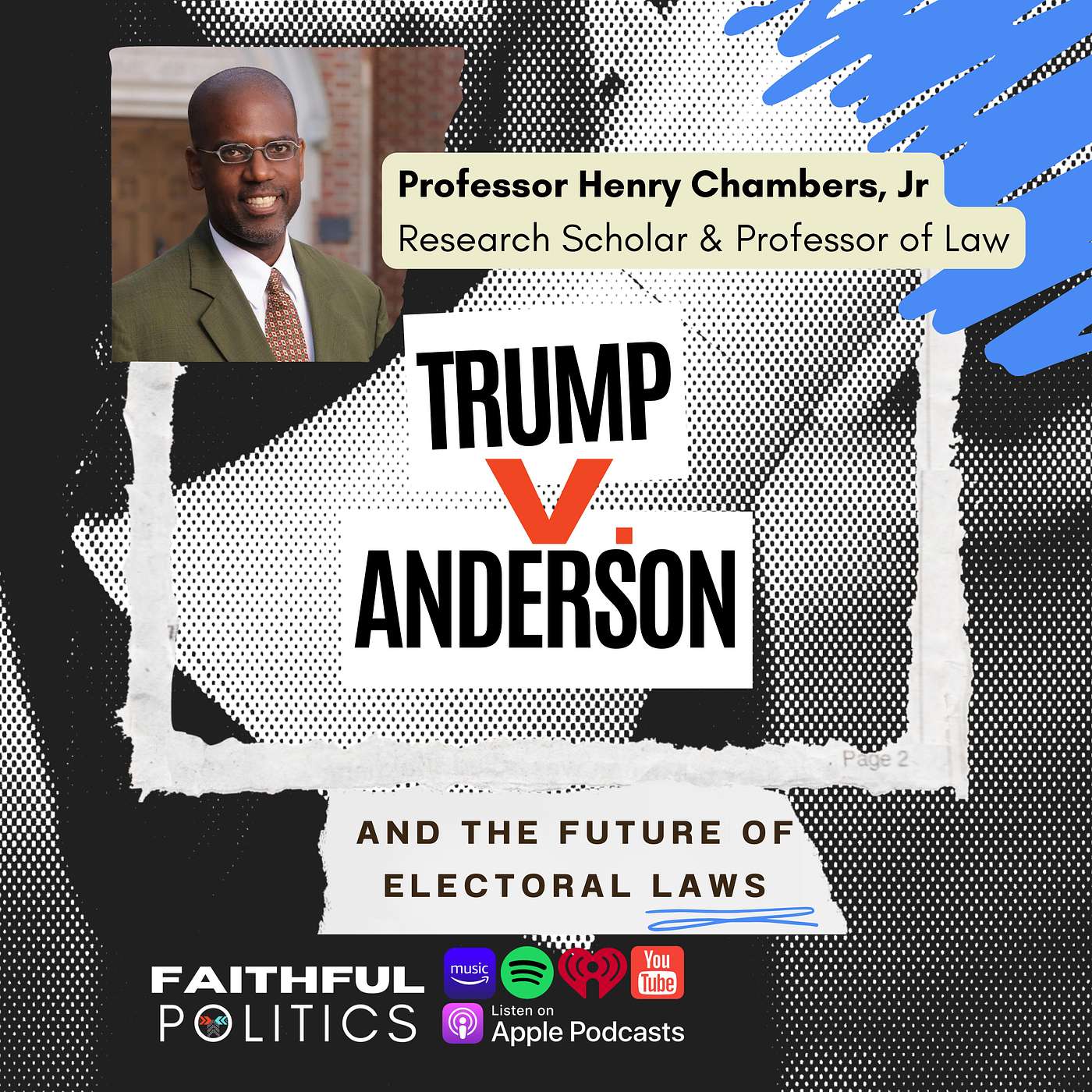
Trump v. Anderson and the Future of Electoral Laws w/Professor Henry Chambers
from Faithful Politics · host Faithful Politics Podcast
Have a comment? Send us a text! (We read all of them but can't reply). Email us: [email protected] this episode, Will Wright talks with Professor Henry L. Chambers Jr. about the significant Supreme Court oral arguments in Trump v. Anderson, centering on whether former President Trump should be allowed on the ballot in Colorado. The discussion illuminates the legal pathways for cases to reach the Supreme Court, the intricacies of the 14th Amendment, and the specific constitutional arguments impacting the eligibility of candidates. They dissect the legal and constitutional frameworks guiding the Court's decision-making process, focusing on how this particular case could set precedents for future electoral and constitutional interpretations.The episode provides a deep dive into the broader implications of the Court's potential ruling, examining how it might influence the fundamental principles of democracy and the rule of law in the United States. Chambers offers his expert insights into the dynamics of the Supreme Court's deliberations, the importance of precedent, and the complex relationship between state and federal electoral laws. Through their conversation, Wright and Chambers engage listeners in a nuanced discussion about the balance of powers, the role of the judiciary in interpreting the Constitution, and the critical importance of this case in shaping the landscape of American electoral politics.Guest Bio:Professor Henry L. Chambers, Jr., teaches and writes in the areas of constitutional law, criminal law, law and religion, and employment discrimination. He is active in the Virginia State Bar, including serving as chair of its Section on the Education of Lawyers from 2007-2009, and has been a member of the American Law Institute since 2002. Professor Chambers served as Special Assistant Attorney General for redistricting matters for the Commonwealth of Virginia from 2011-2013. He also frequently lectures on constitutional law through the We The People program, which provides civic education instruction to school teachers and the public; at James Madison’s Montpelier; and at the Federal Executive Institute in Charlottesville. Support Sarah Stankorb’s work and preorder Damned If She Does: Why Women Quit Church and What It Means for the Future of Religion, Releases September 15, 2026. Bookshop.org: https://bookshop.org/a/112456/9798889837091Website: https://www.sarahstankorb.com/Support the showKeep the conversation going.Want to learn more about Faithful Politics, suggest a future guest, or connect with us directly?Visit our website:faithfulpoliticspodcast.comBrowse our bookstore, featuring books from many of our guests:faithfulpoliticspodcast.com/bookstoreSupport the show and help us keep these conversations going:patreon.com/cw/FaithfulPoliticsSubscribe for behind-the-scenes content, reflections, and updates:faithfulpolitics.substack.comContact the hosts:Josh Burtram, Faithful Host: [email protected] Wright, Political Host: [email protected] Faithful Politics:Instagram: faithful_politicsFacebook: FaithfulPoliticsPodcast
Embed this episode
NOW PLAYING
Trump v. Anderson and the Future of Electoral Laws w/Professor Henry Chambers
No transcript for this episode yet
Similar Episodes
No similar episodes found.