
EPISODE · Jul 3, 2026 · 38 MIN
Trump’s Communist Boogeyman Playbook: Charging Protesters as Terrorists
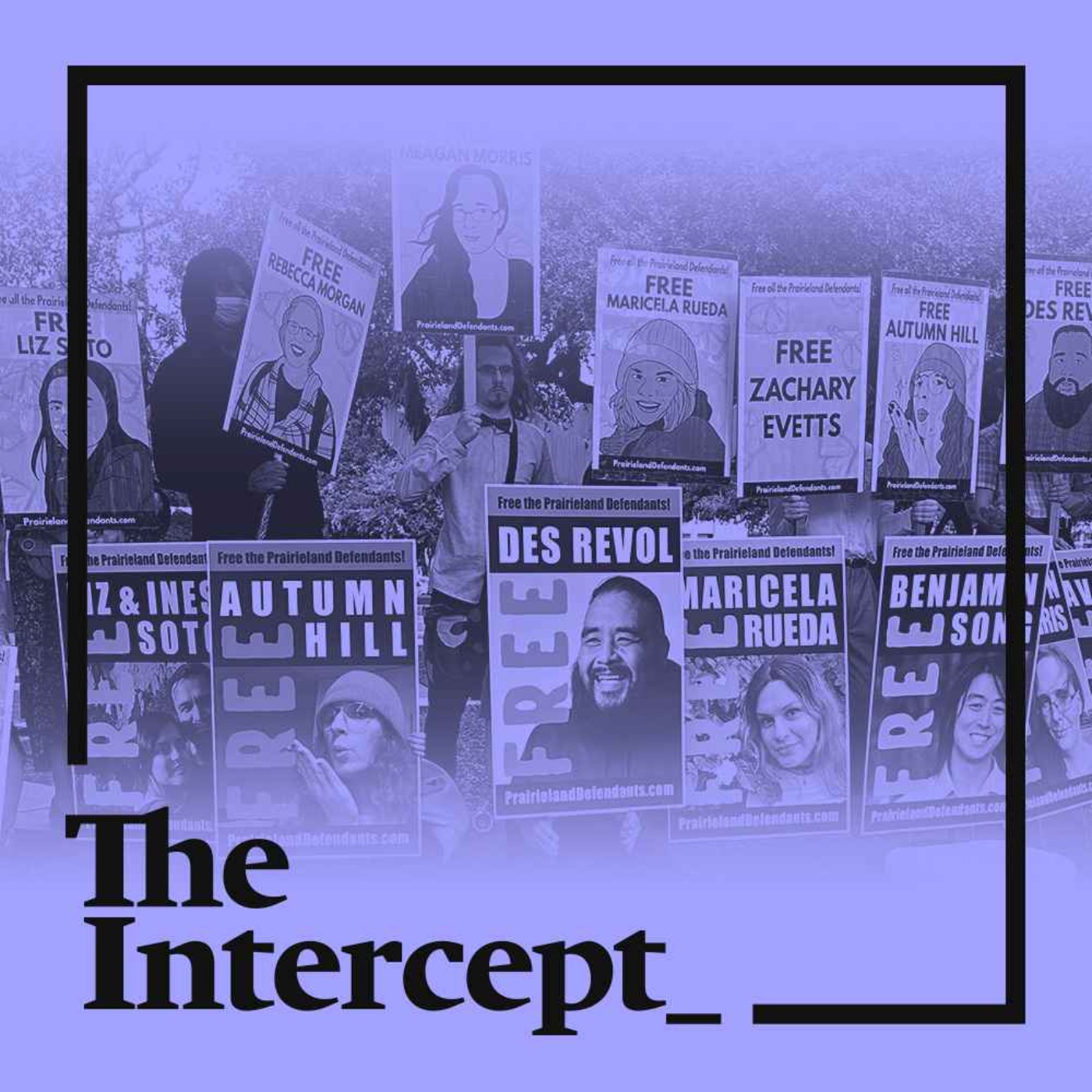
A noise demonstration that took place outside of the Prairieland Detention Facility in Texas one year ago has resulted in decades of prison time for the anti-ICE activists involved. Federal judges sentenced eight defendants, who the government cast as antifa operatives, to between 30 and 100 years in prison for terrorism-related charges last week; seven more people were sentenced this week.“There's a stunningly wide gap between what the Justice Department has put in its press releases and what top officials have said, versus the evidence that was actually presented at trial,” says Intercept reporter Matt Sledge, who has been covering the Prairieland case and was present at the sentencing. “It’s a real stretch to assert, as the government did, that this was all one coherent group.”“There's a concerted effort to characterize opposition to ICE or opposition to the Trump administration as some form of conspiracy, as an effort to provoke terrorism,” says Mark Bray, author of “Antifa: The Anti-Fascist Handbook.” “There are a number of things that can be said about the various sentences, but perhaps the most obviously egregious is that handed out to Daniel Sanchez [Estrada]: 30 years for moving some zines, some literature, which is not illegal to possess.”This week on The Intercept Briefing, host Jessica Washington speaks with Bray and Sledge about Prairieland as a test case in Trump’s war on dissent, and why the administration is determined to convince the public that antifa is a domestic terrorist organization.“I don't think Trump or his allies really care about antifa per se. It's a useful umbrella term to craft into a boogeyman scare tactic. In a way that ‘Communist’ was used in past generations, antifa is used now,” says Bray. He and Sledge point out that in the wake of Charlie Kirk’s killing, the Trump administration became much more aggressive in its targeting of the left and dissent in general.A noise demonstration that took place outside of the Prairieland Detention Facility in Texas one year ago has resulted in decades of prison time for the anti-ICE activists involved. Federal judges sentenced eight defendants, who the government cast as antifa operatives, to between 30 and 100 years in prison for terrorism-related charges last week; seven more people were sentenced this week.“There's a stunningly wide gap between what the Justice Department has put in its press releases and what top officials have said, versus the evidence that was actually presented at trial,” says Intercept reporter Matt Sledge, who has been covering the Prairieland case and was present at the sentencing. “It’s a real stretch to assert, as the government did, that this was all one coherent group.”“There's a concerted effort to characterize opposition to ICE or opposition to the Trump administration as some form of conspiracy, as an effort to provoke terrorism,” says Mark Bray, author of “Antifa: The Anti-Fascist Handbook.” “There are a number of things that can be said about the various sentences, but perhaps the most obviously egregious is that handed out to Daniel Sanchez [Estrada]: 30 years for moving some zines, some literature, which is not illegal to possess.”This week on The Intercept Briefing, host Jessica Washington speaks with Bray and Sledge about Prairieland as a test case in Trump’s war on dissent, and why the administration is determined to convince the public that antifa is a domestic terrorist organization.“I don't think Trump or his allies really care about antifa per se. It's a useful umbrella term to craft into a boogeyman scare tactic. In a way that ‘Communist’ was used in past generations, antifa is used now,” says Bray. He and Sledge point out that in the wake of Charlie Kirk’s killing, the Trump administration became much more aggressive in its targeting of the left and dissent in general.Full Transcript: https://interc.pt/4wnyW0eKeep our investigations free and fearless at theintercept.com/join. Hosted on Acast. See acast.com/privacy for more information.
What this episode covers
A noise demonstration that took place outside of the Prairieland Detention Facility in Texas one year ago has resulted in decades of prison time for the anti-ICE activists involved. Federal judges sentenced eight defendants, who the government cast as antifa operatives, to between 30 and 100 years in prison for terrorism-related charges last week; seven more people were sentenced this week.“There's a stunningly wide gap between what the Justice Department has put in its press releases and what top officials have said, versus the evidence that was actually presented at trial,” says Intercept reporter Matt Sledge, who has been covering the Prairieland case and was present at the sentencing. “It’s a real stretch to assert, as the government did, that this was all one coherent group.”“There's a concerted effort to characterize opposition to ICE or opposition to the Trump administration as some form of conspiracy, as an effort to provoke terrorism,” says Mark Bray, author of “Antifa: The Anti-Fascist Handbook.” “There are a number of things that can be said about the various sentences, but perhaps the most obviously egregious is that handed out to Daniel Sanchez [Estrada]: 30 years for moving some zines, some literature, which is not illegal to possess.”This week on The Intercept Briefing, host Jessica Washington speaks with Bray and Sledge about Prairieland as a test case in Trump’s war on dissent, and why the administration is determined to convince the public that antifa is a domestic terrorist organization.“I don't think Trump or his allies really care about antifa per se. It's a useful umbrella term to craft into a boogeyman scare tactic. In a way that ‘Communist’ was used in past generations, antifa is used now,” says Bray. He and Sledge point out that in the wake of Charlie Kirk’s killing, the Trump administration became much more aggressive in its targeting of the left and dissent in general.A noise demonstration that took place outside of the Prairieland Detention Facility in Texas one year ago has resulted in decades of prison time for the anti-ICE activists involved. Federal judges sentenced eight defendants, who the government cast as antifa operatives, to between 30 and 100 years in prison for terrorism-related charges last week; seven more people were sentenced this week.“There's a stunningly wide gap between what the Justice Department has put in its press releases and what top officials have said, versus the evidence that was actually presented at trial,” says Intercept reporter Matt Sledge, who has been covering the Prairieland case and was present at the sentencing. “It’s a real stretch to assert, as the government did, that this was all one coherent group.”“There's a concerted effort to characterize opposition to ICE or opposition to the Trump administration as some form of conspiracy, as an effort to provoke terrorism,” says Mark Bray, author of “Antifa: The Anti-Fascist Handbook.” “There are a number of things that can be said about the various sentences, but perhaps the most obviously egregious is that handed out to Daniel Sanchez [Estrada]: 30 years for moving some zines, some literature, which is not illegal to possess.”This week on The Intercept Briefing, host Jessica Washington speaks with Bray and Sledge about Prairieland as a test case in Trump’s war on dissent, and why the administration is determined to convince the public that antifa is a domestic terrorist organization.“I don't think Trump or his allies really care about antifa per se. It's a useful umbrella term to craft into a boogeyman scare tactic. In a way that ‘Communist’ was used in past generations, antifa is used now,” says Bray. He and Sledge point out that in the wake of Charlie Kirk’s killing, the Trump administration became much more aggressive in its targeting of the left and dissent in general.Full Transcript: https://interc.pt/4wnyW0eKeep our investigations free and fearless at theintercept.com/join. Hosted on Acast. See acast.com/privacy for more information.
NOW PLAYING
Trump’s Communist Boogeyman Playbook: Charging Protesters as Terrorists
No transcript for this episode yet
Similar Episodes
No similar episodes found.
Similar Podcasts
No similar podcasts found.